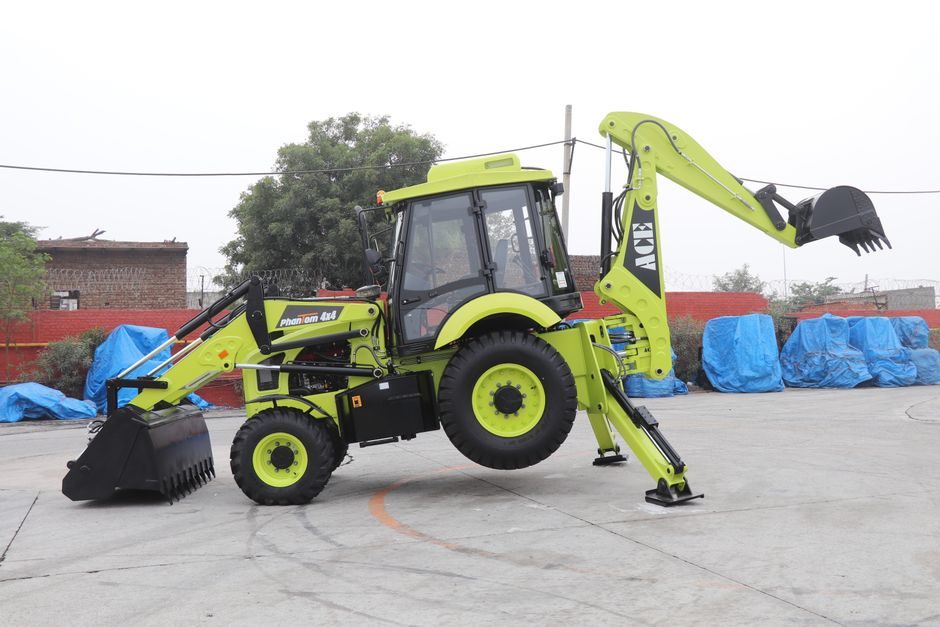
Centered on a rigid steel frame, a backhoe loader is a four-wheel-drive construction machine that pairs a hydraulically actuated front loader bucket with a rear-mounted, articulated backhoe arm and bucket, with the operator cab straddling the front console and the rear linkage exposed to the rear.
For 2026 spec sheets, the two numbers that anchor every comparison are operating weight (commonly 6,000–10,000 kg for a compact-to-midsize backhoe loader) and maximum backhoe dig depth (typically 3.5–5.5 m, with 4.3–4.8 m being the most common production band on a 14- to 16-foot machine), followed by engine net power (55–82 kW / 74–110 hp), loader lift capacity to full height (1,800–3,500 kg), and backhoe bucket breakout force (35–65 kN). These are the criteria the rest of this guide uses to walk selection.
Operating Class and Machine Footprint
Backhoe loaders in 2026 are split into three working classes: compact (5.5–7.0 t operating weight, ~3.5–4.3 m dig depth, 55–65 kW engines), standard (7.5–9.0 t, ~4.3–5.5 m dig depth, 66–75 kW), and heavy-production (9.5–11.0 t, ~5.5–6.1 m dig depth, 75–82 kW). Compact units are aimed at utility work, light landscaping, and small-site trenching; standard units are the municipal and rental-fleet default; heavy-production units are spec'd for long trench runs, highway shoulder work, and continuous loader-bucket cycles. Pick the class by the heaviest single tool you will run, not by the average day, because under-spec'd backhoes lose productivity to cycle time long before they lose traction. [S1]
Track width, overall length, and loader bucket width track operating weight closely. A 4-in-1 multi-purpose bucket at 60–62 inches wide is the most common loader attachment, and a 12- to 36-inch backhoe bucket handles most utility trenching. The compact class is the only segment where a backhoe loader is realistically towable on a tag trailer without a Class 7 truck; everything above ~8 t needs a dedicated lowboy.
Engine, Drivetrain and Emission Tier
Engine net power is the headline number, but peak torque at 1,200–1,500 rpm and the engine's rated speed are what actually drive the backhoe cycle. Tier 4 Final / Stage V diesels dominate 2026 builds, with most 74–82 hp blocks coming from displacement bands of 3.3–4.4 L and using DOC + DPF + SCR aftertreatment for NOx control. For regions still on Tier 4 Interim / Stage IIIB, mechanically simpler units exist at a 5–8% purchase-cost discount and a heavier maintenance footprint. [S2]
Driveline is invariably 4×4 with a power shuttle or full powershift transmission. Mechanical shuttle is the lowest-cost option, powershift is the rental-fleet standard because it cuts cycle time in the backhoe-to-loader pivot. Two-speed or three-speed ranges with a top travel speed of 35–40 km/h on the road is the norm; nothing above 45 km/h is worth specifying because the loader linkage and backhoe arm swing mass penalize road speed above that point.
Front axle oscillation of ±10–11° is standard and is the single biggest comfort-and-traction feature; lock it manually for loader work at full turn angle. A locking rear differential is a must for soft-soil trenching, and a differential lock on the front axle is worth the money on sites with cohesive clay or wet subgrade.
Backhoe Geometry, Dig Depth and Hydraulic Capacity
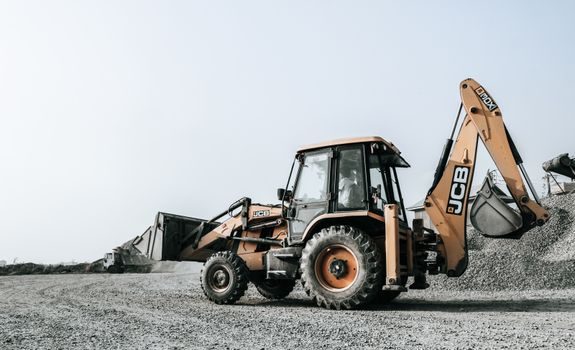
The backhoe arm on a 2026 backhoe loader is a two-piece boom with swing cylinders in the kingpost, giving a swing arc of 180° (90° each side). The two numbers that determine trench productivity are max dig depth (the floor of the trench, measured perpendicular to the machine's centerline) and loading reach at full dig depth, because loading reach dictates where the spoil pile has to be set. [S3]
Hydraulic flow for the rear backhoe is typically 130–160 L/min from a single variable-displacement piston pump, with system pressure set at 210–250 bar. The rear backhoe runs its own dedicated pump in nearly every modern design so the loader's lift and tilt do not rob dig force at depth. Multi-function hydraulics (independent circuits to extendable-stick and thumb) are now standard on the 75+ kW class, where the auxiliary hydraulic flow is split to power a hydraulic thumb, compactor, breaker, or auger attachment.
Extendable-stick backhoes (telescopic dipper) add 0.9–1.2 m of additional reach and depth and are the single most useful factory option on a 2026 backhoe loader, because they collapse a 4.4 m backhoe's reach to roughly 5.4 m without forcing the operator to upsize the whole machine. Specify the extendable stick up front, because retrofitting involves a different boom pivot, new hydraulic plumbing, and a re-rated kingpost.
Loader Bucket, Lift Capacity and 4-in-1 Options
Front loader geometry is rated by breakout force and lift capacity to full hinge-pin height. On a 2026 standard-class backhoe loader, expect loader breakout of 45–65 kN, lift capacity to full height of 1,800–3,500 kg, and a dump clearance at 45° of 2.6–3.0 m. The hydraulic quick-coupler for the loader bucket is a near-universal factory option, but verify the coupler matches the brand of your existing attachments before specifying, because European-pattern and skid-steer-pattern couplers are not interchangeable on most loader arms. [S4]
4-in-1 (multi-purpose) buckets are the right choice for grading and cleanup because they act as a dozer, a clamshell, and a conventional bucket in one tool. The trade-off is weight (~+200–300 kg over a GP bucket) and a slight reduction in breakout force. For pure trench-and-haul production work, the standard general-purpose bucket with bolt-on teeth remains the lowest-cost-per-yard option and the easiest to rebuild.
Ride control, return-to-dig, and self-leveling on the loader linkage are no longer optional on a 2026 machine, because they are tied to operator-assist software packages that also control autoshift on the transmission. Spec them in; on long shift cycles, they reduce operator fatigue more than the seat upgrade does.
Cab, Controls and Operator Interface
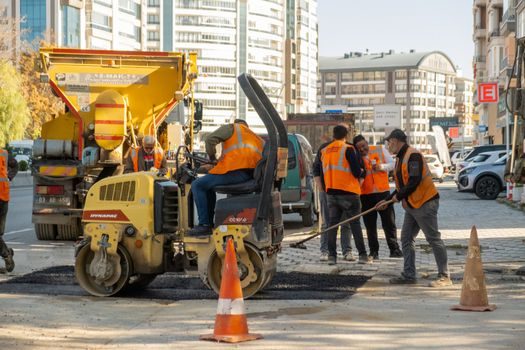
The 2026 backhoe loader cab is ROPS/FOPS-rated, climate-controlled as standard, and uses either mechanical (backhoe-style) or pilot hydraulic controls. Pilot controls are the new default on the 75+ kW class because they cut operator effort on the rear stick by ~60% and they are required to drive the joystick-integrated auxiliary control pattern. ISO/SAE pattern switch is a factory option worth specifying for fleets that mix brands. [S5]
Display consoles are moving from analog gauges to 7-inch color LCDs that show fuel rate, engine load, hydraulic flow split, and rear camera feed. The camera feed is not a luxury; on a 9-ton backhoe loader the rear blind spot is large enough to hide a worker, and most 2026 spec sheets already include a backup camera as a regulatory item in the EU and as a customer-paid option in North America.
Sound levels inside the cab land at 72–78 dB(A) for most 2026 models, with the closed cab and HVAC running. Vibration is a separate spec, and on the backhoe arm it is governed by the smoothness of the loader-linkage hydraulic accumulator, not the seat. If the operator is going to spend more than 4 hours at a time on the rear stick, specify the loader-linkage accumulator as well as the seat suspension.
Selection Criteria Comparison (2026 Build)
Here is a criteria-based comparison of the three operating classes for a 2026 backhoe loader purchase, aligned to typical spec sheets: [S6]
Compact class (5.5–7.0 t) — engine 55–65 kW, backhoe dig depth 3.5–4.3 m, loader lift 1,800–2,400 kg, advantages: trailer-towable, sub-2.0 m transport height, lowest acquisition cost; limitations: lower hydraulic flow (100–130 L/min), shorter reach on trench work, fewer attachment options on the rear arm.
Standard class (7.5–9.0 t) — engine 66–75 kW, backhoe dig depth 4.3–5.5 m, loader lift 2,500–3,200 kg, advantages: best balance of footprint and reach, full powershift availability, broadest attachment compatibility; limitations: heavier trailer requirement, slightly higher fuel burn (~10–12 L/hr under load), still limited on deep utility work above 5.5 m.
Heavy-production class (9.5–11.0 t) — engine 75–82 kW, backhoe dig depth 5.5–6.1 m, loader lift 3,200–3,500 kg, advantages: highest hydraulic flow (150–180 L/min), extendable stick as standard, long trench cycle efficiency; limitations: road-transport only on lowboy, larger turning radius, 12–15% higher fuel burn, requires a Class 7+ tow vehicle.
For a rental fleet or mixed municipal/utility operation, the standard class is the lowest-risk 2026 spec. For specialty trenching (fiber, utility, drainage), step up to heavy-production. For landscaping and small-site work, the compact class earns its keep only if tow weight and site access genuinely constrain a bigger machine.
Maintenance, Fluids and Consumables
Maintenance intervals on a 2026 backhoe loader are set around 500-hour engine oil and 1,000-hour hydraulic/hydraulic return. The hydraulic system uses ISO VG 46 mineral oil or a synthetic blend in cold climates, with the reservoir sized at 90–140 L depending on class. DEF tank size is 19–38 L, sized to match a full working day of Tier 4 Final operation, and is a real planning factor for sites without DEF infrastructure. [S1]
Wear items are predictable: front bucket teeth (replace at 200–400 hours in abrasive soil), rear bucket teeth and side cutters (400–700 hours), kingpost bushings (1,500–2,500 hours), and the backhoe boom pivot pins (2,000–3,500 hours). Stocking these consumables against an annual service-hour target is the cheapest way to control downtime on a multi-machine fleet.
Tire selection is split between industrial (R4) and general-purpose (R4+). For mixed on-road/off-road, R4+ is the right choice; for purely off-road trench work, R4 with a foam-fill option survives puncture events that would otherwise pull a machine off-site. The right rear tire wears first because it carries the heaviest load in 4×2 loader mode and the most traction load in 4×4 trenching.
Sourcing, Standards and Lead Times
For 2026 sourcing, expect 4–9 month lead times on a factory build for the standard and heavy-production classes, and 6–14 weeks on a compact-class build. EU and North American builds are typically delivered with Tier 4 Final / Stage V engines, while builds for markets still on Tier 3 / Stage IIIA are simpler, cheaper, and shorter in lead time by 4–8 weeks. [S2]
Relevant standards to verify in a 2026 spec sheet: ROPS/FOPS to ISO 12117, operator seat to ISO 7096, sound level to ISO 6395, hydraulic safety to ISO 4413, and the EU Machinery Directive 2006/42/EC. On the engine side, EPA Tier 4 Final (40 CFR 1039) and EU Stage V (Regulation 2016/1628) are the two emission regimes that govern 2026 builds.
Use the reference catalog at encyclopedia/backhoe-loader.html and the related skid-steer-loader.html page for class context, and review wheel-loader.html for comparison against a dedicated loader when backhoe work is light. The cross-category linear-guide.html is not directly comparable but is often co-purchased for the cab's mechanical seat rail. The press also has a related article on Bulldozer 2026 Price & Cost Guide: Class, Hours, Spare Parts and Total Landed Cost and a side-by-side Wheel Loader Price and Cost Guide 2026: Size Class, Spec Tier and Sourcing Map that frame total cost of ownership alongside the backhoe decision.
Final selection: pick the class by heaviest expected tool, spec the extendable stick up front, choose pilot controls with ISO/SAE pattern switch for any fleet mix, and lock the locking differentials on both axles; those four calls, made once, save the most money and the most operator fatigue across the machine's working life.