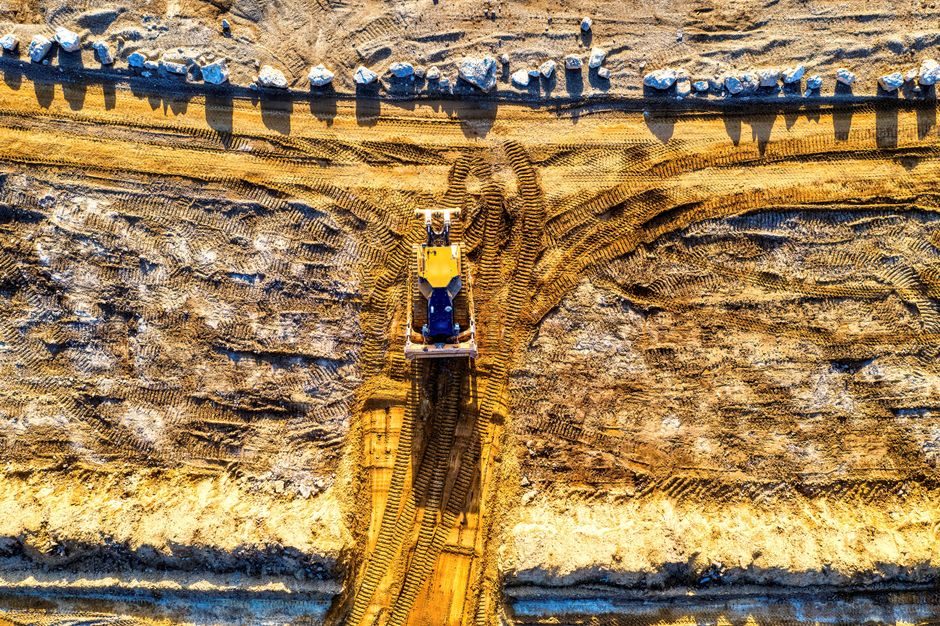
New compact-class crawler dozers such as the Koasu PC70-8 and PC200-8 family are listed at OEM export-tier pricing on Chinese wholesale channels, while late-life used Cat D6H and D7G units clear between US$18,000 and US$30,000 per machine with verifiable model codes [S6][S5].
Spare-part economics sit in a separate band: a 5-piece MOQ on hydraulic accessories and final-drive components from Gold-tier manufacturers on Made-in-China.com prices from US$10.00 to US$20.00 per piece, indicating that wear-item replacement remains a much smaller line item than the undercarriage and powertrain cost of a complete machine [S2]. For context on how bulldozers compare to a different heavy-equipment class, our shield machine buying guide breaks down cutterhead, thrust and tooling cost gates. For a side-by-side buyer-logic contrast, see storage rack vs tank cleaning machine.
Class definition: compact, mid-size, and large crawler dozers
Operating weight is the dominant cost driver: compact dozers under ~10 t typically cover yard grading and small-site prep, mid-size 14–25 t units cover road and mining work, and large 30 t+ machines move overburden at quarry scale [S5]. The Koasu listing covers a stepped range from PC40 / PC55 / PC56 / PC60 / PC70 / PC78us / PC130 / PC160 / PC200-8 with pricing tiered by class [S5]. Used-equipment channels list Caterpillar D6H in the mid-size band and D7G as a large-scale earth-moving dozer, confirming that the second-hand market segments by the same operating-weight logic as new sales [S6].
A 2026-05-28 snapshot of the Made-in-China bulldozer machinery catalog shows a Cheap Used Cat D6H second-hand dozer at US$18,000–25,000 and a Large-Scale Earth-Moving Dozer Cat D7G crawler at US$24,000–30,000, both listed in the same supplier block — meaning a buyer moving from a 14 t to a 24 t class sees roughly a 20–33% price step on used iron [S6].
Selection criteria: new vs used, hours, and undercarriage condition
Hours-on-meter is the single largest price lever on used units; mid-size Cat D6H/D7G dozers in the US$18,000–30,000 window typically carry 4,000–8,000 working hours, and a 1,000-hour delta can move price 8–12% on inspected channels [S6]. Undercarriage wear — track pads, idlers, rollers, and sprockets — is the second lever, because replacement sets on a D6/D7 class can run into five figures on their own, which is why Gold-supplier spare parts at US$10–20 per piece are tracked separately from full-machine cost [S2].
Hydraulic and powertrain items such as final-drive assemblies, hydraulic pump blocks, and valve groups dominate the spare-parts catalog, and 5-piece MOQ tiers from verified Gold Members signal the minimum economical buy for a workshop stocking one machine class [S2]. The same cost discipline shows up in adjacent heavy-equipment categories — for example, the carbon steel price and cost guide uses a similar MOQ-tier and grade-premium logic that applies when a buyer is specifying dozer blades or push arms in plate steel.
Who should buy new vs used, and who should not
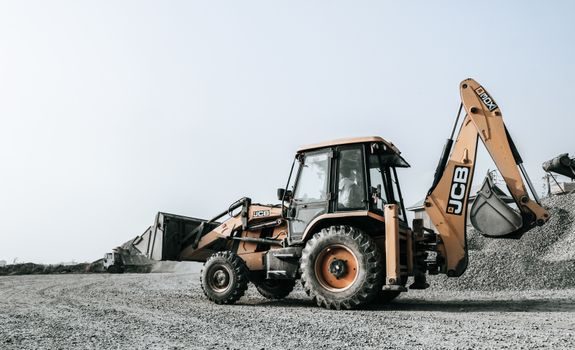
New compact dozers in the PC40–PC200-8 family are aimed at contractors needing full OEM warranty, telematics, and tier-4 emissions compliance, typically on 3- to 5-year finance terms [S5]. Used D6H/D7G class machines at US$18,000–30,000 are aimed at small-to-mid civil contractors, agricultural co-ops, and quarry lease operators whose hourly utilization is below 1,500 h/year and who can self-service the powertrain [S6].
Buyers who should NOT use the second-hand D6H/D7G price band are mine-site prime producers, port logistics fleets, and any operation that runs above 2,500 h/year under articulated-truck loading — undercarriage and final-drive life is too short at that duty cycle, and the apparent 80% saving on acquisition is consumed within 18–24 months of spares [S2][S6]. For a parallel cost comparison in another heavy-machinery segment, the ready-mix concrete buying guide walks through total-cost tiers in a similar new-vs-used framing.
Criteria-based comparison: D6H vs D7G vs compact new Koasu
On a four-criteria comparison for the price band documented in May 2026 — acquisition cost, class, spare-parts ecosystem, and total landed cost — the Cat D6H used sits at US$18,000–25,000 in the 14–18 t mid-size class with abundant Gold-tier spare supply at US$10–20 per piece; the Cat D7G used climbs to US$24,000–30,000 in the 23–25 t large class with the same spares ecosystem but heavier undercarriage wear per hour; the Koasu PC70-8 new compact sits at a higher per-ton price but with full OEM warranty and tier-4 emissions compliance in the under-10 t bracket [S6][S5][S2].
Spare-part cost levers: what moves the US$10–20 per-piece band

The US$10.00–20.00 per-piece price band on Made-in-China covers hydraulic accessories and final-drive-adjacent components from Jining Lishun Hydraulic Accessories and similar Gold Members, with a 5-piece MOQ [S2]. Material grade, machining tolerance, and surface treatment (hardened pins, ground bores) are the three documented levers that move a part from the bottom of the band to the top — none of the listings quote a certification premium for tier-4 or stage-V compatibility, which is a real gap a buyer must close with the supplier directly [S2].
Adjacent wear items — cutting edges, end bits, ripper tips — sit on a separate cost curve and are typically quoted by the meter or by the set; buyers should expect a different MOQ structure (often 1–3 sets) and a higher per-unit price than the hydraulic-accessory band [S2].
Limitations, failure modes, and what the data does not yet show
The Made-in-China snapshot is a listing snapshot rather than a transacted-price index, with used D6H listed at US$18,000–25,000 and used D7G listed at US$24,000–30,000 [S6]. Hours-on-meter are not published on these listings, so a buyer must commission an independent inspection (undercarriage wear gauge, compression test, hydraulic-flow test) before releasing payment [S6].
Standard and emissions compliance for the imported unit is also not stated on the listing block; EU, North American, and Australian buyers will need to confirm tier-4 final / stage-V / ADR compliance separately, and the cost to retrofit or re-certify a D6H/D7G can erase the price advantage of used iron [S5][S6]. For a parallel compliance-and-cost framing in another heavy spec domain, the cast iron price and cost guide maps grade, weight and total landed cost in a similar compliance-bound workflow.
Sourcing, standards, and verification signals
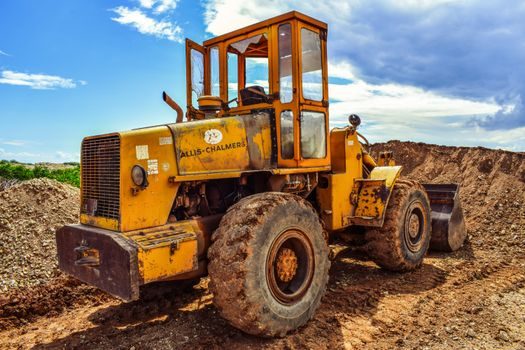
Gold-Member status on Made-in-China is a paid verification tier, not a quality standard; it should be cross-checked against the supplier's business license, on-site audit reports, and references before a US$10–20 per-piece / 5-piece MOQ order is scaled [S2]. For a dozer-class machine, the buyer-side inspection checklist should cover engine compression, track-sag measurement, final-drive oil analysis, and a hydraulic-pump flow test, all of which a typical 14 t mid-size unit can be put through within a half-day on the seller's yard [S6].
Trackable 2026 signals to watch: (1) whether Chinese OEM compact lines (Koasu PC70-8, PC200-8) extend their export-tier pricing into tier-4 final / stage-V configurations by Q4 2026, which would narrow the new-vs-used gap in regulated markets [S5]; (2) whether the used D6H/D7G price band stabilizes in the US$18,000–30,000 window or drifts as Australia, Africa, and South America re-enter the second-hand cycle [S6].
For component-level specifications, see bulldozer, linear guide, and crossed roller guide.