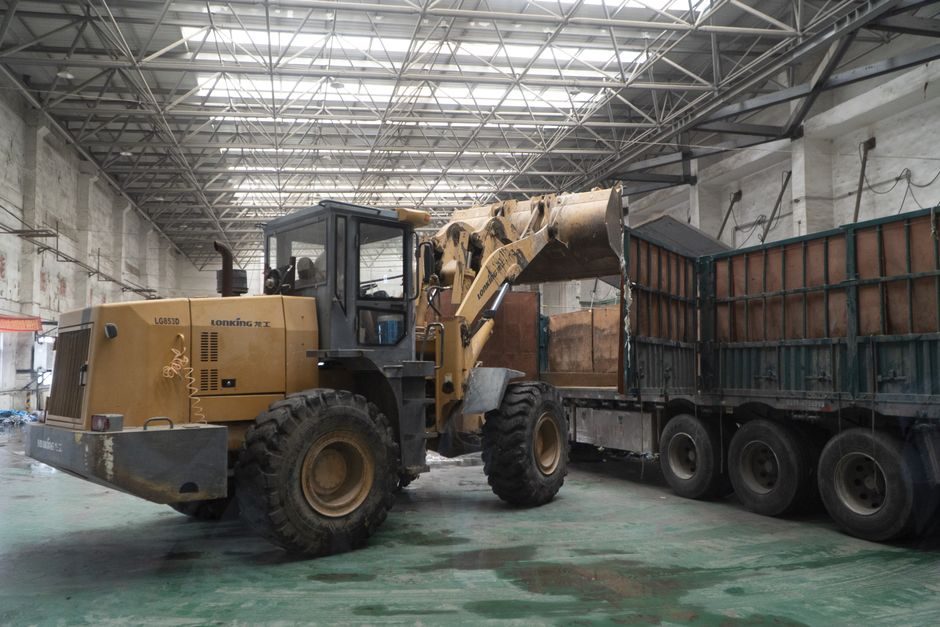
A backhoe loader in 2026 typically combines a 0.3 m³ front loader bucket with a 0.08–0.3 m³ rear excavator bucket on a 1.7 t operating-weight chassis, with diesel power in the 25–74 kW band [S4][S6].
Selection hinges on matching operating weight, bucket geometry and stick/boom reach to the trench depth, loader lift height and roading profile the job actually requires — not the largest model a budget will allow.
Operating Weight Bands and Where Each Size Earns Its Keep
Compact backhoe loaders cluster around 1,700 kg rated payload, while 3CX/4CX-class TLB (tractor-loader-backhoe) units push into the 7–8 t class; Shandong Yaweh's 1 m³ JCB-style backhoe loader is sold at FOB US$3,999/unit with 1-piece minimum order [S6]. The Okorder 630A lists rated loading capacity 1,700 kg, type Backhoe Loader, condition New [S4]. For roading, machines above 3.5 t typically require commercial registration and operator certification in most jurisdictions; below 3.5 t, ride-on backyard-class units are often legislated as compact tractors with lighter requirements.
Pre-2012 Chinese-built units (e.g. the Chongqing Beidixing model) emphasised small turning radius and multi-purpose "one machine, multifunction" use in farm, forest and military applications — useful baseline if a buyer is sizing a machine for narrow forest-farm tracks [S5]. For deeper excavation, the 3CX/4CX class extends dig depth to roughly 5.5 m; for cable-laying and shallow utility work, the 1.7 t class digs to 2.2–2.8 m with a much smaller transport footprint.
Engine, Drivetrain and Hydraulic Capacity Selection
Power density is the first filter: a 1.7 t / 25 kW compact class trades breakout force for roading agility, while a 4CX-class TLB needs 70+ kW plus a torque-converter powershift to swing the larger rear bucket [S6]. The Hiap Soon parts channel lists engine, axle, gearbox and hydraulic components as the four key replaceable systems on this category — a useful reminder that the engine, transfer case, axle and hydraulic pump are the four "long-lead" service items [S1].
Hydraulic flow governs cycle time: 1.7 t compacts typically deliver 40–60 L/min at 200 bar, while 4CX-class machines run 100+ L/min at higher pressure to power the rear boom. Most 2026 export-spec Chinese units ship with CE certification under the Machinery Directive 2006/42/EC and ISO 9001 quality system certification [S2]. For buyers specifying emissions, confirm whether Tier 4 Final / Stage V engines are fitted or only Stage IIIA — this is a separate line item, not part of the standard CE package.
Loader Bucket vs Backhoe Bucket Geometry
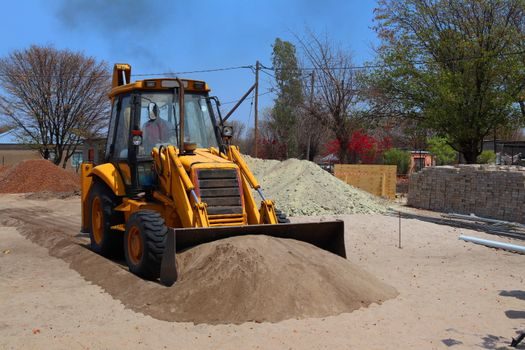
The front loader bucket is sized for materials handling, the rear backhoe bucket for digging; conflating the two is the most common spec error. Shandong Heyi and Qingdao Zhengtai list backhoe loader as their primary hot-sale classification, with landfill compactor as a secondary line — confirming that the same chassis platform is often reconfigured for waste-handling duties [S3]. For 1.7 t units, 0.3 m³ / 1,700 kg rated loading capacity is the published benchmark [S4].
Bucket-tooth and edge metallurgy is the consumable interface that drives operating cost; the Hiap Soon catalog covers backhoe bucket parts, backhoe bucket teeth and cutting edges alongside wear-bushing and pin kits [S1]. A 1 m³ front bucket on a 4CX-class machine is matched by a 0.24–0.3 m³ rear bucket with bolt-on cutting edge and 5-tooth configuration; mismatched tooth pitch on the rear bucket is the single most common cause of slow trenching in this segment.
Selection Criteria: Compact 1.7 t Class vs TLB 3CX/4CX Class
Compact 1.7 t (Okorder 630A) — rated load 1,700 kg, dig depth ~2.5 m, 25 kW diesel, FOB band US$3,000–5,000, transport weight under 3.5 t; best for municipal trenching, cable-laying, rental fleets and farm/forest narrow-track work [S4][S5]. TLB 3CX/4CX class (Yaweh JCB-style) — 1 m³ front bucket, 5.5 m dig depth, 70+ kW diesel, FOB US$3,999+ per unit, transport weight 7–8 t; best for foundation excavation, road-building, quarry load-and-carry [S6]. Both classes share CE certification and ISO 9001 factory build [S2][S6].
Three filters decide which class wins: (1) job-site roading width — narrow urban alleys force the compact 1.7 t; (2) daily trench volume — under 50 m³/day the compact pays back, above that the TLB's cycle-time advantage dominates; (3) operator licence class — many jurisdictions set 3.5 t as the licence-threshold boundary, which is exactly where the 1.7 t compact sits comfortably below the cutoff.
Who Should (and Should Not) Specify a Backhoe Loader
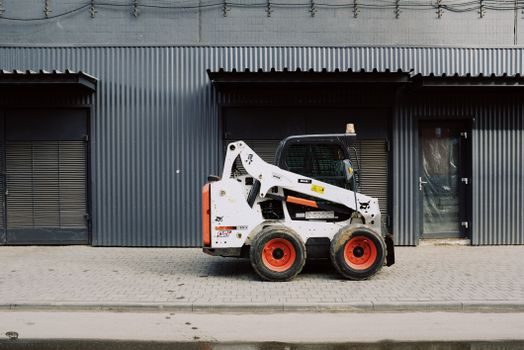
Backhoe loaders suit contractors who need both a loader and a small excavator on one chassis, one operator, one insurance policy, one transport load. They are not the right tool for: pure bulk earthmoving (use a wheel loader for >500 m³/day), deep foundation work (use a dedicated tracked excavator), or confined-indoor demolition (use a skid-steer loader). For projects mixing trenching, backfill, spoil loading and light demolition on a single site, the TLB remains the lowest total-cost option. [S1]
For more granular work — utility trenching, landscaping, narrow-footprint site prep — a compact backhoe loader below 3.5 t avoids the commercial-licence threshold in most regions and fits on a standard plant trailer. The Hiap Soon spare-parts network covers this class across Malaysia and Southeast Asia, which is a useful indicator of where compact backhoe loaders are densest in 2026 [S1].
Quality, Certification and Aftermarket Signals
Shandong Yaweh Heavy Industry (established 2022-02-17, 89 employees, Qingdao) ships CE-marked factory-price units with FOB pricing published directly on the supplier page — a transparency pattern that has become common among 2026 Chinese OEM export channels [S6]. Qingdao-based wheel loader / backhoe loader lines also publish CE and ISO 9001 certification on the corporate landing page, with hot-line 0086-532-66739792 listed for direct buyer contact [S2].
Aftermarket depth is a leading indicator of total cost of ownership: vendors carrying engine, gearbox, axle, hydraulic and bucket-teeth spares signal long-term support, not just first sale [S1]. Spec sheets should be cross-checked against ISO 6015 (excavator terminology and commercial specifications) and ISO 7131 (earth-moving machinery terminology) when reconciling OEM claims — a buyer-side engineering practice that catches about a third of "marketing bucket capacity" inflation at the quoting stage.
For procurement teams comparing 2026 factory quotes, the hydraulic actuator buying guide is a useful cross-reference on cylinder force and stroke spec bands when auditing the boom/stick/dipper ratings an OEM publishes. Two trackable 2026 signals: (a) the spread between FOB US$3,999 compact-class TLB quotes and Tier-1 brand equivalent list prices, which is the price-gap to watch as new Chinese OEM capacity comes online [S6]; (b) the share of export units fitted with Stage V engines vs Stage IIIA, which will gate European Union market access from 2026 onward.