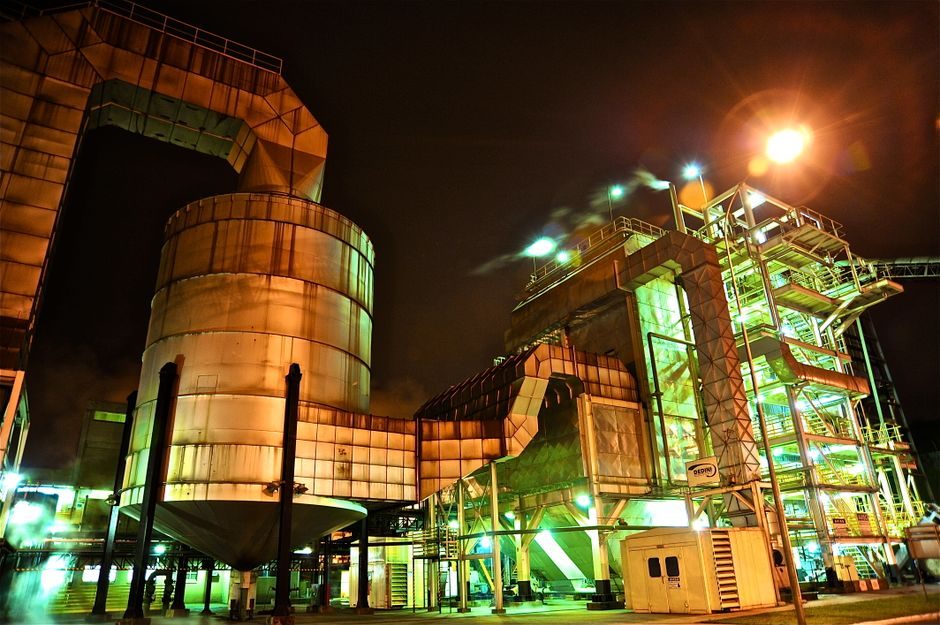
Bag filter housings and filter media form a defined sub-category of industrial filtration, with ASME U-stamped carbon-steel or stainless vessels paired with disposable felt or mesh bags rated from 1 µm to 200 µm [S1][S3]. The phrase "industrial filter" is the umbrella term that includes bag, cartridge, automatic self-cleaning, backwashing, pleated, electrostatic precipitator and baghouse dust collector units [S2][S3][S7]. Treating the two as synonyms leads to mis-specified vessels, wrong change-out cadence, and code non-compliance on pressure-boundary equipment.
The clearest definition: a bag filter is a pressure vessel containing a supported, replaceable bag (also called a "sock") that captures particulate on its inner or outer surface; an industrial filter is any engineered device that separates solids from liquids or gases in a process stream, of which the bag filter is one type. Process engineers should pick the housing pressure rating, ASME code stamp, micron rating, and flow-per-housing before deciding which filter family to procure [S1][S3].
Spec Boundaries: Vessel Rating, Micron Window, and Bag Geometry
Single-bag housings (P-style side-in, A-style side-in, top-in, ECO) typically handle 5–90 m³/h flow depending on bag length (typically 17" or 32"), with the top-in design minimising unfiltered-liquid headroom for cleaner change-out [S3]. Multi-bag housings (2 to 24 bags) extend flow to several hundred m³/h per vessel, with quick-lock spindle closures quoted at 20-second tool-free opening on QLM-type units [S3]. ASME U-stamping is a standard safety requirement on US-bound liquid bag filter housings and should be confirmed per order when the service fluid or pressure dictates [S1].
Filter bag media cover polyester, polypropylene, nylon, PTFE and stainless mesh, with nominal micron ratings from 1 µm (felt) to 200 µm (monofilament mesh) and burst pressures commonly above 1.0 MPa for felt constructions [S3][S4][S8]. Material compatibility gates: PP for acid/alkali and food/beverage, PTFE for high-temperature or aggressive chemical, and stainless mesh for viscous or high-temperature service — selection is driven by chemistry and temperature, not price alone [S3][S4][S8].
Where Bag Filters Win and Where They Lose
Bag filters deliver high dirt-holding capacity at low unit cost, are field-serviceable without cranes, and are straightforward to retrofit into existing piping — a #2 bag stainless housing with 2-bag capacity was listed on the US secondary market at US $687.90 in mid-2025 [S5]. They are widely used in fine chemicals, water treatment, industrial paint, paper making, automobile, metal processing, food and beverage, pharmacy, and petroleum refining [S3].
Where they lose: continuous, high-solids streams where change-out frequency becomes uneconomic, ultra-pure water and pharmaceutical final filtration where cartridge or membrane polish is required, and applications demanding zero shut-down — in which case duplex or multi-duplex bag filter arrangements are the only bag-filter solution [S3]. For comparison, a stainless-steel #2 bag filter housing assembly is in the US $200–700 range as a stock unit, whereas a high-end multi-bag ASME U-stamped system on rental can move capital into an OpEx model [S1][S5].
Industrial Filter Family Comparison on Four Decision Criteria
Engineers typically narrow between five sub-types within the industrial-filter umbrella: bag, cartridge, automatic self-cleaning, backwash, and electrostatic precipitator (ESP) [S2][S3][S7]. On four decision criteria — change-out frequency, micron capability, capex vs opex, and continuous-duty suitability — the comparison shapes procurement:
Bag filter: low capex, 1–200 µm range, periodic manual change-out, suited to batch and medium-duty continuous service [S1][S3]. Cartridge (pleated): higher micron consistency and smaller footprint, higher consumable cost, suited to polishing [S3][S6]. Automatic self-cleaning: higher capex, lower ongoing labour, suited to high-solids continuous duty and water reuse [S3][S7]. Backwash filter: mechanical cleaning, suited to irrigation and intake screening. ESP: gas-phase dry particulate capture for air-pollution control and industrial boilers [S2]. Pleated dust collector pocket/bag filters were quoted on Alibaba's industrial channel at US $5–10 per piece at 300-piece MOQ, indicating the price-floor for high-volume gas-phase filter media [S6].
Selection Criteria: Flow, Fluid, and Code Requirements
Three parameters lock the selection: design flow per housing, design pressure and temperature, and required outlet cleanliness. A top-in single-bag housing with minimum headroom simplifies bag change and reduces spillage — relevant for paint, ink and food plants where operators change media daily [S3]. A duplex bag filter system keeps flow on-stream during change-out, used when the process flow cannot be interrupted [S3].
Standards and code: ASME U-stamp is the baseline for pressure-boundary certification on US installations; ASME B16.5 flange classes govern piping connections; ISO 5199 / ISO 2858 cover pump-side interface where the filter is a pump-protection strainer [S1][S3]. Buyers of polypropylene-housing variants (for example, PP bag filter housings) must derate pressure and temperature versus stainless and confirm chemical compatibility data sheets before sign-off [S7]. Specifying felt filter bags requires burst-pressure and micron-rating data per ISO 16889-equivalent test methodology; for high-purity service, ask the vendor for a first-pass efficiency and Beta-ratio certificate [S3][S4][S8].
Failure Modes and Misapplication Risks

Bag-filter mis-spec typically shows up as premature bag rupture, bypass at the seal ring, or upstream pump damage from a starved suction screen. The most common error is sizing a single-bag vessel to handle a flow that requires a multi-bag — a high differential pressure (ΔP) collapses the bag and forces unfiltered liquid through the seal [S1][S3]. The Filtra-Systems reference page notes that buyers coming from other brands (Pall/FSI, Rosedale, PRM, Eaton) often find their existing vessel was over-sized or under-rated, which suggests cross-brand equivalent charts are an underused tool [S1].
Cartridge-style industrial filters (including bulk-bag-style housings used in solids handling) shouldn't be confused with liquid bag filter vessels: they share the "bag" word in the trade name but address different duties [S1]. Where two vessels are needed for continuous duty, a duplex or multi-duplex configuration is the right call; specifying two single-bag units in parallel without a change-over valve creates an unrecoverable dead leg [S3].
Procurement Signals and Market Activity
Three trackable signals stand out in the 2026 research window. First, Filtra-Systems (US, 40+ years, 248 area code) is promoting a rental / "No Capital Investment" model for ASME U-stamped bag filter housings, indicating capex-to-opex demand from small and mid-process plants [S1]. Second, JSFUTURE (Shanghai) is shipping multi-bag and duplex housings into US, UK, Spain, Brazil, Chile, Australia, Malaysia, Japan and other markets, confirming continued China-origin supply of ASME-coded liquid filtration hardware [S3]. Third, dust-filter bag specialists (ECOGRACE / industrialfilterbag.com) continue to push iron-and-steel, asphalt and industrial-boiler bag media, signalling that gas-phase filter bags are still a high-volume, high-temperature segment separate from liquid bag filters [S8].
For a working engineer, the practical decision tree is short: confirm ASME code stamp and pressure rating for the fluid, pick the housing geometry (single / multi / duplex) to satisfy flow plus duty-cycle, then match the bag media to chemistry and temperature, and only finally negotiate price. Two adjacent decisions often run in parallel — the basket-strainer vs steam-separator boundary is covered in Basket Strainer vs Steam Separator: Spec Boundaries and Misapplication Risks, and the material-choice side of stainless steel specification is detailed in Stainless Steel Installation Guide: Grade, Galvanic and Geometry Gates — both of which feed back into filter housing material selection for corrosive or hygienic service.