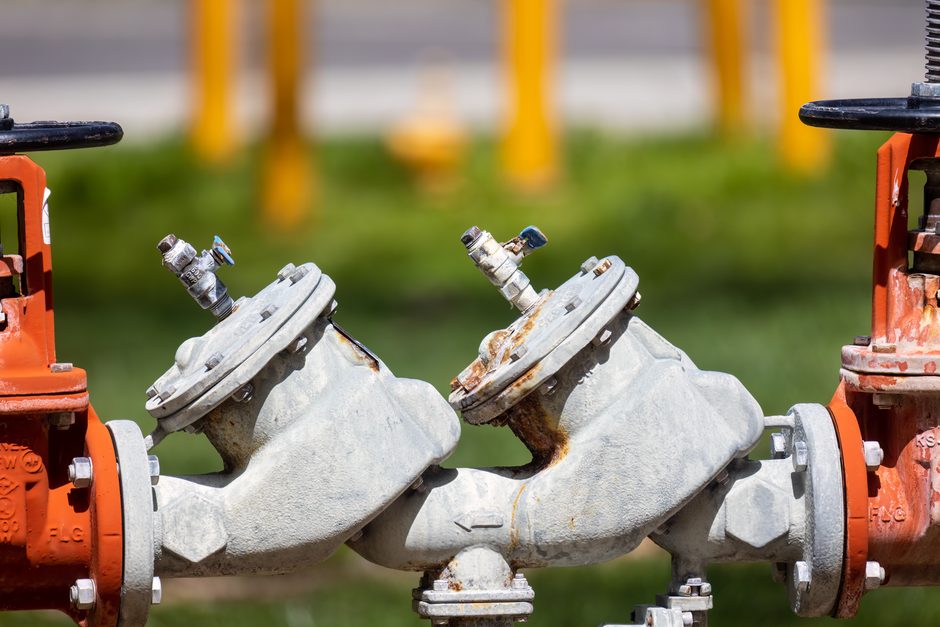
Specifying a balancing valve starts from the design flow rate and the residual differential pressure the branch can absorb — pick the DN and Kv (Cv) so the valve's working ΔP sits between roughly 3 kPa and 30 kPa at the design point, otherwise you either lose authority or generate cavitation.
The Directindustrial index lists 45 manufacturers and 108 balancing-valve product records in 2026, covering HVAC static models, hydraulic counterbalance cartridges, and dynamic differential-pressure-control units; the market splits cleanly by duty band rather than by brand.
Three duty families, three sizing logics
Static balancing valves are fixed-orifice double-regulating devices used for hydronic HVAC commissioning. The reference ZETKAMA zSTA 221 and VIR 9515/9516 series span DN15 to DN50, body in dezincification-resistant brass, with 40 handwheel positions giving a calibrated Kv curve, ISO 228/1 or ISO 7/1 Rp threaded ends, and two quick-test points for differential pressure measurement; pressure class is PN16 or PN25 depending on SKU [S1].
Dynamic balancing valves — differential-pressure-control types — keep ΔP across a downstream branch constant as system pressure fluctuates. Hebei Huahui's differential-pressure-control and dynamic-flow-control product lines sit alongside static-balance units in their 2026 catalogue and are commonly applied where chiller differential pressure varies more than ±20% during part-load operation [S3].
Hydraulic counterbalance valves are a separate engineering animal. The HAWE BLB series covers 2–30 MPa (20–300 bar) at 0–70 °C for press-workpiece support, while the UZPHD10 load-holding slide valve runs to 31.5 MPa for mobile machinery [S1]. Sizing here uses the load pressure plus pilot ratio logic, not a Kv table — see the HAWE counterbalance selection handbook for the full method (2025-08).
Where the mainstream static brass valve is the wrong pick
If the medium is glycol mixture above 40% concentration, or if the loop runs above 120 °C, a DZR brass body is the wrong call. The VIR 9515/9516 tops out at 130 °C and the ZETKAMA 221 at 120 °C, both with PN25 maximum; specify a cast-iron or steel body with EPDM seats for higher-temperature district-heating duty, and switch to stainless trim for glycol or aggressive closed-loop chemistry [S1].
For DN50 and above, threaded brass bodies also become uneconomic; flanged cast-iron static balancing valves (PN16, EPDM or NBR) are the standard step-up. Kemper Olpe's 141 0G thermostatic balancing valve series covers DN15–25 at PN16, 50–90 °C, sized for riser balancing on potable hot-water circulation (PWH-C) including thermal-disinfection mode, not for general HVAC [S1].
Where the loop differential pressure swings more than roughly 2:1 between full and part load, a static valve will lose its calibrated accuracy; in that case move to a dynamic balancing valve with self-contained differential-pressure control, sized so the minimum available ΔP at the valve exceeds its setpoint plus 5 kPa margin.
Sizing procedure that survives a commissioning audit
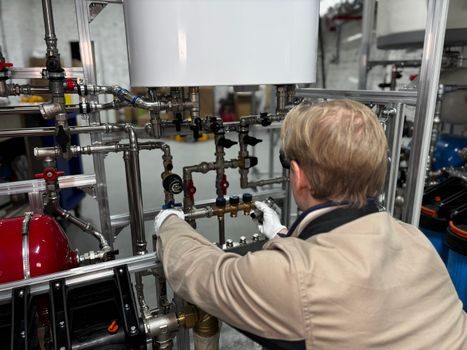
Step one: lock the design flow in m³/h (or l/s) per branch. Step two: read the residual ΔP available at the valve location at design load — usually 10–30 kPa for HVAC. Step three: compute the required Kv = Q / √ΔP (with Q in m³/h and ΔP in bar), then round up to the next standard DN. Step four: pick a valve whose Cv/Kv at the design handwheel position equals or exceeds the required Kv by 10–20% so the valve is not 100% open at design. [S1]
The ASHRAE-handbook balancing procedure and EN 14336 commissioning rules both require a measurement-and-adjustment loop, which is why static units carry two quick-test ports; a digital manometer reading across the ports gives the actual flow via the published Kv-vs-position curve. Without the ports you cannot document the balance, and the valve body essentially becomes a glorified ball valve trim element [S1].
For hydraulic counterbalance sizing the calculation is different: the valve setting pressure = (load × safety factor) / piston area, then add a 10–15% margin above maximum load pressure. A pilot ratio of 3:1 or 4.5:1 is typical for mobile machinery; the wrong pilot ratio on an excavator boom will give either chatter or drift, and no amount of handwheel adjustment fixes it (HAWE handbook, 2025-08).
Criteria-based comparison of the four main options
Four balancing-valve types cover roughly 90% of real-world specs. Static DZR brass (DN15–DN50, PN16/25, 0–130 °C) suits closed-loop HVAC at steady ΔP. Dynamic differential-pressure control (DN15–150, PN16) suits variable ΔP loops. Thermostatic balancing (DN15–25, PN16, 50–90 °C) suits domestic hot-water recirculation. Hydraulic counterbalance (DN10–25 cartridge, up to 31.5 MPa) suits mobile and press duty — a completely different selection problem from the HVAC three [S1][S3].
On the decision axes: cost per DN is lowest for static brass, highest for counterbalance cartridge. Temperature limit is highest for steel-body dynamic and counterbalance units (>150 °C), lowest for thermostatic. Accuracy at part load is highest for dynamic units, lowest for static. Cavitation resistance on high-ΔP branches is highest for counterbalance and dynamic; static brass fails first.
Material, end-connection, and standard fit
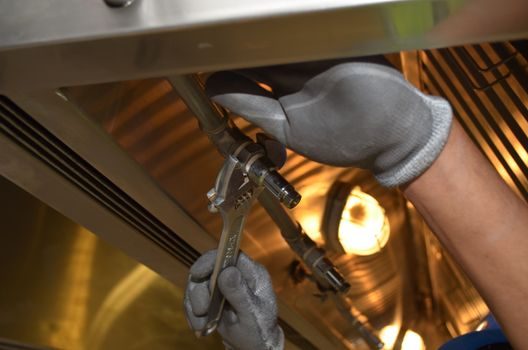
DZR brass to EN 12165 (CW602N or CW511N) is the default for HVAC potable-water duty; dezincification resistance matters when water stagnates overnight, which is exactly what a balancing loop does. Carbon steel ASTM A216 WCB with EPDM seats covers PN16/PN25 flanged units up to 120 °C. Stainless 316 trim is reserved for glycol, demin water, or chemical service. [S1]
End connections split by region: ISO 228/1 parallel thread (BSPP) or ISO 7/1 Rp taper (BSPT) for European HVAC, NPT for North America, flanged EN 1092-1 PN16/PN25 or ASME B16.5 Class 150 for DN50 and above. The reference VIR 9515/9516 ships with ISO 228/1 on DN15/DN20 and ISO 7/1 Rp above DN25, and offers an olive-and-nut kit for EN 1057 copper tube — note the standard number, this is the EN 1057 copper compatibility detail, not a flow rule [S1].
Pressure-temperature ratings need to match the valve body flange standard, not the pipe: a PN16 flange at 120 °C typically derates to PN13 in water service, while ASME Class 150 at 250 °F derates to about Class 125 — check the manufacturer's pressure-temperature chart before the spec sheet goes out for bid.
Procurement and sourcing signals to track
Directindustrial's 2026 supplier index lists 45 manufacturers with 108 products, with the heaviest cluster (Suzhou Delan, Taloar, HAWE Hydraulik, Schubert & Salzer, Siemens, Honeywell) concentrated in HVAC static and hydraulic counterbalance; fewer than ten brands offer DN80+ flanged dynamic units, which is where lead time stretches in 2026 [S1].
For an HVAC static balance order at DN15–DN50, expect 4–6 week lead time ex-China or 2–3 weeks ex-EU; for DN150 flanged dynamic, 10–14 weeks is typical, and the price gap between a Chinese PN16 cast-iron dynamic and a European stainless equivalent is roughly 2.5–3× on the same Kv class. The published ball valve and butterfly valve lines from the same Cangzhou cluster are not substitutes, but they do share foundry capacity, so a balancing valve order placed alongside a butterfly-valve order on the same mill slot usually pulls the delivery date forward by a week.
This topic is covered further in Masonry Rotary Hammer Selection: Chuck Class, Impact Energy, and Power Source.