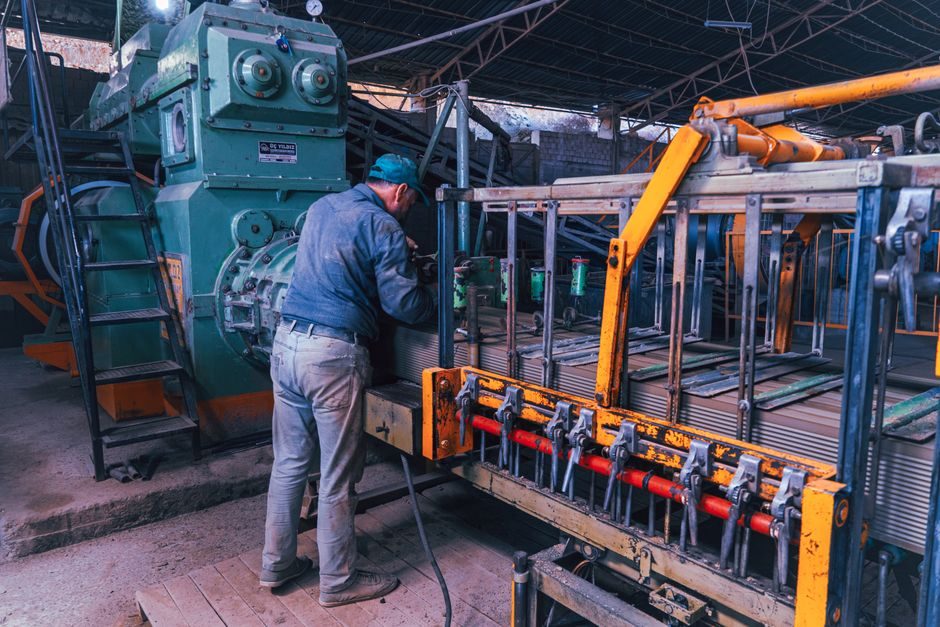
Baler selection is a feed-stock problem before it is a machine problem: a steel mill handling 20 t/h of No. 1 HMS scrap needs a horizontal automatic two-ram baler with a 1,200×1,000 mm chamber and a 200-400 ton main ram force, while a warehouse producing 2-3 t/day of OCC cardboard typically runs a vertical downstroke baler with a 1.0-1.5 m³ hopper and a 25-50 ton ram.
Drive Type and Architecture: Vertical, Horizontal Single-Ram, Two-Ram
Vertical balers use a single downstroke cylinder (typically 25-50 ton force) feeding a 0.8-2.5 m³ chamber, and they fit any site with under 3 t/day of plastic film, PET, or corrugated output; they are floor-loaded manually, run on 7.5-22 kW motors, and produce bales in the 80-300 kg range [S2].
Horizontal single-ram balers (sometimes called auto-tie channel balers) feed material via conveyor or airveyor into a 700×700 mm to 1,100×1,100 mm cross-section, deliver 300-800 kg bales, and handle 3-15 t/h of mixed paper, RDF feedstock, or light ferrous scrap [S2]. Two-ram balers split pre-compression and main compression across two cylinders — a 60-100 ton pre-press ram plus a 200-400 ton main ram — pushing throughput into the 15-40 t/h band that scrap yards and steel mills require [S2].
Throughput, Bale Density, and Hydraulic Pressure
Bale density in the 1.2-2.5 t/m³ range is the rule of thumb for ferrous scrap; achieving 2.0+ t/m³ on No. 1 HMS usually requires main ram pressures of 250-315 bar and specific ram force above 80 t/m² of chamber cross-section [S2]. For non-ferrous (aluminum UBC, copper swarf) the same hardware delivers 0.8-1.4 t/m³ because the material springs back; this is the most common source of buyer disappointment in spec sheets — the same machine, different material, very different density.
Motor sizing scales with cycle time: a 200-ton main ram on a 1,000×1,000 mm chamber at 250 bar draws roughly 75-110 kW for a 45-60 second cycle, and the duty motor on a CE-marked EU-spec unit is typically IP55 with IE3 efficiency per EU 2019/1781 motor rules (industry-standard for industrial hydraulic drives) [S2]. Chinese OEM data sheets for export units commonly publish cycle times in the 35-90 second window — if a vendor quotes under 30 seconds, ask for the empty-cycle number, not the loaded-cycle number.
Chamber Geometry, Bale Footprint, and Tie-Off Method
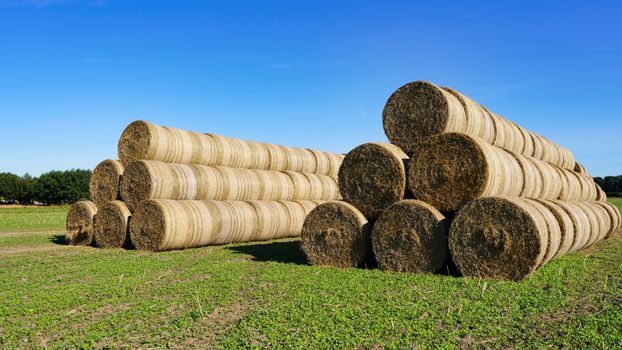
Bale cross-section drives truck loading density and downstream furnace charge weight: a 600×600 mm bale stacks poorly in a 40 ft container, while a 1,100×1,100 mm bale hits the 20-25 t payload mark that ocean-freight logistics optimise for. Chamber length is usually 1.0-2.4 m and locks the bale length; longer chambers raise bale weight but cap the throughput per ram stroke [S2].
Tie-off method is the other hidden spec: manual 4-point wire tie (Ø3.5-4.0 mm annealed wire) is the low-cost default and fits 4-8 t/h sites; automatic wire tie runs at 30-45 t/h and adds roughly 15-25% to machine price;PET strap tie is faster but only acceptable on low-density paper bales. The encyclopedia entry on coding machine principles explains why automated marking matters on every bale your site produces — traceability to shift and operator is increasingly required by ISRI-grade scrap buyers.
Material, Liner Plate, and Wear Life
Chamber liners take the real abuse: Q345B / ASTM A572 Gr.50 liner plates at 20-30 mm thickness are standard on export-grade Chinese balers, with Hardox 400 or NM400 (Brinell 360-430 HBW) offered as a paid upgrade where abrasive shredded scrap is fed; Hardox roughly doubles liner service life but adds 8-12% to machine cost [S2].
Hydraulic cylinders are usually 45# forged steel barrels with chrome-plated pistons (rod hardness HRC 55-60) running on NBR or PU seals rated to 315 bar continuous; Chinese OEM data sheets commonly publish 8,000-12,000 hour seal-replacement intervals on this build. For buyers comparing to a labeling machine line, the same NBR-vs-FKM seal discussion applies — FKM (Viton-class) extends fluid-temperature ceiling to 200°C but is rarely needed in a baler because the hydraulic oil rarely exceeds 60-70°C in steady state.
Automation, Safety, and Compliance
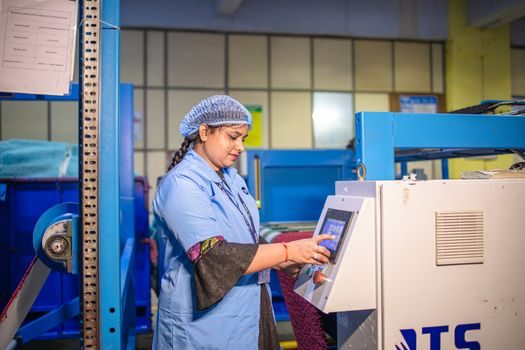
CE-marking plus EN 60204-1 electrical safety plus EN 953 guarding on the feed hopper is the baseline package any EU-bound buyer should require from a Chinese OEM; the better vendors offer ISO 9001 factory certification, participation in industry shows (ISRI, FABEX, Metal Expo), and documented 4,000+ global installations as commercial evidence [S2]. Lockout-tagout on the main ram, two-hand hold-to-run on the feed gate, and light-curtain interlocks on the conveyor infeed are not optional on any auto-tie horizontal baler — pinch-point injuries on the chamber door are the single most reported incident class on this equipment class.
PLC platforms split between Siemens S7-1200/1500 and Mitsubishi FX5U on export units; HMI is typically 7-10 inch colour touchscreen. Remote telemetry (4G/Modbus-TCP) is now standard on 2026 builds and lets the vendor push cycle-count-based maintenance alerts — useful for multi-site operators who would otherwise over- or under-servicing the hydraulic pack.
Comparison: Vertical vs Horizontal Single-Ram vs Two-Ram
Three criteria separate the three main architectures cleanly. On throughput, vertical delivers 0.5-3 t/h, horizontal single-ram delivers 3-15 t/h, and two-ram delivers 15-40 t/h [S2]. On bale weight out, vertical averages 80-300 kg, horizontal single-ram 300-800 kg, and two-ram 500-1,500 kg. On price band (FOB China, 2026), vertical sits at USD 6,000-25,000, horizontal single-ram at USD 45,000-180,000, and two-ram at USD 200,000-600,000 — these ranges align with the S2 vendor's published catalogue and are the most defensible brackets for a buyer shortlist. The vertical is the wrong pick above 3 t/day (operator fatigue becomes the bottleneck); the two-ram is the wrong pick below 10 t/day (capital payback stretches past 5 years even on steel-mill duty).
Selection Criteria, Sourcing, and Who Should NOT Buy What
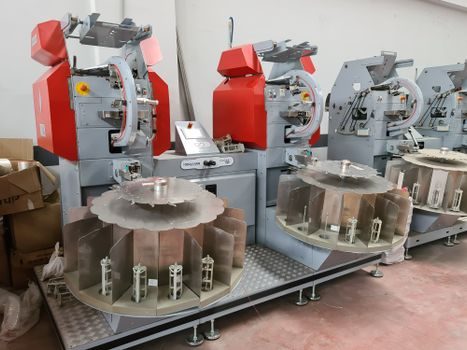
A defensible shortlist is built on five numeric gates: feed-stock type (ferrous / non-ferrous / paper / plastic), peak hourly throughput, target bale weight, available floor area (two-ram machines need 8-14 m of conveyor infeed plus 6-9 m of machine footprint), and three-phase power availability (two-ram balers above 200 ton typically need 250-400 kW at 400 V / 50 Hz, or 480 V / 60 Hz for North America) [S2].
Buyers who should NOT standardise on a horizontal two-ram include any site under 10 t/day of throughput, any site without a dedicated baling operator, and any site whose bale goes to a smelter that accepts only 1.0-1.2 t/m³ density — the extra ram force is wasted capex. Conversely, buyers who should NOT pick a vertical baler include any site with a continuous feed stream (conveyor out of a shredder or shear), any site shipping more than 2 truckloads of bales per day, and any site whose downstream furnace wants 1,000+ kg blocks. The same logic that makes a buyer pick a cutting machine over a shakeout machine applies here: match the duty cycle to the architecture, not the catalogue photo.
Track the following two signals in the second half of 2026: CE-RED/EMC compliance documentation revisions affecting hydraulic-machine export to the EU (vendor bulletins Q3-Q4 2026), and ISRI scrap-spec updates on bale wire count and contamination tolerance, both of which directly re-rank the tie-off and chamber-liner choices above. A related selection walkthrough on packaging-line machinery is published at How to choose a palletizer machine: spec map, axis count, and 2026 price bands for buyers stacking the baler into a downstream automation cell.