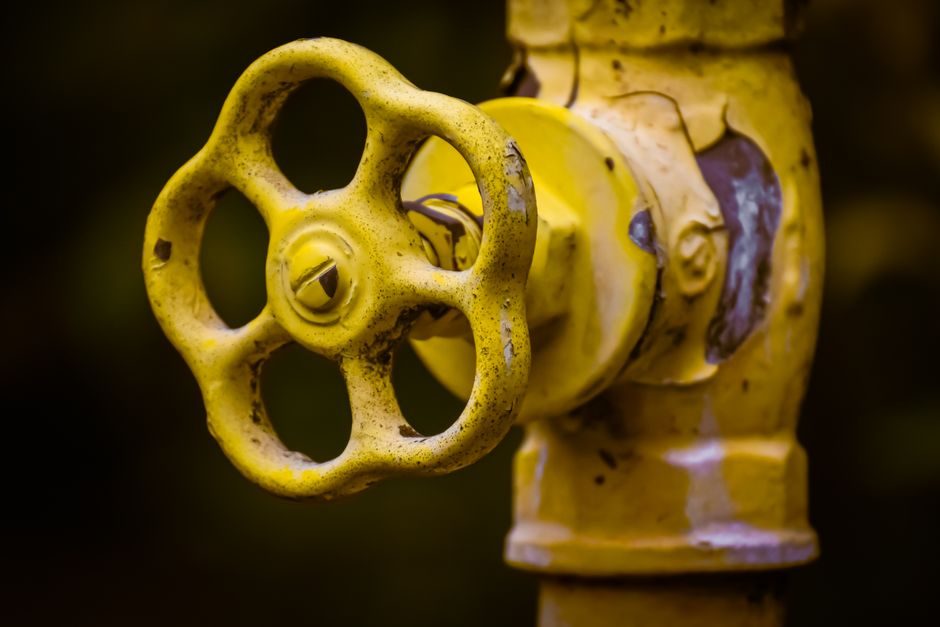
For a municipal or industrial wastewater train, the certification pass on a ball valve is decided by four documented layers: pressure equipment directive conformity, drinking-water safety where reuse exists, hazardous-area zoning, and material resistance to the specific effluent chemistry.
The working envelope typically falls between DN 10 mm and DN 80 mm for brass instrument-duty valves such as the OMAL ITEM 101 at 25-64 bar and -20 to 150 °C [S1], and stretches to ANSI 600 / 41.4 bar full-bore 3-piece bronze units such as the NIBCO S-595-Y-LF carrying NSF/ANSI 61 and NSF/ANSI 372 [S2]. On the high-pressure instrumentation side, stainless TB-series miniature valves reach 3,000 bar at -54 to 149 °C [S3], but those figures are not the envelope a WwTW spec runs to.
Mandatory EU pressure-equipment conformity (PED 2014/68/EU)
PED 2014/68/EU is the binding conformity route for any ball valve sold into a pressurised European wastewater line above the DN×PS threshold in the directive's category tables [S1]. For fluids classified in Article 13 Group 2 (which includes most wastewater service), the notified-body requirement is set by the size-and-pressure chart in Annex II, and a manufacturer's Declaration of Conformity plus the CE mark on the body are the minimum audit evidence.
A common rejection point is the thread-end standard: the OMAL ITEM 101 ships with EN 10226-1 Rp (Ex ISO 7/1) taper threads as standard, with NPT available only "on request" [S1]. A spec that quietly assumes NPT and receives Rp threads will not assemble to ANSI B16.11 or ASME B1.20.1 mating components, so the thread code must be an explicit PO line, not a footnote. The ISO 5211 mounting pad on the same valve is the datum for any electric ball valve or pneumatic actuator that goes on top, and it should be cross-checked against the actuator supplier's coupling datasheet before purchase.
Potable-water and reuse cross-connection (NSF/ANSI 61, NSF/ANSI 372, WRAS)
NSF/ANSI 61 governs metallic leaching into water intended for human consumption, and NSF/ANSI 372 caps the lead content of wetted surfaces at 0.25 % weighted average; both are required on the NIBCO S-595-Y-LF three-piece lead-free DZR silicon-bronze body [S2]. Where the same WwTW discharges to a reclaimed-water network feeding buildings, dual NSF/ANSI 61 plus NSF/ANSI 372 marking on the body is the audit-evidence level expected.
WRAS in the UK or DVGW W270 in Germany is the equivalent on the European side and is the cert most often missed on China-sourced product. UPVC and PP bodies aimed at agricultural and irrigation reuse, such as the PP and UPVC product lines from Indian and Chinese suppliers [S5][S6], generally do NOT carry NSF/ANSI 61 — they target water, air, oils and corrosive chemicals at ambient duty, not NSF-grade drinking water. Putting one of those on a reclaimed-water main is a documented non-conformance in a municipal audit; the spec must call NSF/ANSI 61 explicitly when reuse is the use case.
Hazardous-area zoning (ATEX 2014/34/EU) and ignition risk

Any ball valve in a zone where methane from digester gas, sludge gas, or solvent vapours can reach the LEL must be supplied as an ATEX 2014/34/EU marked variant or fitted with an ATEX-certified actuator package. The OMAL ITEM 101 datasheet lists "ATEX version in conformity with directive 2014/34/EU on request" [S1] — note the "on request", which means it is NOT on the standard build sheet and must be written into the order code, otherwise the unit arrives with the standard brass build and no Ex marking.
The FESTO VZBF is the contrasting case: the manufacturer datasheet states ATEX as a body characteristic in the standard catalogue entry, plus a "double-flange, 2-piece, in-line, rugged, chemical-resistant" body option for chemical-industry duty [S4]. Anti-static device and blowout-proof stem are the two mechanical features that close the residual ignition risk on a wastewater fuel-gas or digester-gas let-down — both are listed as standard on the Bray Series S85 [S9] and on the API 6D/API 608 forged two-piece products in the same category [S10]. For any electric ball valve fitted in Zone 1, the actuator's own Ex d or Ex e certificate (typically IEC 60079-1 or IEC 60079-7) must be named on the same nameplate and traceable to the same notified body.
Material and lining selection against the effluent chemistry
The four body-material families on the working supplier shortlist each carry a different corrosion envelope. Brass (the OMAL ITEM 101 build) [S1] is acceptable on clean water and petroleum products but is attacked by ammonia-bearing sludge and high-sulphide digesters; DZR brass (NIBCO S-595-Y-LF) [S2] extends life in dezincification-prone potable service but still fails in strong acid or chloride. Austenitic stainless (the Watts TB series at up to 3,000 bar and the FESTO VZBF chemical-resistant option) [S3][S4] handles the broadest effluent range including chlorides when 316L is specified.
UPVC and PP bodies [S6] are the right pick for sodium-hypochlorite dosing, ferric-chloride flocculant lines, and dilute acid or alkali where metals pit, with the published duty envelope covering water, air, oils and corrosive chemical liquids. PTFE seats are the most common soft-seat material in the 2-piece and 3-piece forged product class [S2][S10], with reinforced PTFE and PPL listed as the higher-temperature options on forged 2-piece builds to API 6D and API 608 [S10]. A spec that calls for "ball valve, stainless" without naming the seat, the body cast vs forged, and the seat temperature rating has left three independent failure modes unclosed.
Design standards: API 6D, API 608, ANSI B16.34, MSS SP-110, EN 12255
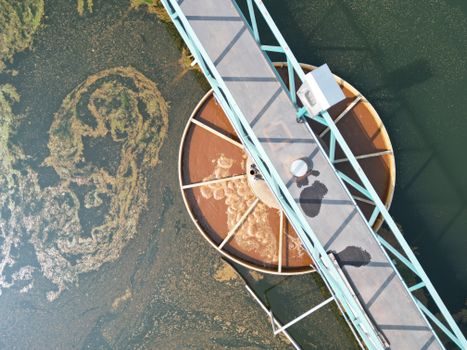
The design-and-test layer for the wastewater specifier most often reads API 6D for pipeline valves (face-to-face per ANSI B16.10 or API 6D, end flanges to ANSI B16.5) and API 608 for compact ball valves, with ANSI B16.34 as the pressure-temperature reference [S10]. For 3-piece solder-end lead-free bronze, MSS SP-110 is the governing performance standard and is the standard the NIBCO S-595-Y-LF is built to [S2]. Threaded-end 2-piece carbon-steel and stainless units to API 6D/API 608 with ISO 5211 actuator mounting, as listed on the Okorder 2-piece forged line [S10], are the workhorse for buried and above-ground WwTW service.
For municipal wastewater treatment works specifically, EN 12255-1 is the European standard that lays down the general requirements for WwTW construction, and it is the umbrella under which valve selection is made. Suppliers holding API 6A wellhead certification, such as Oviko's trunnion ball-valve line [S8], are an indicator of an audited casting-and-test discipline that over-qualifies for WwTW service, but API 6A is a wellhead standard and is NOT a substitute for EN 12255-1 on a municipal wastewater train. Dafram's "certified quality" listing [S7] and similar EU-Italy ball-valve makers publish downloadable reference-and-authorisation packs that should be requested at the RFQ stage, not after PO.
Documentation discipline: what an auditor will physically check
Every line item on the purchase order must be traceable to four paper artefacts: the PED Declaration of Conformity with the notified-body four-digit number, the ATEX EU Type-Examination certificate when the line is zoned, the NSF/ANSI 61 + 372 certificates when the line touches potable or reuse, and the material certificate to EN 10204 3.1 for body and ball [S1][S2]. A typical 2-piece forged line carries "ISO, CE, API" mark-pack [S10]; the auditor reads the certificate numbers back to the issuing body's public register before signing off the lot.
Anti-static device, blowout-proof stem, ISO 5211 mounting pad, full-port vs reduced-port decision, and seat material are the five mechanical items that must appear on the same datasheet page as the certification block, or they will not be checked [S9][S10]. For higher-pressure or polymer service, the spec should also call out the seat temperature limit, since PTFE variants derate sharply above 180 °C and PPL derates above 250 °C, both of which sit inside the envelope of a sludge-digester hot-tap or a thermal-hydrolysis-feed line.
Failure modes that block site acceptance
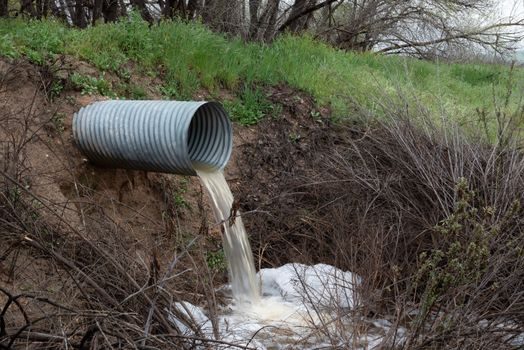
Five patterns account for most site-acceptance rejections: missing PED file, ATEX ordered as standard instead of "on request" so the unit arrives non-Ex, Rp threads supplied where NPT was specified, soft-seat material not named so an RPTFE upgrade is refused, and NSF/ANSI 61 absent on a reuse line. Each of these is closed by an explicit PO line; none is closed by a generic "supplier to comply with all applicable standards" clause. [S10]
A second-tier pattern is the ISO 5211 pad supplied without an actuator or with a misaligned coupling kit, leaving the valve inoperable until a third-party mount is fabricated. The fix is to call the pad size and the actuator supplier's model on the same PO line, and to confirm the ball valve datasheet shows the pad pattern in the catalogue rather than only on request.
Trackable signals to watch in the next procurement cycle: EN 12255 revision status for any tightening of corrosion-alloy content, expansion of the Oviko and other Asian makers into API 6D + EN 12255 dual-marked product [S8], and notified-body migration patterns on PED certificates for Chinese OEM brass. Reference documentation on European makers' sites, such as Dafram's references-and-authorisations pack [S7], is the fastest cross-check a specifier can run without leaving the desk.
For component-level specifications, see heat treatment furnace.
Background reading: Radar vs Laser Level Transmitters: Spec-First Selection Map.