A banded V-belt combines 2 to 8 V-belt sections under one tie-band backing, controlling rollover and load imbalance on shock-loaded drives [S1].
Individual V-belts suit steady, light-duty drives with aligned sheaves, while banded construction targets pulsating torque, long centres, vibration and high starting load [S2][S3].
Decision Basis: Load Character and Drive Geometry
A joined belt is the stronger choice when load torque varies sharply, individual belts can turn over in their grooves, or the drive centre distance makes whip and resonance troublesome [S1][S2]. Its lateral restraint keeps adjacent sections aligned, while the common backing promotes more even engagement and load sharing [S2][S7].
Individual V-belts remain the more versatile and most commonly stocked option. A V-belt selection is based on transmitted power, peak torque, sheave diameter, centre distance and operating environment, not simply on the number of belts required [S4].
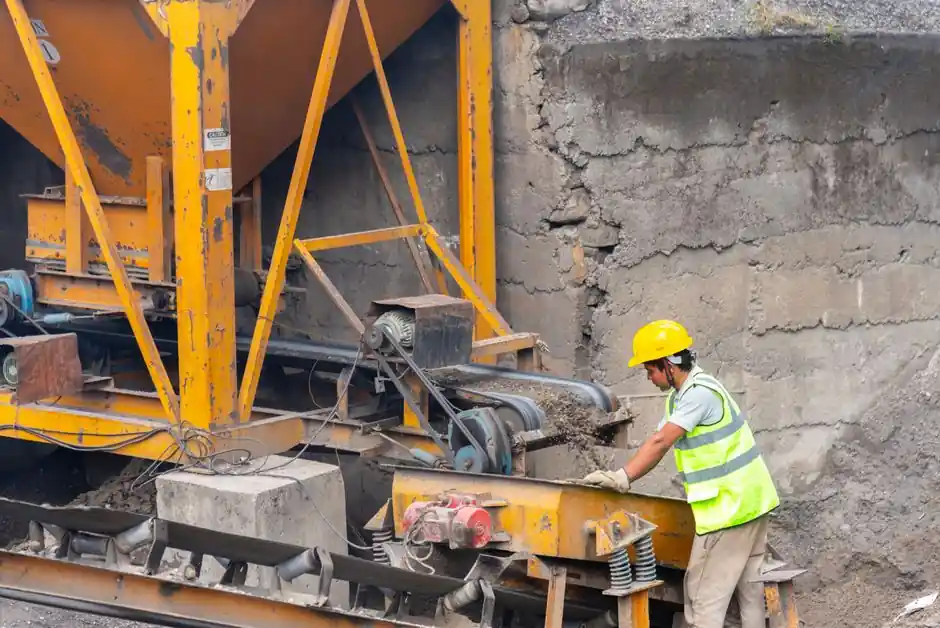
These machines combine high starting torque, pulsating compressor torque or abrupt shock input with a practical need to limit vibration and belt movement [S1][S4].
How the Joined Backing Changes Failure Behaviour
On a multi-belt drive, small length or tension differences can leave one belt carrying disproportionate load, producing uneven wear and premature failure [S1]. The joined construction keeps the sections together and helps maintain equal tension and alignment, reducing rollover, turnover and jumping from sheave grooves [S1][S8].
The joined design also resists whip, particularly on long-centre or pulsating drives, and reduces the tendency for individual belts to move at different speeds [S2][S3]. The practical result is smoother power transfer, less vibration and reduced wear on the belts and sheaves [S2].
The tie band does not make an undersized drive adequate. Section, sheave size, horsepower and rotational speed still determine whether the selected profile can carry the load [S2]. A banded belt can distribute a transient more evenly across its cords, but it cannot remove an existing horsepower, wrap-angle or speed mismatch [S2].
Band Count, Section and Construction
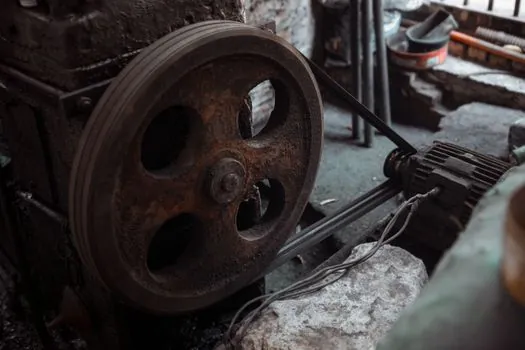
Published construction options include classical A, B, C and D sections and narrow 3V, 5V and 8V sections. Available band counts run from 2 to 8, with lengths from 1000 mm to more than 5000 mm, depending on the product [S1].
Designation examples make the count explicit: 2/A denotes two A-section belts, 3/B three B-section belts, 4/C four C-section belts and 5/5V five narrow 5V belts [S1]. Classical belts are generally identified as A through E, narrow wedge belts as 3V, 5V and 8V, and cogged belts use AX, BX, CX, 3VX and 5VX designations [S4].
One documented construction range uses CR, EPDM or NR rubber compounds with polyester or aramid cord reinforcement, in wrapped or raw-edge forms with tie-band backing. The stated temperature range is -30°C to +80°C, with ISO 4184 and RMA IP-22 cited as applicable belt standards [S1]. Compound and temperature suitability must still be checked against the actual drive environment.
Cost, Inventory and Replacement Trade-Offs
Banded belts generally cost more as a purchased assembly, but one banded unit replaces several separately installed belts and avoids individual length matching at installation [S1][S3]. They are normally replaced as one unit, whereas an individual belt in a multi-belt set can be replaced separately [S1]. That operating convenience can offset a higher initial purchase price where vibration or turnover has caused repeated failures.
Individual V-belts are the more versatile and most commonly stocked option. Five single belts of the correct profile and length can cover either a 3-band or 5-band configuration, whereas the two banded assemblies are not interchangeable [S3]. A practical service stock can therefore hold a common set of single belts and use them to assemble matched drives for selected machines.
Matching remains a quality-control issue. Industry discussion records a two-belt A-section example priced at about US$3.60 per individual belt, compared with about US$300 for a special-order banded belt with a reported six-week lead time [S5]. That is an illustrative replacement case, not a universal price, but it demonstrates the inventory effect.
Installation, Tensioning and Inspection
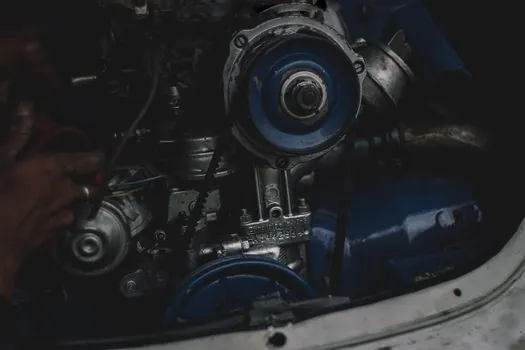
A banded belt replaces multiple separate belts and requires installation and tensioning as one unit [S1]. Correct alignment and tension remain essential because the construction controls belt-to-belt movement but does not correct a crooked sheave axis or an unsuitable tension setting [S2]. A tensioning component such as a belt tensioner must be selected for the actual belt arrangement and available travel.
For individual belts, check that every belt has the same length, load rating and operating history. Loose or mismatched belts can slip at different rates and create heat, vibration and uneven wear [S2]. Matched sets improve consistency, but they still lack the lateral restraint of a common backing [S3][S5].
Inspect drives for cracking, glazing, uneven wear and abnormal noise [S2]. Replace a banded assembly as a unit when wear reaches the replacement limit. If individual belts are used, inspect all strands rather than replacing only the visibly failed one, because the surviving belt may have operated at a different tension [S1].
Application-Based Selection Rule
For pulsating torque, shock loading, long centres, high vibration or repeated rollover, specify a banded V-belt with the correct section, band count, sheave size and rated power [S1][S2][S3]. For steady light-duty service, short centres and maintenance situations demanding low cost or universal spare-part coverage, use individual matched V-belts and accept the higher risk of differential movement [S3].
The explicit comparison is stability versus availability: joined construction supplies lateral restraint and integrated load sharing, while individual belts supply lower purchase cost, flexible stock and component-level replacement [S1][S3]. On a mining screen or reciprocating compressor, stability usually governs; on a small fan with stable torque and a common belt inventory, availability may govern.
Record the failure mode before changing construction. Chattering, rollover or heat in one strand supports a joined belt or individual tensioning correction; normal operation with only a damaged spare supports an individual matched set. This separates a design defect from an inventory convenience decision [S5].
Specify the drive profile, sheave diameters, centre distance, peak torque, duty cycle, ambient temperature and observed failure mode, then compare the calculated power requirement with the manufacturer’s banded or individual-belt rating before ordering [S2][S4].