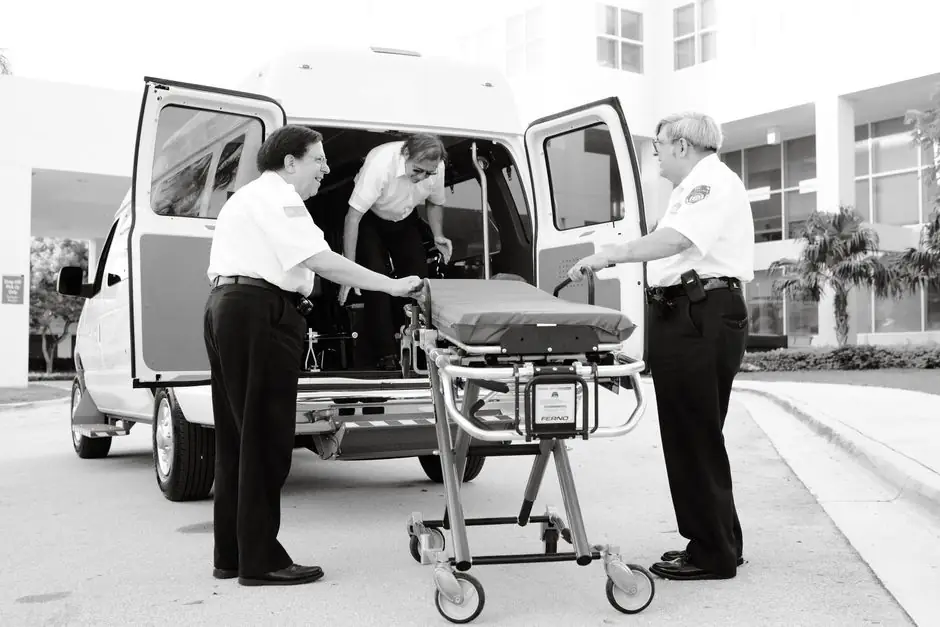
A basket stretcher and a scoop stretcher solve different problems on a confined-space job, and confusing the two costs time at the point of injury [S1]. Basket (rigid litter) designs are built for vertical lift, rough terrain, and water retrieval; scoop (split-blade) designs are built to package a patient with suspected spinal injury while minimising movement [S2][S3].
Both fall under the broader category covered in the emergency rescue reference, but the engineering trade-off is real: a 2,500 lb HDPE basket cannot be slid sideways under a casualty in a 60 cm manway, and a 350 lb scoop cannot be safely hoisted on a vertical line [S3].
Where Each Design Actually Fits
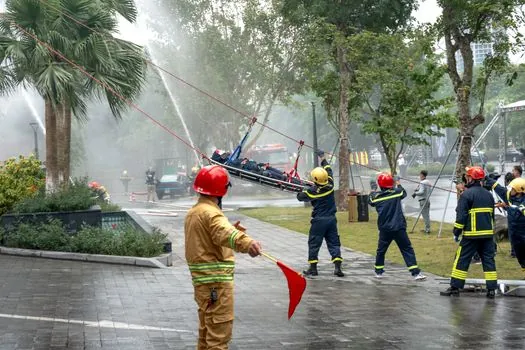
Basket stretchers with HDPE shells are rated to handle up to 2,500 lb (1,134 kg) and ship with multiple rope attachment points, which is what makes them the default pick for cliff, high-angle, and helicopter hoist work [S3]. The same rigid shell that survives a 30 m vertical lift is the reason they are also the go-to for water rescue, including the dedicated D90-style basket built to recover a drowning victim without rotating the body [S1].
Scoop stretchers are designed to eliminate the log-roll: the two blades split longitudinally, close around the patient from each side, and lock at head and foot, so a responder can package a suspected spinal case in the same position found [S4]. That geometry sets a hard limit on patient access: you need roughly the body-width-plus-clearance of space along the casualty's long axis to deploy the blades, and you need a horizontal surface or near-horizontal surface to do it on [S5].
Load Rating, Weight, and the Real Numbers
Basket litter capacity sits in the 2,000 to 2,500 lb band for technical-rescue HDPE shells, with lower ratings on aluminium utility models; this is the reason the basket is the only one of the two that is routinely rated for two-patient or bariatric-plus-gear lifts in technical rescue kits [S3]. Scoop stretchers land in the 350 to 500 lb working-load band, which is fine for a single adult casualty plus immobilisation straps but is not a hoist-rated device [S3].
On the deployment side, scoop stretchers run roughly 8 to 10 kg for an aluminium model, and basket stretchers run 12 to 18 kg empty depending on shell material and whether flotation is built in; both can be carried in a confined-space trailer, but the basket typically needs more stowage volume [S3]. Pricing follows the same pattern: scoop stretchers commonly sit under $500, basic folding stretchers under $200, while technical-rescue baskets with full rigging kits run well past the entry-level EMS pricing band and into the $1,000 to $2,000+ range for powered or titanium-equipped systems [S3].
Decision Matrix: Basket, Scoop, or Both
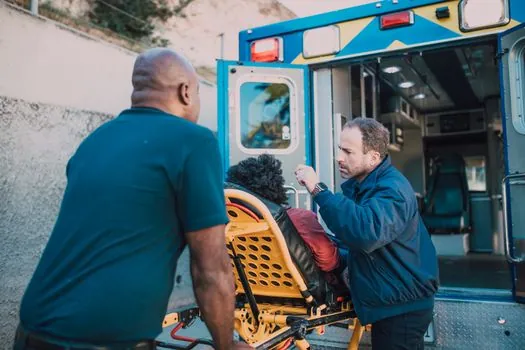
Across the four criteria that actually drive confined-space specification, the comparison is clean enough to put in a procurement memo:
1) Hoist capability: basket = yes, with dedicated rope-attach points and tested vertical-lift geometry; scoop = no, the split-blade joint is not a lifting bridle and the rating does not cover dynamic loads [S3][S4].
2) Spinal-injury packaging: scoop = designed for it, closes around the casualty without log-roll; basket = patient must already be immobilised on a long board or vacuum mattress before being loaded into the shell [S4][S6].
3) Lateral access in narrow manways: scoop = can be deployed from the side in tight spaces, no full-body roll required; basket = needs a roughly 2 m x 0.6 m clear envelope to load the casualty horizontally [S5][S6].
4) Terrain and environmental abuse: basket = HDPE shell, rope-attach points, rated for technical-rescue abrasion and water; scoop = aluminium and polymer, built for pavement and smooth-floor EMS, not for repeated contact with rock or concrete [S3][S7].
For a single-device kit, the rule of thumb in the trade is straightforward: if the top foreseeable scenario is a non-ambulatory casualty at the bottom of a vertical entry with suspected trauma, the basket stretcher is the primary and the scoop is added as a packaging tool. If the top scenario is a horizontal or low-angle retrieval in a tight industrial space where spinal precautions dominate, the scoop carries the package and the basket becomes the secondary extraction device [S1][S6].
Packaging Sequence That Actually Works on Site
The 2026 consensus sequence in confined-space rescue training is scoop-first, basket-second when a spinal injury is suspected: package the patient on the scoop, secure with a full set of straps, then load the scoop with patient into a basket for the vertical or rough-terrain lift [S6][S7]. This is the only sequence that lets one team immobilise in the hole and a second team execute the lift on the surface without re-handling the casualty.
Where spinal injury is not suspected and the casualty is reachable from above on a casualty-line, the basket goes in directly with the patient rolled or self-rescued into the shell, secured with the internal restraint system, and lifted on a matched rigging kit [S1][S3]. Trying to scoop-package a casualty in a manway that does not allow the blades to clear each other is the most common documented misuse of the device, and it is the misuse that turns a 5-minute package into a 25-minute improvisation [S5][S6].
Standards and Sourcing Reality
There is no single harmonised standard that names a "basket stretcher" or "scoop stretcher" the way ATEX 2014/34/EU names equipment for explosive atmospheres; instead, the devices are typically specified against a basket of consensus references including CEN/TS 17776 for rescue equipment, manufacturer load-test certification, and the rigging components (descenders, carabiners, anchor slings) carrying their own EN ratings [S1]. A buyer who needs a defensible specification should request the manufacturer's individual load-test certificate, the EN rating on every connector in the rigging kit, and a documented annual inspection regime.
On supplier selection, the practical signal is breadth of the rigging kit: a basket stretcher sold as part of a confined-space package that includes the bridle, descent device, and matching anchor sling is a meaningfully different procurement than a bare shell sold as a stretcher [S1]. The same logic applies to the scoop: a scoop sold with a full strap set, head blocks, and a dedicated carry sheet is operationally a different tool from a bare split-blade frame [S4][S7].
For a plant or utility that maintains its own confined-space rescue team, the working inventory is one basket per entry team, one scoop per entry team, and enough compatible rigging to lift the loaded basket from every certified anchor point on site [S1][S3]. The basket handles the lift, the scoop handles the package, and the rigging kit is the part that ties both to the fall-protection/anchor inventory covered in the industrial valve and stretcher reference pages that anchor this topic in the broader plant-safety spec stack.
Track two signals through the rest of 2026: any new CEN/TS revision that re-names the basket-stretcher load-test methodology, and any manufacturer release of a basket with a built-in integrated flotation collar that meets the ISO 12402-style buoyancy test without a bolt-on collar, because that closes the last spec gap between technical-rescue and water-rescue baskets [S1][S3].
For related coverage, see Discrete Event Simulation for Line Balancing and Throughput: A 2026 Process-Engineer Read.