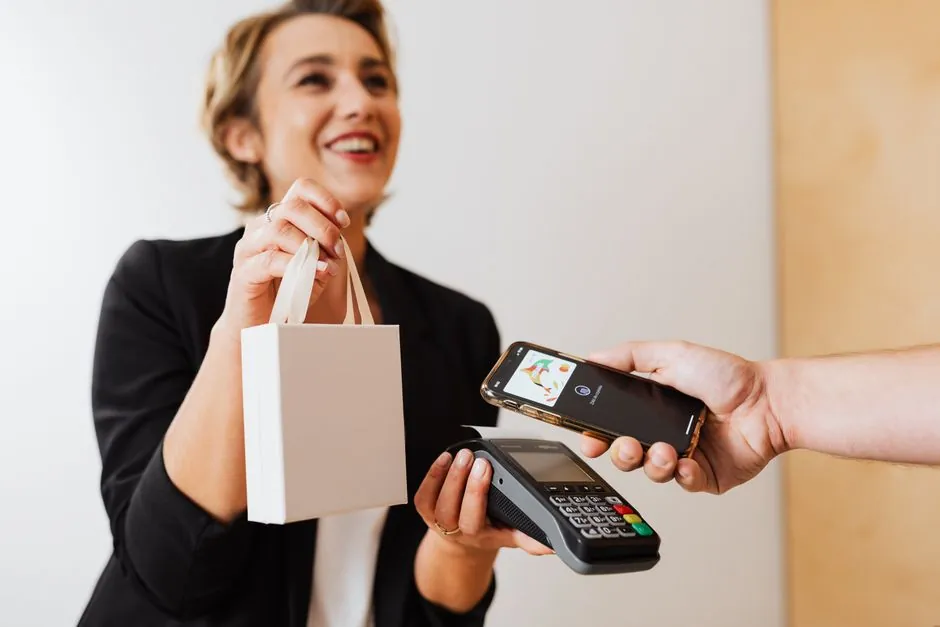
Mobile credentials leverage smartphone-resident secure elements, encrypted NFC (13.56 MHz) or Bluetooth Low Energy (2.4 GHz) radios, and biometric unlock to deliver multi-factor authentication, while smart cards rely on ISO/IEC 14443 or 125 kHz contactless interfaces and on-card cryptographic chips for tamper-resistant identity storage [S1][S2].
Both credential types can reach high assurance, but they fail in different modes: smart cards degrade through physical wear and cloning attempts, whereas mobile credentials collapse when the phone battery dies, the OS is outdated, or a legacy 125 kHz prox reader is still in the wall [S2][S5].
Credential architecture and encryption model
Smart cards embed a credential inside a tamper-resistant microcontroller and present it over a contactless RF link. Mobile credentials move that same identity into a smartphone's secure element or SE-backed wallet, then transmit it via NFC at 13.56 MHz or BLE at 2.4 GHz to a compatible reader [S1][S3]. End-to-end encryption of the over-the-air payload is now standard: Tapkey states that all communication within the credential cloud is encrypted end-to-end, and Avigilon notes that most mobile devices already encrypt wireless traffic before the credential layer is added [S1][S4]. Because the credential is bound to a single device ID plus a PIN or biometric, cloning a phone-based credential is materially harder than copying a 125 kHz prox card, which is essentially a coil and a chip that broadcasts a fixed ID [S3].
On the smart card side, the security baseline is well understood: a contact or contactless smart card (typically ISO/IEC 14443 Type A/B at 13.56 MHz) runs a cryptographic challenge-response against the reader, so a captured RF trace cannot be replayed. The classic 125 kHz HID prox card, by contrast, emits a static facility code plus card number and is widely considered clonable with a $30 writer, which is why rf IDEAS and other vendors position 13.56 MHz smart cards as the secure floor for new installations [S2][S3].
Authentication factors: who actually verifies the user
Smart cards verify only the token, not the person holding it, unless the system is paired with a separate PIN pad or biometric reader. Mobile credentials inherit the phone's biometric stack, fingerprint or face unlock, before the credential is even presented, so a stolen unlocked phone still requires the same gesture to open a door that it needed to wake the screen [S1][S6]. Wired Note Music's 2026-02-12 guidance frames this as a structural advantage: smartphones offer stronger security through biometric authentication that keycards cannot replicate without an additional reader [S6].
Sharry's 2022 key-facts list makes the bound-to-device property explicit: every smartphone holds a trusted ID number that is encrypted, is securely linked to that device only, and cannot be cloned easily [S7]. The practical flip side is that the credential is only as strong as the phone's lock screen: a phone with no PIN, no biometric, and an open OS exposes the credential to anyone who picks the device up, which is the same failure mode as an unwritten prox card left on a desk.
Provisioning, revocation, and lifecycle control
Cloud-based mobile credential platforms let an administrator issue, amend, or revoke a credential from any browser, with changes propagating to readers the next time the phone comes into BLE or NFC range. Avigilon's 2023 guide describes this as the core operational benefit: if an employee leaves their role or a tenant vacates the property, mobile credentials can be deactivated instantly to minimize security risks [S1]. Smart cards require physical collection or, at best, a blacklist entry that a 125 kHz reader may not even honor, and reissuing a card costs the price of the card plus the labor to encode and ship it [S2][S5].
Avigilon's reference deployment model also matches how onboarding works in the field: the access control system emails the user a link, the phone downloads a virtual "box of cards" (priced around $6.50 each per the IPVM 2025-09-10 thread), and the user adds the credential to Apple Wallet, Google Wallet, or a vendor app without touching a card printer [S1][S3]. For a 500-person site rotating 15-20% of staff annually, that delta alone changes the cost calculus.
Hardware constraints: readers, batteries, and radio coverage
The headline problem with mobile credentials is not cryptography, it is the reader swap. A modern multi-tech reader that reads legacy 125 kHz prox, 13.56 MHz smart card, BLE, and NFC costs roughly $160 more per door than a single-protocol prox reader, according to the September 2025 IPVM discussion, and integrators routinely find 10-15 year old readers still in service that show no sign of failing [S3]. Until those readers turn over, mobile credentials have to coexist with the installed base, which is one reason the "wallet case" hack, hiding a prox card inside a $35 phone case, has any market at all [S3].
The second hardware constraint is power. A 125 kHz prox card or a 13.56 MHz smart card has no battery and will open a door after sitting in a wallet for three years. A mobile credential is a function of a device that needs to be charged, and a depleted smartphone is useless without a nearby charging station, as IDZone's 2022 comparison puts it, and may leave a person trapped outside the building [S5]. For data centers, hospitals, and other sites where the credential must work during a power outage on a UPS-backed door, this is a real specification point, not a hypothetical.
Comparison: smart card vs mobile credential on four decision criteria

Side-by-side on the criteria that actually drive a spec:
1. Authentication factors. Smart card: token only (something you have), needs a separate reader for PIN or biometric. Mobile credential: token plus the phone's biometric or PIN, so a lost unlocked phone still needs the user's face or finger to present the credential [S1][S6].
2. Anti-tamper / anti-clone. Smart card: 13.56 MHz cryptographic challenge-response is robust; 125 kHz prox is clonable. Mobile credential: encrypted SE-bound ID, claimed to be non-clonable in practice, but only as strong as the host device's lock policy [S4][S7].
3. Lifecycle cost. Smart card: per-card media cost, encoding labor, and physical collection on offboarding. Mobile credential: zero media cost, instant remote revoke, but per-door reader upgrade of roughly $160 and a per-credential virtual card cost near $6.50 [S3].
4. Failure modes. Smart card: card lost, worn, or demagnetized; reader fails closed. Mobile credential: phone battery dead, OS version unsupported, user upgrades handset and forgets to re-enroll, or site has no compatible reader yet [S3][S5].
Where each credential is the right call
Smart cards remain the right spec for high-security government or PIV environments where FIPS 201-compliant cards are mandated, for cleanrooms and ESD-sensitive areas where a personal phone is forbidden, and for any door on a legacy 125 kHz prox system that has not been budgeted for a reader replacement cycle [S2]. Mobile credentials fit multi-tenant offices, coworking spaces, residential buildings, and university campuses where the user population churns fast and remote provisioning pays for the reader upgrade within 12-24 months, which is also the deployment model Avigilon's guide and rf IDEAS's 2026-05-20 post both lead with [S1][S2].
For industrial sites, the hybrid is common: smart card for production floor doors tied into the smart camera and access control backbone, mobile credential for office doors and visitor management. The same operator that runs an AGV robot fleet in the warehouse does not want a phone on the forklift, but does want tap-to-enter for the engineering office above the floor.
Limits, standards, and what to verify before you spec
Three hard limits show up repeatedly in the source material. First, mobile credentials do not work on a 125 kHz prox reader without either a multi-tech reader swap or a wallet-case workaround, and neither is invisible to the budget [S3]. Second, a phone with a dead battery is the credential equivalent of a missing card, so mission-critical doors need either a fallback reader policy or a stated "no mobile-only" rule [S5]. Third, the credential inherits the phone's OS lifecycle: when Apple or Google deprecates an API, the credential app must be re-certified, and vendors that look healthy in 2026 may not survive a 2028 platform shift, which is why rf IDEAS's 2026-05-20 post also lists FIDO passkeys as the third leg of the stool alongside smart cards and mobile [S2].
For standards, treat the following as the floor rather than the ceiling: ISO/IEC 14443 for 13.56 MHz contactless smart cards, ISO/IEC 15693 for vicinity cards, ISO/IEC 27001:2013 for the credential-issuing organization's information security management (cited by IDZone for mobile credential platforms), and FIDO2/WebAuthn if passkeys enter the picture [S5]. Any vendor that cannot point to a current certification against the standard governing the credential you are buying should be treated as unverified. The same spec discipline that drives a mobile crane selection, documented duty cycle, named standards, and a fallback plan, applies one-to-one to access control credentials.
Trackable next nodes: rf IDEAS's 2026-05-20 framing of smart card, mobile credential, and FIDO passkey as a three-way decision rather than a two-way race, and IPVM's September 2025 observation that the 10-15 year reader turnover window is the real throttle on mobile adoption [S2][S3]. If either of those shifts, the security comparison shifts with it.
Background reading: HART vs Foundation Fieldbus for Smart Valve Positioners: Protocol-Level Decision Guide.