
Bearing makers are running Industry 4.0 rollouts at the same time that two end markets are restructuring their demand: the global ball bearing market is projected to grow from USD 21.63 billion in 2025 to USD 31.69 billion by 2035, a 3.89% CAGR through 2035, while the linear motion bearing segment is tracking from USD 9.21 billion in 2025 to USD 16.22 billion by 2035 at a 5.82% CAGR [S2][S1].
The driver is not generic "digital transformation" but four measurable shifts on the shop floor: AI/ML-based process control, in-line condition monitoring, electrified drivetrain bearing specs, and counterfeit screening. Each of these is reshaping the spec sheets a process engineer sees in 2026 [S3].
Where Industry 4.0 Actually Lands in a Bearing Plant
AI and machine-learning modules now sit on grinding, superfinishing, and assembly cells, where they correct surface roughness and raceway geometry in near real time [S3]. Robotics handles loading of ball bearing rings and dynamic balancing, while vision systems screen surface defects that humans miss at cycle times above 60 parts per minute.
For linear systems, the same stack extends to pick-and-place stages feeding linear guides, actuators, and recirculating units. The U.S. CHIPS and Science Act allocated USD 52.7 billion for domestic semiconductor manufacturing, and fabs are direct downstream consumers: wafer handling robots, lithography stages, and inspection tools all spec linear bearing assemblies with sub-micron repeatability [S1]. Asia-Pacific is the fastest-growing region for ball bearings, while North America holds the largest installed base, and that geographic split determines where new condition-monitoring revenue will appear first [S2].
EV Drivetrain Is Rewriting the Bearing Spec
Electric drivetrains spin faster, deliver instant torque, and inject stray currents into bearing housings, so a 2026 EV spec sheet routinely calls for ceramic rolling elements, electrically insulated coatings, advanced lubricants, and precision sealing, not the deep-groove steel pair a 2018 ICE axle would have accepted [S3].
The trade-off is real. Silicon nitride hybrid ceramic bearing sets are now a "significant segment" in aerospace and high-frequency applications, and the same material is migrating down into premium EV programmes [S2]. Buyers should expect unit prices 2-4x higher than equivalent steel units and longer lead times, but the offset is higher rpm ceilings, lower no-load losses, and immunity to micro-arcing on the raceway.
Predictive Maintenance Is Reshaping the Aftermarket
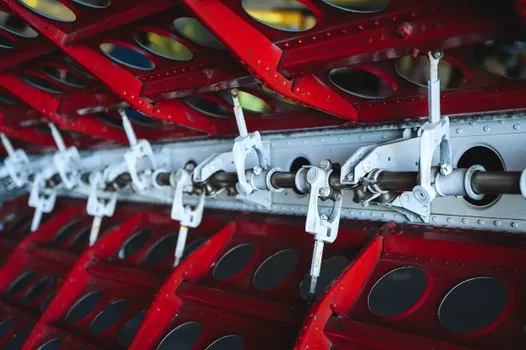
Bearings are wear components, so the replacement market is structurally resilient, but the spec inside that replacement is changing: integrated vibration and temperature sensors, plus edge gateways that stream to plant historians [S3].
For a spec-first engineer, the 2026 decision is no longer "sealed vs open" but "smart vs passive." Smart units feed condition-monitoring platforms and let a wind turbine or steel mill run to actual wear limit instead of a calendar interval. The same data path also lets OEMs detect counterfeit and substandard product flowing in through unorganised distribution, a problem the industry still flags as serious [S3]. For a maintenance planner handling conveyor lines, the selection logic for housed units is detailed in Pillow Block Bearing Selection for Material Handling Lines, and steel-mill duty is covered separately in Pillow Block Bearing Selection for Steel Mills: A 2026 Spec-First Field Guide.
Linear vs Ball vs Roller vs Thrust: A Criteria Comparison
For a 2026 spec-first selection, four bearing families dominate the buying sheet, and they line up against different decision criteria. Linear bearings (5.82% CAGR to 2035) win on positioning repeatability and stroke length, but lose on load capacity per unit volume [S1]. Deep-groove ball bearing units, the largest ball-bearing sub-segment, win on cost, speed, and availability, and lose on misalignment tolerance and thrust load [S2].
Tapered roller bearing sets win on combined radial-plus-thrust load capacity, which is why wind, rail, and heavy industrial still anchor the installed base. Spherical and thrust bearing families win where misalignment or pure axial load dominates, including slewing ring and gearbox first stages. Slewing rings, a specialised slewing bearing category, sit at the top of the load-capacity axis but have the longest replacement interval, so condition monitoring pays back fastest there. The cross-cutting rule: pick the family that owns the dominant load case, then add Industry 4.0 sensing if the downtime cost of an unplanned stop exceeds the unit premium.
Constraints Buyers Hit in 2026
Raw-material volatility for bearing steel, alloying elements, and specialty lubricants is the single most cited structural problem, with procurement budgets reset every quarter on energy and scrap indexes [S3]. That volatility makes long-term fixed-price contracts on high-volume roller bearing programmes harder to honour and pushes buyers toward indexed or quarterly-reviewed pricing.
Counterfeit and substandard product remains a parallel threat, entering through unorganised channels, failing to meet critical performance criteria, and triggering premature failures with safety and downtime consequences [S3]. The 2026 mitigation is traceable lot codes, OEM app verification, and, where load justifies it, integrated sensor fingerprints that confirm a unit is genuine before it goes into service. For plants planning new lines, the upstream spec-first workflow for the machines that actually make bearings is laid out in Bearing manufacturing equipment 2026: spec-first selection guide for plant engineers.
Standards and Sourcing Discipline
Buyers specifying 2026 Industry 4.0 bearing programmes should anchor each clause to a written standard: ABEC/ISO tolerance classes for precision grades, ISO 15243 for failure-mode classification, and OEM-specific material and insulation specs for EV and wind units. Where a bearing carries integrated sensors, IECEx or ATEX certification governs hazardous-area use, and EMC compliance applies to the data link, not just the bearing. [S1]
For a deeper dive on how ceramic rolling elements, insulated coatings, and smart lubrication packages interact in a hybrid drivetrain, follow the Bearing manufacturing equipment 2026: spec-first selection guide for plant engineers and the steel-mill pillow block guide already cited above; these remain the most current process-side references for the 2026 buying cycle.
Two trackable signals to watch through Q4 2026: the EV-specific bearing content per vehicle (rising as 800 V architectures spread), and the share of new linear-motion orders shipped with factory-fitted condition-monitoring modules, which the linear-motion CAGR of 5.82% will pull materially higher if fab and warehouse-automation capex holds [S1].