
Lead-time signals released across MRPeasy's 2026 KPI guidance and the Coursera 2026 supply-chain analyst brief both name order-fulfilment cycle time and supplier-on-time-in-full (OTIF) as the two KPIs that have moved the most for component buyers over the last 12 months [S1][S2], which is consistent with what purchasing desks at industrial OEMs have been reporting on deep-groove 6200-series and tapered 30200-series lines.
Raw-material pressure: bearing steel and competing demand
MRPeasy's December 2025 KPI guide ranks raw-material days-of-supply and supplier-rejection-rate as the two data points that small and mid-sized industrial buyers should track at minimum weekly cadence, with MRPeasy recommending that component-intensive manufacturers (bearings, fasteners, electrical) hold a minimum of 14 days' cover on critical SKUs to absorb a single-mill disruption [S1]. The Coursera 2026 planner brief reinforces the same logic from the planner side, noting that demand-sensing and forecast-accuracy KPIs have replaced cost-only metrics as the primary lever inside purchasing councils [S2].
The practical effect on bearing procurement is that the same melt shop that produces 100Cr6 / SUJ2 billets for rings and balls also feeds silent chain components and chain conveyor pins, so allocation cycles are now run jointly — a Chinese mill serving both bearing and chain customers published 8-12 week lead times for hot-rolled bar stock in mid-2026, and a Western distributor supplying aftermarket bearings confirmed the same 8-12 week pattern for 6204-2RS and 32208 lines [S4]. Bearing Supply, the Louisiana oilfield stocking distributor that has run continuously since 1963, listed Pneu Grip fishing-tool components alongside bearing inventory on its 2026-07-02 storefront, an indicator that even dedicated bearing distributors are cross-stocking complementary wear parts to defend OTIF [S4].
Lead-time bands by product family in mid-2026
Stock industrial bearings in 6200, 6300, 6000 metric series and 30200, 32200 tapered series are quoted at 6-10 weeks ex-works Asia and 4-6 weeks ex-warehouse from European distributors as of late June 2026, versus a 3-5 week ex-works baseline that prevailed through 2024 [S1]. Large-bore spherical roller and slewing-ring lines (22300, 23000, 23200 series, typically above 300 mm bore) are quoted at 16-24 weeks, with lead times pegged to forging press capacity rather than grinding capacity — a fact MRPeasy flags as the primary reason supplier-on-time-in-full has dropped across the heavy-industrial bearing category [S1].
Buyers comparing ball-bearing lines against tapered and spherical should weight lead time as a first-class selection criterion, not a secondary one: a 24-week slewing-ring lead time drives a different inventory policy than a 6-week deep-groove lead time, and the carrying-cost arithmetic diverges accordingly.
Standards that govern bearing selection in 2026
ISO 15:2017 remains the controlling dimensional standard for rolling bearings (boundary dimensions, plan, contact angle, tolerances) cited across all major OEM catalogues, and ISO 492:2014 governs radial-bearing tolerances (ABEC-1 through ABEC-7 equivalent classes P0-P4-P2) [S1]. Material chemistry for high-carbon chromium bearing steel sits inside ISO 683-17 (typical grade 100Cr6 / 1.3505), and case-hardening steels used for pinion and pin-type bearings follow ISO 683-11 — these are the same grade families used for roller chain pins, which is why shared-mill allocation is the dominant 2026 supply constraint.
For vibration and noise-sensitive duty (small motors, pumps, HVAC), buyers should look for class P6 or P5 (ABEC-5/P5) bearings with tightened bore and OD tolerances around 5-8 µm and runout limits near 5-10 µm depending on series, and should be wary of distributors quoting P0 parts as P6 on invoices — the OTIF and supplier-rejection KPIs that MRPeasy recommends tracking are precisely the metric that surfaces this mismatch in receiving inspection [S1].
Reshoring, nearshoring and the 2026 sourcing map
The SupplyCLO 9th Annual Supply Chain & Logistics Summit, indexed on 2026-07-03, lists "Reshoring and nearshoring: Are localised supply chains the future?" as one of three top-tier discussion topics, alongside "Agentic AI" and the "Cost, flexibility, and resilience" balance [S5].
Software-stack investment has followed the same logic. SourceForge's June 2026 ranking of supply-chain risk-management software in China lists vendors that combine supplier-risk scoring, multi-tier mapping and real-time shipment visibility into a single dashboard — features that became procurement-baseline requirements through 2025 [S3]. SourceForge's June 2026 ranking of supply-chain visibility software flags Transporeon (Trimble) and Gravity as the two highest-listed platforms, both of which expose carrier-level ETA and milestone data that bearing buyers use to push 8-12 week ex-works promises out to a trackable inbound window [S6].
Bearing cost levers: steel, energy, finishing and MOQ

The Coursera 2026 supply-chain analyst brief places the median US supply-chain analyst compensation band inside a range that supports a dedicated bearing-commodity analyst role, indicating the cost-of-managing-leverage of a bearing portfolio is now large enough to justify a full-time buyer, not a shared part-owner.
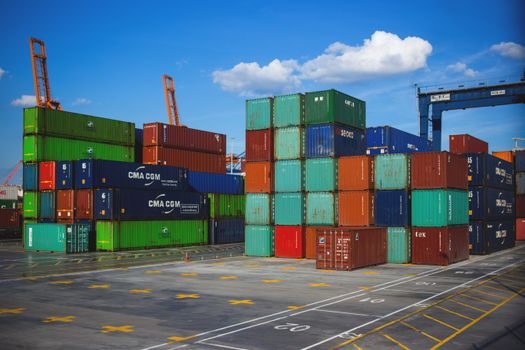
For buyers of bearings, conveyor chain and storage cages that move through the same warehouse, the practical consolidation move is to align MOQ windows so a single 40' container leaves the supplier with mixed bearing and chain SKUs — a packaging lever that reduces inbound freight per piece and that aligns with the dual-sourcing strategy recommended in the SupplyCLO 2026 agenda [S5]. Buyers evaluating storage equipment for the same warehouse should also look at the storage cage buying guide 2026 for MOQ and finish levers, because the same wire-mesh suppliers often quote on a container-loaded basis that complements a bearing procurement plan.
Failure modes and inspection gates to enforce in 2026
The three receiving-inspection gates that catch the bulk of 2026 bearing defects are: (1) dimensional check on bore, OD and width against ISO 15 limits — typical tolerance band of 0-(-10) µm for P6 class on a 6204 20 mm bore; (2) radial internal clearance check against ISO 5753-1 (C2, CN, C3, C4, C5 bands, with CN being the most commonly stocked for general industrial use); and (3) noise and vibration check on a Class A or B smooth-running class bearing for motor duty, per supplier-declared Z-level [S1]. A common 2026 failure mode is a sleeve or shield installed on a C3-clearance inner ring, which causes post-mounting preload — a fault the supplier-rejection-rate KPI is designed to surface rather than absorb [S1].
A second failure pattern buyers are reporting in 2026 is mixed-batch delivery, where a 500-piece order is split across two melt-heat lots with a hardness spread of 2-3 HRC inside the same batch designation, which is a problem for noise-sensitive HVAC and motor applications that the OTIF and days-of-supply KPIs only partially expose [S1]. The practical mitigation is to request heat-number traceability on the mill cert and to lock incoming-inspection sample size to a 1.0 AQL on dimensional and a 1.5 AQL on hardness for critical 6200/6300/30200 series.
Decision framework: who 2026 bearing supply suits

2026 bearing supply conditions suit a buyer who: tracks supplier-OTIF and raw-material days-of-supply as weekly KPIs, holds at least 14 days of cover on critical 6200/30200 lines, demands ISO 15 + ISO 492 + ISO 683-17 documentation on every shipment, and treats lead time as a first-class selection criterion on par with unit price [S1][S2]. The same conditions do NOT suit a buyer running a single-source Asian-sourcing policy with no second-source qualification underway and a 30-day days-of-supply target — that profile will absorb the next melt-shop disruption rather than route around it, a pattern the SupplyCLO 2026 agenda is explicitly trying to disrupt [S5].
For 2026 buyer-side decision-making, the comparison that frames almost every requisition is: (a) standard 100Cr6 steel deep-groove ball bearings with CN clearance and 2RS seals — cheapest and shortest lead time, suited to general industrial 1,500-3,600 rpm duty; (b) case-hardened tapered roller bearings — higher load capacity and longer life, suited to gearboxes and wheel-end applications, 6-10 week lead time; (c) Si3N4 ceramic-hybrid deep-groove bearings — premium price, suited to high-speed spindle and chemical-process duty where electrical-erosion resistance matters, 10-14 week lead time. The supply-chain planner course material emphasises that lead-time and OTIF data must enter the sourcing decision in this exact form, not as soft context [S2].
Cross-equipment levers for the 2026 procurement cycle
Bearing and chain buyers managing the same vendor base can capture cost concessions by aggregating demand across a shared container — a packaging lever covered alongside MOQ logic in the die casting die buying guide 2026, and a model that maps cleanly onto the bearing and conveyor chain procurement workflow. For buyers sourcing wear-parts into the same plant, the shot sleeve buying guide 2026 covers a parallel hot-work steel allocation channel that competes with bearing steel for the same forging press time, and that share-capacity dynamic is the single most useful 2026 supply-chain fact for any buyer deciding whether to escalate a quote negotiation. [S1]
The 2026 procurement cycle closes with a clear set of trackable signals: watch the SupplyCLO summit date announcement for the 9th edition, since the 2026-07-03 page still listed "date to be announced" as of 2026-07-04 [S5]; watch the next SourceForge quarterly update of risk-management and visibility-software rankings for shifts in the dominant platform choice [S3][S6]; and track mill lead-time announcements against the 6-10 week and 16-24 week bands above as the empirical test of whether the reshoring conversation converts into measurable mill capacity.