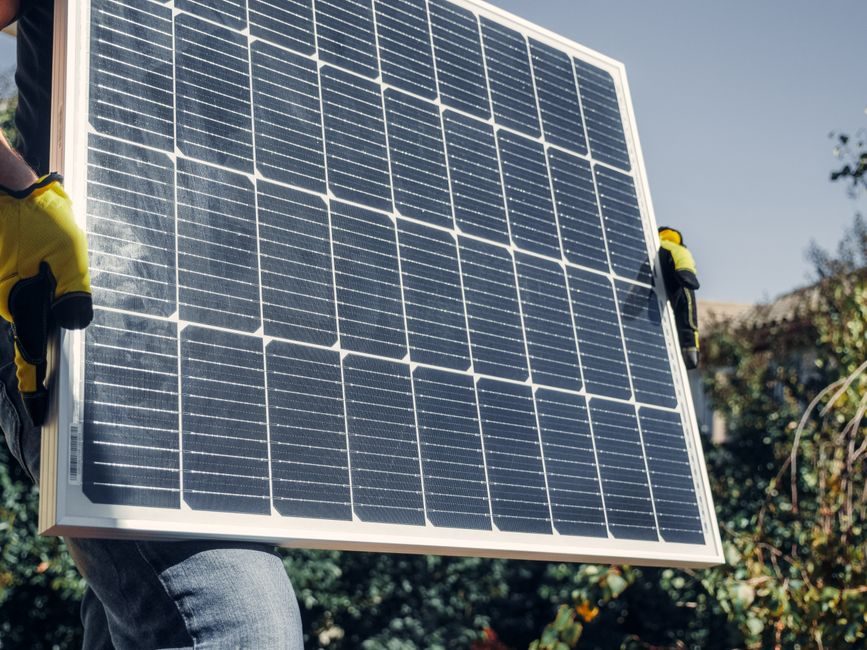
TOPCon (Tunnel Oxide Passivated Contact) cell supply for utility-scale projects in mid-2026 is gated simultaneously by a measured long-term degradation gap against BC and HJT and by an active US patent suit — First Solar v. JinkoSolar over US Patent No. 9,130,074 — whose underlying portfolio carries issued validities extending to 2030 and beyond across 14 jurisdictions [S2].
Demand-side pressure continues: per CPIA (China PV Industry Association) modelling cited in the field-test report, lifting a 1 GW plant's annual degradation from 0.7% to 1.0% removes 625 million kWh over 25 years and over 250 million RMB in lifetime revenue [S3]. That figure reframes the cell-purchasing question from a one-off $/W decision into a 25-year LCOE (levelized cost of energy) calculation, and it is the same calculation driving EPCs (engineering, procurement and construction firms) to require cell-level degradation data, not just nameplate wattage.
Where the Degradation Gap Actually Shows Up in 2026 Field Data
Outdoor test data from the Xi'an field site covering Nov 2023 to Aug 2025 — 9 TOPCon, 4 BC and 4 HJT modules, sampled every 5 seconds with periodic indoor re-measurement — recorded first-year degradation of 0.52% to 1.48% across 3 TOPCon modules [S3]. The site exposed modules to extremes of 41.8°C high, -20°C low, 500–750 mm annual rainfall and roughly 1,500 sunshine hours per year — conditions representative of the desert, high-altitude and coastal regimes where central-state EPCs are now deploying [S3].
For buyers, the first-year band is the gate: industry standard requires first-year degradation ≤ 2.0% and subsequent-year average ≤ 0.6%, and 5 of 6 additional TOPCon modules in the same study landed at 0.93% to 2.19% cumulative after 651 days, while one outlier hit 4.46% and two HJT follow-up modules exceeded 3% at every re-test [S3]. The split inside one technology matters more than the technology label itself — module-level selection, not route-level selection, is where the 0.3% to 0.5% annual-degradation delta lives.
Patent Rail: the '074 Suit, TetraSun Origin and the 14-Jurisdiction Shadow
First Solar filed the '074 suit against JinkoSolar in the US District Court for the District of Delaware on 25 February 2025, alleging infringement of methods of manufacturing TOPCon c-Si (crystalline silicon) PV cells; First Solar inherited the portfolio through its 2013 acquisition of TetraSun, and the issued patents cover the United States, Australia, Canada, China, the European Union, Hong Kong, Japan, Mexico, Malaysia, Singapore, South Korea, the UAE and Vietnam, with validities extending to 2030 and beyond, plus pending applications in the EU, Japan, Hong Kong, the UAE and Vietnam [S2]. First Solar publicly announced the underlying portfolio and the launch of infringement investigations against several leading c-Si cell manufacturers in July 2024 [S2].
The practical risk is not that the suit ends JinkoSolar's TOPCon line — it is that buyers routing product through the 14 issued jurisdictions face a license-or-divert decision, and a settlement or injunction on US-imported modules can cascade into EU-bound inventory within one shipping cycle. For a more detailed mapping of the patent rail, see the TOPCon patent and sourcing brief, which tracks the issuance dates and licensing posture cell-by-cell.
Cell-to-Module Cost Math: Why a 6–9 fen/W Premium Is the Real Decision Variable
Design-institute figures cited alongside the Xi'an test put the BC-vs-TOPCon module price gap at 6–9 fen/W (0.06–0.09 RMB/W), which on a 1 GW DC plant translates into 60–90 million RMB of incremental module CAPEX (capital expenditure) before BOS (balance of system) and lifetime-yield effects are netted [S3].
That math only holds if the TOPCon modules selected are the ones running at 0.52% to 1.48% first-year degradation, not the 4.46% outlier in the same study — a process-control split that vendors are not always willing to surface in a datasheet. The TOPCon market and price-floor analysis puts cell-level ASP (average selling price) ranges against the same patent rail and is the natural complement to the supplier-side mapping linked above.
Cross-Stack Risk: Solar Glass, Aluminium Frames and the Backsheet Bottleneck
TOPCon cell supply does not tighten in isolation: the Xi'an test highlighted HJT degradation driven by low-temperature silver paste failure under heat and humidity, and the same heat-and-humidity regime is where backsheet, encapsulant and junction-box stress concentrate [S3]. Float-glass line lead times and the solar glass feedstock gating at upstream suppliers sit directly upstream of TOPCon module output, while the aluminium ingot automation stack governs frame supply — both of which feed the same EPC bill of materials a TOPCon cell line ships into.
For EPCs running parallel procurement across cells, glass and frames, the consequence of a single supply shock on any one of these three is module-line re-sequencing, not project delay: a 2-week TOPCon cell slip cascades into a 2-week glass shipment reschedule, and the solar glass sourcing map shows where float-line capacity is already booked through Q3 2026.
Who Should and Should Not Anchor Sourcing on TOPCon in 2026
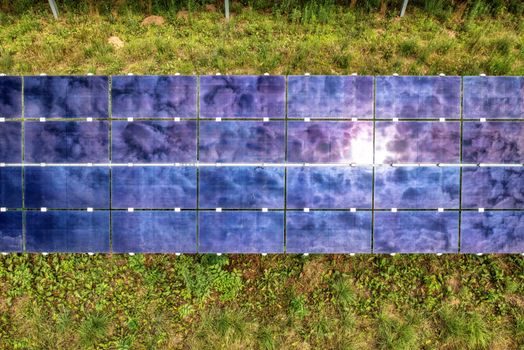
Anchor on TOPCon when the project site is high-irradiance desert (e.g. the sand-Gobi mega-base profile in the Xi'an test), the PPA (power purchase agreement) tenor is 20+ years, and the buyer can demand module-level first-year and subsequent-year degradation data traceable to a third-party outdoor test rather than a vendor-controlled lab [S3].
Do not anchor on TOPCon when the project is in a high-shading rooftop scenario where BC's bifacial gain is the binding constraint, when the buyer cannot audit cell-line process control at the cell supplier (the 4.46% TOPCon outlier in the Xi'an test was the same technology, same nominal spec, different line), or when the module will transit a jurisdiction where '074 or its counterparts are in active litigation and a license is not yet in place [S2][S3].
Selection Criteria: a Four-Variable Comparison Matrix for 2026 Cell Sourcing
For procurement teams that need a single decision frame, four variables cover the 2026 cell-selection problem end to end — outdoor first-year degradation, lifetime-degradation ceiling, $/W module price gap and patent-litigation exposure — and the Xi'an field data plus the First Solar '074 docket populate every cell of that matrix [S2][S3]. On outdoor first-year degradation, TOPCon's measured band is 0.52% to 1.48% against BC at 2.27% to 2.38% and HJT at 4.02% to 4.30% [S3]. On lifetime ceiling, TOPCon holds 25-year cumulative degradation under 12% in the design-institute framing, with BC and HJT both worse on field data [S3]. On price, TOPCon is 6–9 fen/W below BC, with a further LCOE advantage of 0.015–0.02 RMB/kWh once degradation and BOS are folded in [S3]. On patent exposure, only TOPCon currently sits inside the active '074 docket — JinkoSolar is the named defendant, the issued portfolio spans 14 jurisdictions, and the validity runway runs past 2030 [S2].
The matrix also shows the inverse trade-off: HJT's patent exposure is the lowest of the three routes because it does not read on the TetraSun-originated '074 family, but its 4.02% to 4.30% first-year degradation makes it a poor anchor for any LCOE-driven PPA unless silver-paste reliability is independently re-qualified [S2][S3].
Engineering Reality Check: What the 0.7% vs 1.0% Line Really Buys You
Per CPIA's 1 GW model, the all-in number to anchor on is 625 million kWh lost over 25 years for every 0.3 percentage-point rise in annual degradation — that is the engineering rationale behind the EPC shift from wattage-based to degradation-based procurement [S3]. The same model converts to over 250 million RMB in lifetime revenue at current market tariffs, which is roughly three times the 60–90 million RMB upfront cost gap between TOPCon and BC modules on the same 1 GW build [S3].
The reason that gap is decisive: a one-time 60–90 million RMB CAPEX difference amortises over 25 years, while a 0.3 percentage-point annual-degradation difference compounds every year the module is in the field. That compounding is why the TOPCon sourcing brief treats cell-line process-control audits as a procurement deliverable, not a quality-engineering afterthought.
Trackable Signals to Watch Through Q3 2026
Two signals will move this market before the next CPIA cycle: (1) the Delaware court's docket activity on the '074 suit, where any Markman ruling, license disclosure or preliminary injunction will reset the import-side price of TOPCon modules shipped into the US and indirectly into the EU; and (2) the next round of Xi'an-style third-party outdoor test data covering cells produced in 2025, where first-year degradation outside the 0.52% to 1.48% band will identify which cell lines have actually tightened their tunnel-oxide and LPCVD (low-pressure chemical vapor deposition) process control, and which are riding the technology label without the process control behind it [S2][S3]. The same signals will also surface the HJT silver-paste reliability question that the current Xi'an dataset flags but does not yet resolve.
For component-level specifications, see load cell, dc power supply, and load cell module.