
Modular lithium energy storage systems with 15 kWh–160 kWh scalable capacity and 12 kW–48 kW power headroom are shipping as integrated battery-plus-inverter-plus-EMS units, with the HOMESYNC-class design carrying UL9540, UL9540A, UL1973, IEEE 1547, IEEE 2030.5 and UN38.3 compliance in a single enclosure [S1].
At the upstream material layer, high-voltage spinel cathode LiNi0.5Mn1.5O4 research is documented at peer-reviewed level in <em>Energy Storage Materials</em> vol. 45 (2022), p. 821–827, framing the next cell-chemistry wave above 4.7 V [S4]. At the bundling layer, China-based Xiamen C&D Emerging Energy — a subsidiary of Xiamen C&D (Fortune Global 500, 2025 rank 98) — runs an integrated Solar+ESS+EV Charger supply chain service covering cell, residential, C&I and portable storage plus mounting structures and inverters [S3].
Residential and C&I Integrated Storage: Spec Gates in Mid-2026
All-in-one residential energy storage units now ship in the 15 kWh–160 kWh capacity band with 12 kW–48 kW inverter headroom, floor or wall mounted, indoor/outdoor rated to NEMA 3R and IP65 [S1]. The integrated EMS in these enclosures supports self-consumption, time-of-use, smart load management and off-grid modes with < 20 ms UPS-mode switching, plus WiFi/4G telemetry and SunSpec RS485 EMS links [S1]. Compliance is stacked: UL9540 + UL9540A (system + fire propagation), UL1973 (cell-level), UL1741 SB (grid-interactive inverters), IEEE 1547 / IEEE 1547.1 (interconnection), IEEE 2030.5 (smart-energy profile), UL1699B (AFCI), and UN38.3 (transport) [S1]. Pack-level active balancing, dual physical/electrical isolation and modular fire protection are the three safety primitives the current generation is converging on [S1]. For projects crossing into industrial switchgear and backup power, a related reference page on industrial UPS architecture sits in the same compliance family.
High-Voltage Spinel Cathode: the Upstream Research Track
LiNi0.5Mn1.5O4 (LNMO) spinel-related cathodes are documented as a 5 V-class chemistry in the peer-reviewed literature, with the 2022 ScienceDirect paper (vol. 45, pp. 821–827) framing the material as a candidate for high-energy lithium-ion cells that require electrolyte and interface engineering above 4.7 V [S4]. Sourcing implications in mid-2026: cell buyers evaluating post-LFP roadmaps should treat LNMO pilot-scale data as a 2–4 year horizon, not a 2026 commercial SKU, because no commercial LNMO cells appear in the POWERSYNC or C&D product lines yet [S1][S3]. For switching and conditioning hardware around the next cell generation, design teams commonly reuse the same switching power supply DC bus architecture while waiting for higher cell voltages.
PV-Bundled ESS Supply Chain: From Cell to Containerized Skid
Xiamen C&D Emerging Energy's mid-2026 product tree branches into Battery & Cell, Residential Solution, C&I Solution, Portable Power Solution, six mounting-structure families (ground, roof, carport, floating, tracking, accessories), TALESUN PV modules, DC solar BC modules, hybrid/PV/off-grid inverters, EV chargers and smart charging/swapping cabinets, all sold as a "Solar+ESS+EV Charger" bundle [S3]. C&D's parent — Xiamen C&D Corporation — reports RMB 700+ billion in annual revenue, 800+ billion yuan in total assets and 60,000+ employees, with 2025 Fortune Global 500 rank 98 and 2024 rank 85 [S3]. That vertical scope is unusual: most residential-only ESS vendors do not control the racking, module and inverter nodes simultaneously, and it changes the procurement conversation for overseas EPCs that want a single PO covering racking, module, battery, inverter and charger.
Comparison: Three Storage Sourcing Lanes in 2026
Across the three dominant mid-2026 lanes, the decision criteria diverge sharply:
Lane 1 — Modular residential/C&I integrated systems (e.g. HOMESYNC-class): 15–160 kWh capacity, 12–48 kW power, UL9540 + UL9540A + IEEE 1547 + UN38.3 stack, < 20 ms UPS transfer, NEMA 3R / IP65 enclosure, modular fire protection and active balancing [S1]. Best fit for distributed PV+storage retrofits and small commercial.
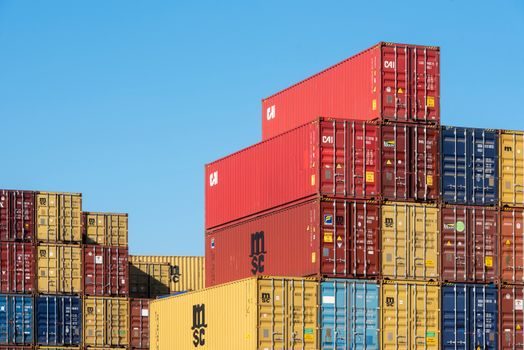
Lane 2 — Containerized MW-scale (e.g. CrystEna, 1 MW Li-ion containerized units historically commissioned for grid services): footprint-constrained, balance-of-plant heavy, designed around ISO container form factor for utility dispatch and renewables firming [S2][S5]. Best fit for utility T&D deferral and renewables smoothing.
Lane 3 — PV-bundled solar+ESS+EV supply chain operator (e.g. C&D Emerging Energy model): bundles racking, module, cell, residential/C&I/portable storage, hybrid/PV/off-grid inverter, EV charger and smart swap cabinet under one procurement contract, backed by a Fortune Global 500 parent [S3]. Best fit for overseas EPCs and project developers that want a single counterparty. For DC-side hardware selection, the same procurement decision tree overlaps with a DC power supply topology choice. A complementary read on upstream cell pressure sits in TOPCon Cell Supply Tightens as Patent Rail and Degradation Gap Squeeze 2026 Sourcing, which covers the PV-side tier-1 cell squeeze running in parallel to ESS demand.
Standards Stack and Failure Modes Buyers Should Audit
For a 2026 residential/C&I integrated ESS, the minimum compliance set to audit on the data sheet is UL9540 (system), UL9540A (cell-to-system fire propagation), UL1973 (battery), UL1741 SB (grid-interactive inverter), IEEE 1547 / 1547.1 (interconnection), IEEE 2030.5 (smart energy profile), UL1699B (AFCI), UN38.3 (transport) and IP65 / NEMA 3R (enclosure) [S1]. Failure modes that show up most often in field return data for this class are: (a) AFCI/RSD nuisance trips from DC arc detection at the module-string side, (b) BMS active-balancing drift that masks cell-level SOC spread under high C-rate discharge, and (c) transfer-time overruns past the < 20 ms UPS specification when grid events occur at the same instant as PV anti-islanding [S1]. Buyers should request test reports per clause rather than the family's "compliance" stamp. For the rack-and-stack hardware that houses the cells in containerized builds, mechanical engineers typically cross-check against a storage rack and storage cage seismic/SBC envelope before signing off on site layout.
Conference Signal and Procurement Trackers for the Next 90 Days
NEIS 2026 (Conference on Sustainable Energy Supply and Energy Storage Systems) is the named European venue for grid technologies, electromobility, hydrogen and AI applied to storage, with the call for participation live as of the mid-2026 window [S6]. Trackable signals to watch: UL9540A test-report revisions tied to larger residential enclosures above 100 kWh, IEEE 1547.1-2020 amendment rollout on grid-support functions, and any LNMO pilot-line announcement that would move the spinel chemistry from research record [S4] into commercial cell SKUs. A parallel reference for metering on the AC side of the same installations is the energy meter spec page, which often drives the CT/PT ratio decision for revenue-grade sub-metering on C&I storage sites.