
Beryllium copper retaining rings provide high spring properties and are identified as non-magnetic and non-sparking for electronics, aerospace, and explosive environments.
Inconel retaining rings are the stronger option for high-temperature service, but grade, magnetic response, corrosion exposure, and machining safety must be checked before replacing copper alloy with a nickel-base alloy.
Material selection by service condition
Beryllium copper combines high strength with good corrosion resistance while remaining non-magnetic, properties that make it suitable for electrical and aerospace applications [S1]. It is also described as non-sparking and high-strength for electronics, aerospace, and explosive environments [S6].
The practical distinction is temperature. Beryllium copper has a maximum recommended operating temperature of 204°C, or 400°F [S2][S4]. That makes it suitable where the ring must remain non-magnetic, resist sparking, or carry electrical current while operating below that limit.
Inconel X-750 is listed among specialty retaining-ring materials, alongside A286, Hastelloy, Elgiloy, and beryllium copper [S5]. For service substantially above 204°C, Inconel is generally the appropriate material family, but a specific alloy and heat-treatment condition must be selected from the manufacturer’s load and temperature data.
This decision should be made before finalizing the retaining ring geometry. Ring style, free height, groove dimensions, and removal stress remain unchanged requirements, while material selection determines whether the installation loads and thermal exposure are acceptable.
Decision criteria: beryllium copper against Inconel
Beryllium copper is the better fit when non-magnetic behavior, non-sparking behavior, conductivity, or a moderate temperature limit drives the selection. A published comparison gives heat-treated C17200 beryllium copper tensile strength up to approximately 1,400 MPa, hardness up to about 40 HRC, and electrical conductivity of roughly 20–25% IACS [S3].
Inconel is the better fit when operating temperature dominates and the magnetic response, galvanic compatibility, and machining plan are acceptable. The supplied research identifies Inconel X-750 as an available retaining-ring material but does not provide a single universal temperature limit or strength value for it [S5]. Those limits depend on the exact grade, temper, product form, and manufacturer.
On four criteria, the comparison is direct. Beryllium copper wins for non-magnetic service and gives published values of 20–25% IACS conductivity, up to 1,400 MPa tensile strength, and up to 40 HRC hardness after suitable treatment [S3]. Inconel wins for severe heat exposure by virtue of its nickel-base alloy family, but the research supplies no equivalent universal strength or conductivity figures. Inconel generally requires a more demanding alloy-selection and thermal-validation exercise, while copper alloy machining requires beryllium exposure controls [S3].
Use Inconel for sustained service above the beryllium copper limit when the application permits nickel-base alloy behavior. Use beryllium copper when non-magnetic, non-sparking, or high spring properties are more important than high-temperature capability.
Non-magnetic and non-sparking requirements
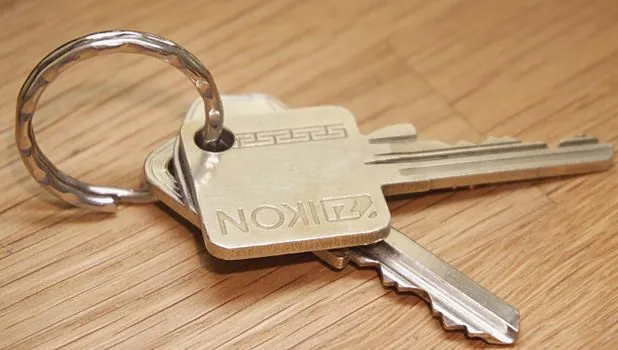
Beryllium copper retaining rings are identified as non-magnetic. It is also identified as non-sparking in a retaining-ring selection guide [S6].
Non-magnetic does not mean that every Inconel grade fails the requirement. Magnetic response is an alloy-specific property, and the supplied research does not establish a universal magnetic classification for Inconel X-750. If a sensor, compass, magnetic coupling, or magnetically sensitive instrument can be affected, require a material-specific magnetic-permeability test or supplier declaration rather than relying on the family name.
Non-sparking requires a similarly disciplined selection. The research supports beryllium copper for non-sparking retaining rings [S6], but it does not establish that Inconel X-750 is equivalent for the stated explosive atmosphere. Confirm the exact ring material, surface condition, contact energy, and applicable site requirements before using a nickel-base alloy as an assumed substitute.
Hot-service limits and load retention
For comparison, carbon spring steel is recommended only to 121°C, 302 and 316 stainless steels to 204°C, and 17-7 PH condition CH900 to 343°C, or 650°F [S4]. These figures show why ordinary spring steel is not the automatic hot-service choice.
Published CuBe service ranges also appear at 150–315°C, or 300–600°F, for springs retaining temper at higher temperatures [S8]. This broader range does not erase the 204°C retaining-ring recommendation in the material-selection sources [S2][S4]. For a production ring, use the lower documented limit for that product type unless the ring manufacturer substantiates the higher value for the actual alloy, temper, product geometry, and test method.
Thermal limits alone are insufficient. At elevated temperature, evaluate preload loss, relaxation, permanent set, installation stress, and cyclic fatigue. A material that survives the peak temperature can still fail if spring force drops below the retention requirement or the fatigue life falls below the duty cycle.
Machining, installation, and occupational constraints
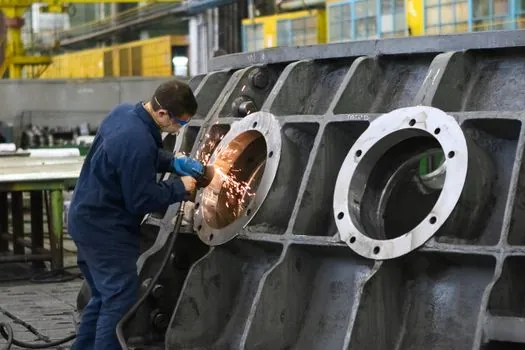
Beryllium copper creates dust and fume during machining, grinding, or welding, presenting an inhalation hazard that requires exposure controls such as local exhaust ventilation and respiratory protection where required [S3]. Solid stock is not hazardous in the same way as generated particulate, but the machining plan belongs in the material decision.
Inconel machining is demanding because nickel-base alloys work-harden readily and generate high cutting forces and heat. Neither alloy justifies uncontrolled tool wear. Specify the ring supplier's manufacturing route, edge condition, tolerance, surface finish, and any mandatory installation or removal tools before accepting the material substitution.
Installation loads also differ by material and temper. Use the supplier's published load-versus-deflection and installation-force limits rather than assuming that a geometrically identical Inconel ring can be installed with the same pliers, punch, or installation tooling. The shaft collar or locking assembly may determine whether the ring is the actual retention element, which changes the material decision.
Application recommendation and procurement data
Specify beryllium copper for magnetic-sensitive electronics, non-sparking tools and hardware, electrical spring contacts, and moderate-temperature assemblies where 204°C is not exceeded [S1][S6][S9]. Specify Inconel for higher-temperature retention after obtaining grade-specific data for tensile strength, spring temper, relaxation, fatigue, and corrosion [S5].
Do not make a substitution from the alloy family name alone. The procurement record should identify the UNS or manufacturer designation, temper, heat-treatment condition, finished dimensions, groove specification, required radial or axial load, service temperature, and test certificates. For any Inconel choice, ask the manufacturer to state the operating-temperature limit and whether the delivered ring is magnetic under the service condition.
One quote captures the engineering requirement: “Beryllium copper is nonmagnetic … beryllium copper has the highest strength” [S2]. The operative conclusion is narrower: beryllium copper satisfies the non-magnetic requirement and offers exceptional strength at temperatures up to 400°F, but Inconel remains the material family to investigate when that thermal ceiling is inadequate.
The next verification step is straightforward: obtain the load and temperature curve for the proposed ring geometry, then require written confirmation of magnetic behavior and any non-sparking suitability before releasing the material specification.