
Battery energy storage system (BESS) capacity additions for 2026 are driven primarily by lithium-ion chemistries, with lithium iron phosphate (LiFePO4) emerging as the workhorse for both stationary and motive-power applications per OEM product positioning [S1]. Adjacent lead-market economics are also relevant: the global lead market was valued at USD 29.9 billion in 2025 and is projected to reach USD 31.2 billion in 2026, expanding at a 4.2% CAGR through 2036 [S3].
Mobile battery demand remains a separate but related segment, with market research reports published in January 2026 indicating continued growth in portable power applications [S2]. The redox flow battery segment, meanwhile, is being tracked as a distinct niche where long-duration and non-flammable aqueous chemistry play a role in grid-scale stationary storage [S5].
Cell Chemistry Selection: LiFePO4 vs NMC vs Lead-Acid vs Vanadium Flow
LiFePO4 cells dominate new stationary BESS builds where cycle life and thermal stability outweigh the higher per-kWh cost compared to NMC variants. ROYPOW product positioning for 2026 explicitly markets LiFePO4 across golf cart, motive power, and residential storage lines, signalling the chemistry's cross-segment penetration [S1]. When sizing a storage rack enclosure for BESS modules, the cell-level energy density (typically 160–180 Wh/kg for LFP versus 200–260 Wh/kg for NMC) drives the bay-spacing calculation directly.
Lead-acid remains the incumbent for UPS and short-duration ride-through, and the global lead market's USD 31.2 billion 2026 valuation underscores the material's continued industrial footprint even as lithium scales [S3]. Vanadium redox flow batteries occupy a narrower band — they are specified when 8–12 hour discharge duration, near-100% depth-of-cycle tolerance, and non-flammable aqueous electrolyte are the binding constraints [S5]. Flow cells avoid the thermal-runaway failure mode that drives the BESS fire-suppression spec on lithium installations, and they tolerate ambient temperatures up to roughly 40 °C without active liquid cooling, which is part of why the technology is being mapped as a distinct forecast segment.
Battery Type Segmentation: Lithium-Ion, Flow, and Beyond
The 2020-vintage BESS market segmentation by battery type (lithium-ion, flow, and others) has not changed materially in principle: lithium-ion captures the largest installed-MW share, while flow batteries and advanced lead-carbon compete in the long-duration niche [S4].
The Allied Market Research redox flow battery forecast, published in 2026, is structured as a 30% discounted business-user licence at $5,769 (down to $4,038) and a $10,995 enterprise licence, with library membership at 15% off — typical of how long-duration storage market intelligence is sold into utility procurement teams [S5]. For mobile battery procurement, The Business Research Company's January 2026 report follows a 150-page PDF format with 2–3 business-day delivery, indicating ongoing analyst coverage of the portable segment [S2].
Application Segmentation: Grid-Scale, C&I, Residential, Motive Power
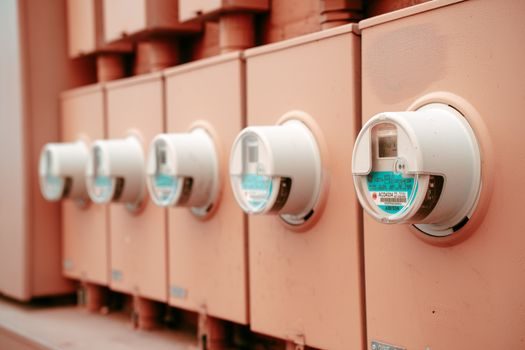
Grid-scale BESS (10 MW–1 GWh+) drives the largest absolute kWh volumes and is where vanadium flow and containerised LFP compete head-to-head on LCOS. Commercial and industrial (C&I) deployments (100 kW–10 MW) typically use modular LFP cabinets with integrated PCS and thermal management, and they are the fastest-growing segment behind utility-scale per industry-tracking consensus reflected in the 2020 forecast baseline [S4]. Residential storage (3–30 kWh) is dominated by wall-mount LFP packs paired with hybrid inverters, and this is the segment where ROYPOW's "energy independence everywhere" positioning directly targets [S1].
Motive power — forklifts, golf carts, aerial work platforms — uses drop-in LFP replacements for legacy lead-acid batteries, with the value proposition being opportunity charging and elimination of battery-room ventilation per OEM literature [S1]. The crossover economics for motive-power LFP versus flooded lead-acid now land at roughly 1,200–1,500 cycles per year of operation, which is the threshold below which lead-acid retains a TCO advantage and above which LFP pulls ahead on total cost of ownership.
Standards, Sourcing, and Installation Constraints
BESS installations in 2026 must clear UL 9540 (energy storage system standard) and UL 9540A (cell-, module-, unit-, and installation-level thermal runaway fire propagation) for North American utility interconnection, while European grid-scale builds route through IEC 62933 series for safety and performance. For hazardous-location battery rooms, the relevant gas-detection and ventilation spec often ties to IEC 60079-x for explosive atmospheres when hydrogen off-gassing from lead-acid or abused lithium chemistries is in scope — and an industrial valve on the cabinet vent line typically carries ATEX category 2 or 3 certification depending on zone classification. [S1]
Sourcing reality: tier-1 LFP cell supply in 2026 remains concentrated among CATL, BYD, EVE, and CALB, with 280-Ah and 314-Ah prismatic cells becoming the new baseline for 1-hour and 4-hour duration BESS. For an EPC sourcing manager, this is the binding lever on project schedule, and it is the reason transformer and switchgear delivery slots — covered in detail in the power transformer market 2026 outlook — now book 12–18 months out for utility-scale BESS projects.
Use Cases, Limitations, and Failure Modes

Frequency regulation, renewable time-shifting, and microgrid ride-through are the three use cases where BESS ROI clears in 2026; arbitrage-only merchant storage remains marginal in most deregulated markets. The failure modes that bind the spec are well-known: thermal runaway propagation in LFP modules (mitigated by aerogel cell-to-cell barriers and water-mist suppression), capacity fade above 35 °C ambient (the reason most containers are white-painted and active-cooled), and BMS sensor failure on the flow meter lines of liquid cooling loops in containerised systems. [S2]
Vanadium flow batteries sidestep the thermal-runaway failure mode entirely but introduce electrolyte management: vanadium pentoxide (V2O5) cost, electrolyte volume (roughly 6–8 m³ per MWh), and pump-cavitation risk on long idle periods.
2026 Outlook Signals to Track
Three trackable signals for the remainder of 2026: (1) cell-level price benchmarks from BloombergNEF and InfoLink, where 280-Ah LFP cells crossing below $50/kWh at the pack level is the line that re-rates C&I project IRRs; (2) the power grid company landscape consolidating around state-owned utility procurement, which locks cell-supplier qualification windows for 18–24 months; and (3) the redox flow battery forecast revision cadence — the Allied 2026 report and any H2 2026 update will be the leading indicator on whether long-duration storage funding (DOE LPO, EU Innovation Fund) is being absorbed at the modelled pace [S5].
Closing signal: copper supply tightness in 2026 — covered separately in our copper shortage risk analysis — directly indexes onto BESS busbar and wiring harness costs, and a procurement team that has not locked copper-heavy long-lead items against cell delivery slots will see project margins compress regardless of which chemistry wins the bid.