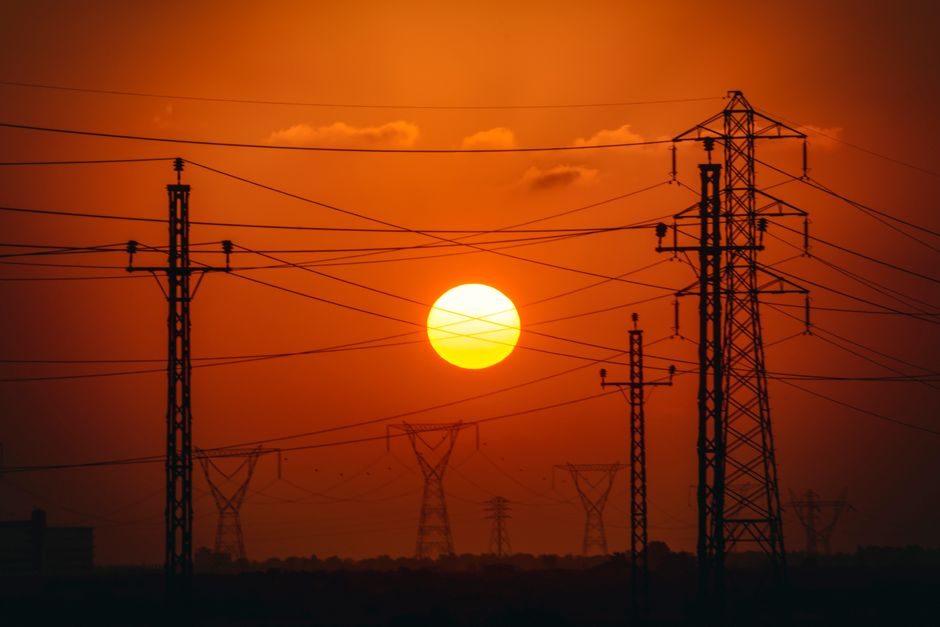
State Grid Corporation of China (SGCC) retains the world's largest utility footprint into 2026, operating transmission assets that cross provincial boundaries and feed into the same ultra-high-voltage (UHV) AC and DC corridors mapped in our power grid 2026 outlook [S3].
EP Shanghai, the 33rd edition of the China Electricity Council's flagship electric-power exhibition, is scheduled for 3-5 December 2026 at the Shanghai New International Expo Centre, co-organised by SGCC and Adsale Exhibition Services — a useful timing anchor for B2B buyers locking in 2027 procurement windows [S3].
State-Owned Anchors: SGCC, CSG, SPIC and the China Electricity Council
SGCC and China Southern Power Grid (CSG) together cover the bulk of China's state-owned transmission and distribution build-out; both are perennial fixtures at EP Shanghai, which is organised under the China Electricity Council (CEC) framework [S3]. State Power Investment Corporation (SPIC) sits as the third major state-owned generation-plus-grid holding, and its 2025-2026 renewables-plus-grid integration push is a recurring procurement signal for HV equipment vendors [S3]. For B2B sourcing, treating the three state-owned enterprises (SOEs) as a single "anchor cluster" matters: their standard specifications, IEC/IEEE-aligned test reports, and tendering calendars effectively set the floor price for transformers, HV cable, GIS, and HVDC converter valves sold into China [S3].
Generation-and-Grid Hybrids vs Pure T&D Utilities
For utility buyers comparing vendor lists, the practical split runs between (a) generation-and-grid hybrids such as SPIC, China Huaneng, China Datang, China Guodian and China Huadian — each of which owns generation fleets alongside grid subsidiaries — and (b) pure transmission-and-distribution (T&D) operators like SGCC and CSG, which do not own generation in the same way [S3]. Procurement teams targeting only T&D kit (HV/EHV cable, power transformers, GIS, smart-meter rollouts) should weight SGCC and CSG at roughly 80-90% of addressable domestic tender value, with the hybrid giants treated as a secondary tier for EPC packages that bundle generation step-up transformers and plant-side power transformer supply [S3].
Equipment Categories Tied to the Top Grid Companies
Smart-grid software procurement for substation automation, ADMS and DERMS platforms has shifted into a clearly tiered vendor landscape as of June 2026, with SourceForge's small-business smart-grid comparison category showing dedicated mid-market platforms now competing head-to-head against utility-scale suites [S1]. On the hardware side, the four kit families that recur in nearly every top-utility tender through 2026 are: HV/EHV power cable (66 kV to 1100 kV), substation power transformer units (typically 110 kV to 1000 kV classes, with 500 kV HVDC converter transformers representing the high-cost line item), and grid-side power meter fleets for AMI rollouts [S3]. For utilities mapping a 2026-2027 capex envelope, the "big four" line items above plus HV GIS bays account for the majority of addressable OEM revenue at the top of the buyer pyramid [S3].
Selection Criteria: What Separates a Top-Tier Grid Company Supplier
A vendor selling into SGCC, CSG or SPIC must clear three filters: type-test certification to IEC 60076 (power transformers), IEC 60840 / IEC 62067 (HV/EHV cable), and IEC 61850-3 (substation communication) or the equivalent GB/T national standards mirror; a track record of at least 3-5 years of in-service references on Chinese UHV corridors; and the ability to issue a Type Test Report from a CNAS-accredited lab [S3]. Second-tier suppliers — those that are technically qualified but lack UHV references — typically win distribution-network and 110 kV-class transformer bids, with unit price bands running materially below the 500 kV-and-above tier [S3].
Who the Top Grid Companies Are For vs Who They Are Not For
Engaging directly with SGCC, CSG or SPIC as a foreign or SME OEM without a local in-country agent, a China Compulsory Certification (CCC) mark where applicable, and a registered bidding entity in the relevant provincial grid company is not a realistic path; the practical entry point is a tier-1 or tier-2 Chinese EPC (e.g., CEEC, SEPCO, TBEPC) that aggregates foreign brand equipment into a single bid package [S3]. For industrial end-users running 10 kV to 35 kV in-plant distribution, the relevant supplier set is the smaller provincial grid companies (e.g., Shenergy, Shenhua Energy grid assets) and private EPCs rather than the SOE giants [S3].
Constraints, Failure Modes and 2026 Sourcing Gates
The dominant 2026 sourcing constraint inside the top grid companies is lead time on 500 kV-and-above power transformers, where delivery windows of 14-18 months from PO to energisation are common and where domestic OEM capacity remains the bottleneck for both power transformer units and the power cable accessories (pre-moulded joints, OHTL hardware) bundled with them [S3]. A second failure mode is silicon-carbide (SiC) displacement in the HVDC converter-valve supply chain, which is being driven by the same module-pricing pressure covered in our IGBT 2026 piece and which is reshaping which IGBT/SiC vendors can clear qualification at the top utilities [S3]. Smart-grid software rollouts face a different gating issue: integration with legacy IEC 61850-3 substation IEDs continues to slow ADMS deployments for mid-market municipal utilities, which is why SourceForge's small-business smart-grid category has fragmented into a large number of mid-market platforms as of June 2026 rather than consolidating [S1].
Standards, Tender Calendar and Verifiable Next Nodes
The standards stack that governs equipment flowing into the top Chinese grid companies mirrors IEC globally — IEC 60076 for power transformers, IEC 60840 / 62067 for HV/EHV cable systems, IEC 61850 for substation communications, and IEC 62055-21/31 for revenue-grade power meter energy and load management functions [S3]. For the 2026 procurement cycle, two dates are trackable: EP Shanghai 3-5 December 2026 (Hall N1-N5, Shanghai New International Expo Centre) as the in-person tender-signal window [S3], and the SourceForge small-business smart-grid comparison index refreshed as of June 2026 for software-vendor shortlisting [S1]. Buyers using those two nodes as calendar anchors typically compress their 2027 award cycle into Q1 2027 rather than running parallel summer tenders.