
Data center halls are normally unclassified, so an explosion-proof distribution box only enters the spec when battery rooms, diesel generator yards, fuel-day tanks, or refrigerant machinery spaces carry a hazardous-area classification. In those sub-areas, the distribution box must carry ATEX or IECEx certification to Zone 1/2 gas or Zone 21/22 dust with an IP66 enclosure rating, per OEM guidance on lighting and power distribution panels [S3].
Three protection concepts dominate: Ex d flameproof, Ex e increased safety, and compound Ex d chamber with Ex e enclosure; the compound pattern is the most common on lighting panels because it keeps the main housing accessible while isolating the switching element in a flameproof cavity [S3]. For a 1-2 MW data center diesel generator skid the distribution box typically feeds 6 to 24 outgoing ways, gland plates for 12.5 to 20.5 mm cable outer diameters, and ambient ratings of -20 to +55 degrees Celsius [S3].
Hazardous Area Classification Drives the Minimum Box
Battery rooms in UPS halls often fall under Zone 1 or Zone 2 for hydrogen release during thermal runaway, while outdoor diesel day-tank enclosures can be Zone 1 for the vented space and Zone 2 for the surrounding 1-3 m radius. Dust classification is rare in data centers but appears in adjacent paper-storage or construction-dust pockets; Zone 21 demands Ex tb IIIC and explicit surface-temperature class, while Zone 22 only needs Ex tc IIIB and IP66 [S3].
An explosion-proof junction box inside a classified sub-area must sit on a certified gas group, not a generic gas group: IIC gases (hydrogen, acetylene) are the hardest to contain, IIB covers ethylene and most petroleum vapors, and IIA covers propane and methane [S1]. A Zone 1 IIC distribution box with a die-cast aluminium housing and machined flame path is roughly 30 to 60 percent more expensive than the same way-count in Ex e GRP, because the Ex d flame path tolerances must be held to within roughly 0.05 to 0.15 mm on the machined joint [S1].
Ex d vs Ex e vs Compound: Choosing the Right Protection Concept
Ex d flameproof enclosures contain any internal ignition and quench it through a precisely machined flame path; they are the only concept rated for Zone 1 with hydrogen (IIC + H2) and are mandatory where the box itself houses switching or breaker components that produce arcs [S1]. Ex e increased-safety enclosures cannot contain an internal arc, so they are only permitted on Zone 1 or Zone 2 when populated with passive terminals and components certified not to spark or exceed temperature class; this is why compound panels put the breaker in an Ex d sub-chamber and the wiring in an Ex e housing [S3].
Ex p pressurised and Ex i intrinsic-safety concepts appear less often in data center distribution boxes but show up in analyser rooms and remote I/O cabinets where low-power instrumentation runs. For a typical data center distribution panel the decision matrix is: IIC gas + Zone 1 = Ex d or compound; IIB/IIA + Zone 1 = compound Ex d/Ex e or Ex d alone; Zone 2 = Ex e with Ex nA switching acceptable; Zone 22 = Ex tc or Ex e [S3][S5].
Enclosure Material and IP Rating: Where Most Data Center Specs Slip
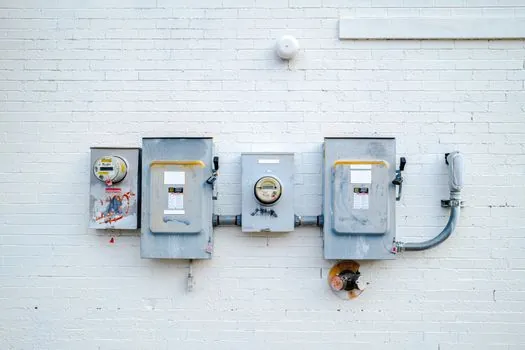
Three enclosure materials cover nearly every data center distribution box on the market: glass-fibre reinforced polyester (GRP), copper-free aluminium alloy, and stainless steel. GRP suits chemical and coastal battery rooms because it is corrosion-resistant, roughly one-third the weight of aluminium, and routinely carries IP66, but it cannot host an Ex d flame path; aluminium is the workhorse for oil, gas, and process skids at IP66 with a wide ambient range; stainless steel 316L is the only defensible choice for marine and saltwater exposure, at the cost of heavier machining [S3].
IP66 means dust-tight and protected against powerful water jets, and is the practical floor for any outdoor data center yard box; IP65 is sometimes accepted indoors where no wash-down occurs [S2][S5]. Internal corrosion has been estimated to drive roughly 25 percent of industrial equipment failures, so an enclosure material that survives the data center's specific atmosphere (diesel condensate, lead-acid acid mist, hydrogen fluoride from a nearby battery incident) matters more than a single universal pick [S2].
Cable Entry, Glands, and the Conduit vs Gland Question
Most non-conforming data center distribution boxes fail the cable-entry interface, not the enclosure. Gland plate hole patterns, thread standards (metric ISO 261 or NPT ANSI B1.20.1), and cable outer-diameter ranges are machined to match the cable schedule at order time; if the contractor later switches from unarmored to armored, or from 6 mm² to 10 mm² cores, the entry plate and gland family no longer match and the cert no longer covers the installed configuration [S3].
Engineers evaluating gland vs conduit entry should treat the choice as a maintenance commitment: direct gland entry on Ex d enclosures is faster to install and easier to inspect, but conduit systems win in data center yards where mechanical protection against vehicle impact matters. A related reference covers the trade-off in detail under Explosion-Proof Conduit Entry Rule Engineers Keep Misreading for those weighing the threading, sealing, and inspection cost of each method.
Certifications, Manufacturer List, and Sourcing in 2026
A genuine explosion-proof distribution box ships with an ATEX 2014/34/EU certificate, an IECEx certificate of conformity, or a UL/CSA listing under NEMA 7 (gas) or NEMA 9 (dust); a CE mark without a notified-body Ex certificate is not enough for Zone 1, and a vendor without IEC 60079-series coverage on the certificate should be replaced [S1][S5]. Global enclosure makers named in 2025-2026 sourcing lists include Schneider Electric, Rockwell Automation, Hammond Manufacturing, Siemens, Laiwo Electrical, J&HW Group, and SENTOP, with Warom, Hexlonex, SUREALL, and Mam-ex in the GRP and aluminium specialty tier [S4][S6][S7].
The global explosion-proof equipment market reached $8.64 billion in 2025 and is projected to reach $11.28 billion by 2030, with junction boxes and enclosures representing 26.3 percent of that total, a sizing that explains why procurement teams see multiple certified options for a single data center tender [S5]. For a data center that wants a defensible spec, request the ATEX/IECEx certificate number, the gas group, the temperature class (commonly T4 at 135 degrees Celsius or T5 at 100 degrees Celsius), the ambient range, and the IP rating; any of those missing on the datasheet is a non-starter [S1][S3][S5].
For Who This Spec Applies, and For Who It Doesn't
An explosion-proof distribution box is the right call for data center battery rooms with flooded or VRLA cells that vent hydrogen, outdoor diesel generator skids with day tanks, refrigerant plant rooms using ammonia or hydrocarbon refrigerants, and any sub-area within roughly 3 metres of a classified vent or drain. It is the wrong call for the white space itself, office areas, and corridor runs that are demonstrably unclassified, where a standard IP54 or NEMA 12 power distribution box is sufficient and saves both cost and weight. [S1]
For projects where the explosion-proof box is one node in a larger cabinet lineup, the related note Explosion-Proof Junction Box vs Distribution Box: Function, Layout, and Spec walks through the difference between a passive splice enclosure and an active breaker panel so the data center MEP team does not double-spec or mis-spec. Two trackable signals for late-2026: UL 1203-certified enclosures are increasingly the data center default in North America, and IEC 60079-0 ambient-lowered variants (-40 degrees Celsius) are now quoted on most generator-yard panels in northern EU and Nordic sites [S5].