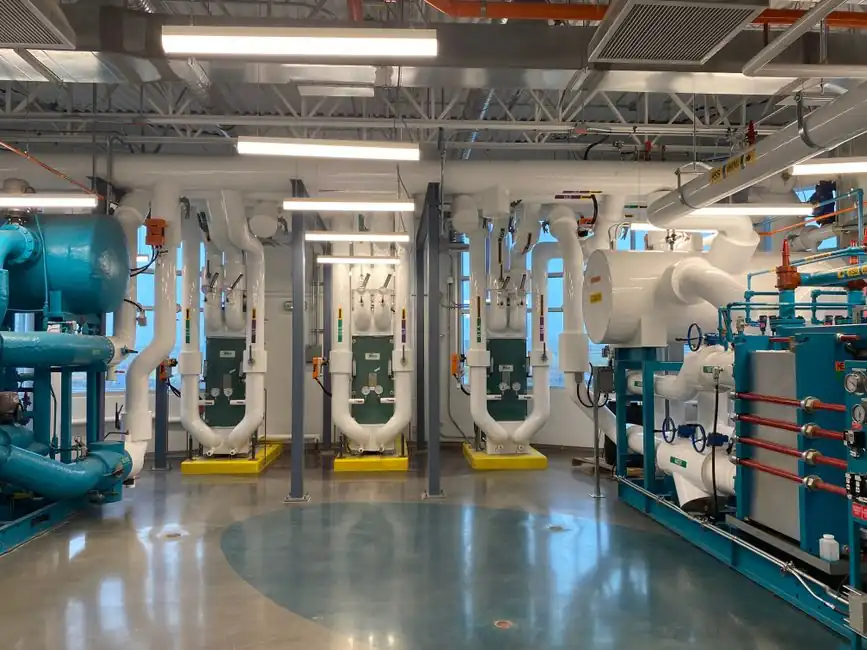
MERV 13 is the practical ceiling for most residential forced-air HVAC systems: it captures particles down to roughly 1.0–3.0 micrometers while keeping static pressure within the blower limits of typical 0.5–1.0 hp furnace fans, and Wirecutter's July 2026 round-up names the MPR 1900 Air Filter at MERV 13 as its top pick [S1].
Globally, the HVAC filter market is projected to climb from USD 4.66 billion in 2026 to USD 6.21 billion by 2031, a 5.9% CAGR, with HEPA-technology media the fastest-growing segment at 5.4% CAGR and carbon-based material holding a 39.6% value share in 2025 [S4].
MERV vs MPR vs FPR: Three Rating Systems, One Decision
MERV (Minimum Efficiency Reporting Value) is the ASHRAE 52.2 standard scale from 1 to 16, and MERV 8 to 13 is the recommended range for most homes because it balances effective particle capture against blower-friendly airflow resistance [S3]. The MPR 1900 filter recommended by Wirecutter carries a MERV 13 rating, the highest grade most residential HVAC cabinets can run without measurable static-pressure penalties [S1][S3].
Filtrete's MPR (Microparticle Performance Rating) scale runs 100–2800 and 3M's FPR (Filter Performance Rating) scale runs 1–10; both are proprietary maps of MERV-equivalent performance, with MPR 1900 corresponding roughly to MERV 13, MPR 1500–1700 to MERV 11, and MPR 1000–1200 to MERV 8 [S3]. Specifying engineers should anchor the purchase order on the ASHRAE 52.2 MERV value and treat the proprietary numbers as a secondary check, since MERV is the only one of the three tied to a reproducible test method.
Filter Media: Fiberglass, Synthetic Polymer, Carbon, Metal
Fiberglass media is the inexpensive baseline, used where basic particulate capture at low static pressure matters more than fine filtration, while synthetic polymer media delivers better dust loading and longer service life at MERV 8–13 ratings [S4].
Carbon-based filter material dominates the HVAC filter market with a 39.6% value share in 2025 thanks to gas-phase adsorption for odors and VOCs, and metal mesh media appears in washable low-MERV applications where lifecycle cost matters more than capture efficiency [S4]. For a precision HVAC filter, pleated synthetic polymer is the right answer in 80–90% of residential and light-commercial cases because it pairs MERV 13 capture with a 90-day typical service interval.
Standard Filter Sizes and the Nominal-vs-Actual Rule
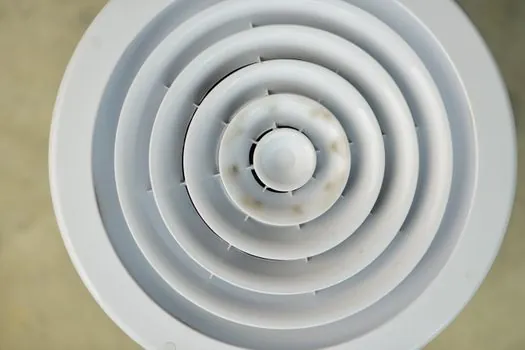
US residential HVAC filter sizes are written as Length × Width × Thickness in inches, and the nominal size printed on the frame is what you order, not what the filter physically measures. Filterbuy cuts its filters 0.5 inches under on length and width, so a labeled 20×25×1 actually measures 19.50 × 24.50 × 0.75 inches; a 1-inch filter is 0.75 in thick, a 2-inch is 1.75 in, and a 4-inch is 3.63 in [S2].
The most common US residential sizes, ranked by volume, are 20×20×1, 16×25×1, 16×20×1, and 20×25×1; furnace, AC, and whole-house HVAC filter slots all share the same nominal measurement system in a forced-air home [S2]. Ordering a filter 0.25 inches too small on any side causes air to bypass the media entirely, which is functionally the same as running no filter at all, while a filter cut 0.25 inches too tight will bind in the rack and is usually discarded.
Who Should Buy a Precision (MERV 13+) Filter
Homes with allergy or asthma occupants, households with immunocompromised residents, homes with pets that shed heavily, and properties in wildfire-smoke zones are the four user groups that get measurable benefit from stepping up to MERV 13 pleated synthetic media [S1][S3].
Industrial and commercial buyers operating hospitals, data centers, schools, pharmaceutical cleanrooms, and electronics manufacturing lines also benefit from MERV 13 media, and the global HVAC filter market's 5.9% CAGR through 2031 is being driven primarily by these sectors plus the building & construction end-use segment, which held a 39.0% value share in 2025 [S4]. For a broader discussion of how filter selection maps onto process-fluid and air-handling duties, see the engineering playbook on bag filter sizing and selection.
Who Should NOT Use a MERV 13 Filter

Older HVAC systems with single-speed PSC blower motors (typically 0.25–0.5 hp) often cannot move enough air through a MERV 13 pleat pack without tripping the high-temperature limit switch or starving the heat exchanger, and the Wirecutter review explicitly caps its recommendation at MERV 13 because that is "the highest level of filtration that can be used in most home HVAC systems" [S1].
Vacation cabins and lightly occupied homes where the air handler runs only a few hours a week are better served by MERV 8 fiberglass media, since the marginal IAQ gain over a year does not justify the 2–3× higher pressure drop and 3–5× higher annual replacement cost. Likewise, anyone in a 1-inch filter slot who refuses to upgrade to a 2-inch or 4-inch cabinet will see a sharper airflow penalty from MERV 13 than from MERV 8 in the same slot.
Comparison: MERV 8 vs 11 vs 13 vs HEPA in a Home HVAC Slot
MERV 8 captures roughly 70% of 3.0–10.0 micrometer particles and is the minimum grade most HVAC manufacturers will honor for warranty purposes; MERV 11 lifts that to about 85% across the same band while also catching 1.0–3.0 micrometer particles at a lower efficiency; MERV 13 raises the 1.0–3.0 micrometer capture to roughly 50% and is the highest grade a 0.5–1.0 hp residential blower can typically handle [S1][S3].
True HEPA (H13 / H14, 99.95–99.995% at 0.3 micrometer) is never specified as a drop-in HVAC filter, because a H13 panel can impose 1.0–1.5 inches w.c. of pressure drop and will stall a residential blower within minutes; HEPA in HVAC is achieved with a 4–6-inch deep bag or V-bank housing upstream of a variable-speed blower [S4]. For more on how housing depth and media surface area change the equation on filter selection, the bag filter suppliers 2026 guide walks through the industrial-side media grades and the practical implications for HVAC-adjacent dust collection.
Selection Criteria and Failure Modes

Three parameters drive 90% of residential and light-commercial precision HVAC filter selection: target MERV grade, slot dimensions (nominal Length × Width × Thickness), and pressure drop at the rated face velocity of 500 fpm. A pleated MERV 13 panel typically runs 0.18–0.30 inches w.c. initial pressure drop, and end-of-life is normally defined as 0.50 inches w.c. or 90 days, whichever comes first. [S2]
Common failure modes include ordering by actual size rather than nominal size (causing bypass), installing the filter backwards (defeating the pleat orientation and raising pressure drop 20–40%), and over-tight rack installation that warps the frame and allows air to leak around the gasket. The fundamental media trade-off is captured in the MarketsandMarkets report: fiberglass gives the lowest cost and pressure drop but the worst capture efficiency, while carbon and synthetic polymer media dominate the higher-MERV grades at the cost of higher pressure drop and shorter service life [S4].
Sourcing and Standards
Star players identified in the 2026 HVAC filter market report include Donaldson Company, Parker Hannifin, and 3M, with Air Filters Inc., Tex-Air Filters, and A-J Manufacturing cited as the most prominent SMEs in specialized niches [S4].
ASHRAE 52.2 is the underlying test standard for MERV ratings, and HVAC buyers should require MERV-verified media (not just MERV-equivalent marketing claims) on any precision filter purchase order. The practical industrial reference for filter housing geometry and media-area math is the precision filter encyclopedia entry, which lines up the same MERV/HEPA vocabulary used in the home market with the deeper pleat packs and V-bank housings used in commercial air handlers.
Track the ASHRAE 62.2 ventilation standard revision cycle and the UL 900 flammability classification on any new MERV 13 specification, since these are the two documents most procurement engineers get wrong. As of July 2026, the global HVAC filter market sits at USD 4.66 billion and is growing at 5.9% CAGR with HEPA technology as the fastest-growing segment at 5.4% CAGR, so expect MERV 13 retail prices to drift down 3–6% annually through 2027 as pleated synthetic capacity expands in the Asia Pacific region, which already held a 37.0% value share in 2025 [S4].
Component reference pages worth checking: bag filter, and filter element.