Alumina (Al2O3) ceramic is graded first by weight-percent Al2O3 — 95% / 99% / 99.5% / 99.7% are the four stock bands carried by most advanced-ceramic factories, with the 95% and 99% lines dominating mill-stock tube, rod, plate, washer and crucible output [S2].
For a process engineer the practical size-and-spec question is rarely "which Al2O3" alone — it is "which purity band, which stock form, what tolerance, and which production route" against the application's temperature, wear, dielectric and chemical load. This guide walks the bands, the geometry options, and the decision criteria a buyer can apply to an RFQ [S2][S3].
Purity Bands and the Property Step Between Them
Commercial alumina ceramic is rarely pure Al2O3 — it is an Al2O3 matrix with controlled silicate, zirconia, chromia or glassy-phase additives, and the band you pick is the single largest driver of mechanical and electrical spec [S2][S3].
Common purity-to-property bands seen on advanced-ceramic supplier catalogs: 95% Al2O3 (workhorse grade, balanced mechanical strength and cost — used for general wear parts and insulators); 99% Al2O3 (higher dielectric strength and smoother as-fired surface, common in electronic substrates and structural insulators); 99.5% Al2O3 (higher hardness, finer grain, tighter tolerance capability — common in semiconductor handling and high-purity process ware); 99.7% and above (premium, near-single-phase corundum microstructure, used where metal-ion contamination must be minimized) [S2][S3]. As a rule of thumb, every step from 95% to 99% to 99.5% gains hardness and chemical resistance while trading up in sintered density and price — a process engineer should pin the operating temperature, contact chemistry and any purity-of-contact (e.g. pharmaceutical / semiconductor) constraint before locking the band [S2].
Stock Geometry and What Each Form Is Actually For
Mill-stock geometry determines the maximum as-fired dimension a supplier can deliver economically, and what secondary machining (green-machined vs fully fired) the part will need to hit tolerance [S2][S3].
The five geometry families carried by advanced-ceramic manufacturers are: alumina tube and rod (used for thermocouple protection sheaths, furnace tubes, insulating sleeves, pump plungers); alumina plate and washer (electrical insulators, heat-shield plates, gasket backers, wear plates); alumina crucible and boat (lab and metallurgical melting, calcining, sintering trays); alumina beads and grinding media (high-alumina ball grinding media supplied in tonnage batches, MOQ 50 kg at roughly US$860/50 kg on one China listing, 10 000 t/yr capacity) [S5]; and custom machined parts (machined from billet in the green or hard state, used when stock geometry is insufficient) [S2][S3]. Stock tube and plate are the cheapest route per cm³; anything requiring a non-cylindrical or non-rectangular section generally moves to custom machining and a noticeably longer lead time [S2].
Tolerance, Machining State and Surface Finish
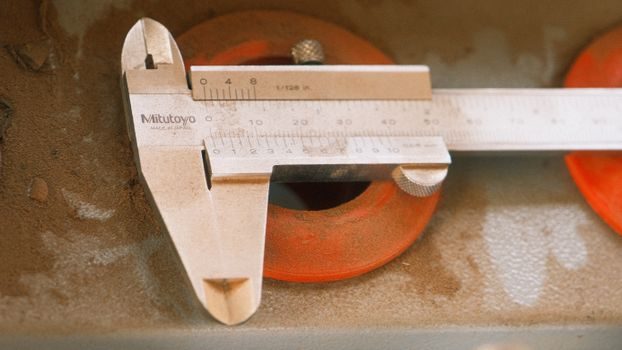
Alumina is hard but brittle — the finish you receive is the finish you should specify, because secondary grinding and lapping dominate finished-part cost in advanced ceramics [S3].
Two production routes are common: "as-fired" / "factory-stock" parts (tube, plate, rod supplied near-net, with looser tolerance, used where the part slips into a larger assembly and is not a wear face) and "custom machined" parts (sintered to near-final, then diamond-ground or lapped to a defined tolerance and surface finish) [S2][S3]. For grinding-media (high-alumina ball) the spec is different again — it is a bulk refractory commodity, not a precision part, and is sold in 25 kg plastic-bag export packs at 10 000 t/yr plant capacity [S5]. When the application is a wear face, a seal land, or a dielectric interface, ask the supplier for the as-ground tolerance (typical ±0.05 mm on precision ground features), the surface roughness (Ra µm value), and whether the part is finished before or after sintering — hard-machining after sintering hits tighter numbers but adds cost; green-machining is cheaper but yields looser as-fired tolerance [S2][S3].
Selection Criteria: Purity, Form, Load, Chemistry and Dielectric
A defensible selection can be built from five criteria lined against the four purity bands [S2][S3].
Decision criteria to apply, in order: (1) operating temperature — sustained-use ceilings trend upward with purity and density; (2) chemical contact — strong acids, caustics and halogens push you up the purity ladder; (3) mechanical load / wear — higher purity and finer grain raise hardness but do not save you from impact (alumina is brittle, design for compression, not tension); (4) dielectric requirement — the 99% and 99.5% bands are the standard pick for electronic insulators, with stated volume resistivity, dielectric strength and loss-tangent values quoted on the supplier datasheet; (5) purity-of-contact (food, pharma, semiconductor) — drives the 99.7% / 99.9% bands and may require a documented leach profile [S2][S3]. For a first-pass down-select, line the 95% / 99% / 99.5% / 99.7% bands up against these five criteria and strike out the bands that fail any single hard constraint; the survivors are your RFQ list [S2].
Application Fit and Common Failure Modes
Alumina shines in hard, hot, abrasive, insulating jobs; it fails the same way every time — by brittle fracture, almost never by gradual wear [S2][S3].
Typical fits: 95% Al2O3 liners and cyclones in mineral processing, grinding-media balls in cement and mining, general insulators; 99% Al2O3 substrates, pump plungers, sealing faces, valve seats; 99.5% / 99.7% Al2O3 semiconductor wafer-handling chucks, medical and pharmaceutical process ware, high-purity lab crucibles and boats [S2][S3][S5]. Common failure modes to design against: edge chipping during installation (specify chamfers, avoid sharp internal corners), thermal-shock fracture at rapid heat-up (ramp rate, not peak temperature, is the constraint — confirmed by the temperature-shock research literature on alumina-magnesia and high-alumina ceramic systems) [S4], and tensile bending stress from point loading on an unsupported span (alumina tolerates compression an order of magnitude better than tension). When a service case is "high impact at room temperature", alumina is almost always the wrong pick — specify a zirconia-toughened or a metal-backed ceramic instead [S2][S3].
Sourcing, MOQ and Supplier-QA Levers
For sourcing engineers the variables that move RFQ outcomes are purity band, form, tolerance, MOQ and a small set of QA asks [S2][S3][S5].
Mill-stock tube, rod, plate, washer and crucible ship from stock or short-cycle production with no formal MOQ on a per-piece basis at many advanced-ceramic factories, while custom machined parts move to an engineering review and a quoted lead time [S2]. Bulk grinding media (high-alumina ball) is a different market entirely — one China listing quotes 50 kg MOQ, US$860/50 kg, 10 000 t/yr capacity, 25 kg plastic-bag export pack — so specify refractory grades against the wear duty, not the precision-ceramic grade [S5]. On the QA side, a useful minimum ask set is: a factory test report naming the Al2O3 weight-percent, the as-fired density (g/cm³), the as-ground tolerance and surface finish, and the production route (as-fired vs green-machined vs hard-machined) [S2][S3]. For a deeper read on how purity bands and QA levers line up, see Alumina Ceramic Selection: Purity, Spec Bands and Supplier QA Levers. For background on how alumina ceramic compares to other engineering ceramics on a sizing basis, the industrial ceramic and alumina ceramic reference pages lay out the family-level property bands; for a related wear-facing part class, ceramic tile covers the lined-tile use case in mineral processing.
Spec Bands and Standards Anchors
Most supplier datasheets quote the same small set of property values, and lining your RFQ against them is the fastest way to compare offers [S2][S3].
Standard property ask-set for an alumina datasheet: Al2O3 content (wt%, the band label); bulk density (g/cm³, expect ~3.6 for 95%, trending toward ~3.9 for 99.5%+); hardness (Rockwell or Vickers, expect a rising trend up the purity ladder); flexural strength (MPa, typically three-point bend on a ground bar); maximum use temperature (°C, sustained); thermal expansion coefficient (×10⁻⁶/K); dielectric strength (kV/mm) and volume resistivity (Ω·cm) for insulator applications [S2][S3]. Refractory-grade high-alumina ball and lining products are quoted against Al2O3+RO bulk composition and grain size, not the precision-ceramic spec set [S5]. Historical research on high-alumina spinel and high-alumina ceramic concrete systems in the refractory literature confirms the dominant role of Al2O3 content, bond type and grain-size distribution in setting the in-service thermal-shock and corrosion envelope [S4][S6] — useful context when a lining duty is creeping toward the limits of a 95% stock grade and you are weighing a move to 99%.
Trackable signals over the next buying cycle: (1) whether the supplier quotes a numeric Al2O3 wt% on the test report or only a band label, (2) whether the as-fired density moves with the quoted purity (a clean cross-check on whether you are paying for 99.5% and receiving 95%), and (3) whether the grinding-media and the precision-ceramic quote lines are clearly separated on the RFQ — they are different products with different MOQ and lead-time profiles [S2][S3][S5].