
For 2026 chemical-plant flow loops, the spec that lands most often is a multivariable inline vortex meter with HART or Foundation Fieldbus output, wetted parts in 316L stainless or Hastelloy, and an accuracy band near ±1% of reading across a turndown of about 10:1 to 20:1 [S1][S2].
Chemical processing covers a wide envelope: saturated and superheated steam at 120-260°C+, process gases (chlorine, nitrogen, hydrogen, oxygen), and aggressive liquids (acids, caustics, solvents). Vortex technology is a strong default because the bluff-body principle has no moving parts to wear, tolerates dirty steam, and handles both gas and liquid service on a single body [S1][S3]. For broader flow measurement theory, see the flow meter reference page, and for the underlying shedding physics see the vortex flowmeter entry.
Why vortex fits chemical service: principle and operating envelope
Vortex flowmeters work on the Kármán vortex street principle: a bluff body sheds alternating vortices whose frequency is linearly proportional to flow velocity, so frequency-to-flow conversion is far more linear than the square-root response of an orifice plate [S1][S3]. In chemical service, that linearity shows up as a quoted accuracy of around ±1% of reading across the calibrated range, and stable behaviour on both saturated and superheated steam [S1]. Steam systems in chemical plants routinely run above 250°F (120°C), with many processes above 500°F (260°C), so any meter body has to be rated for that thermal class with the electronics mounted remote or isolated [S3].
The no-moving-parts architecture is the durability argument a process engineer can defend in front of a maintenance manager: no rotor bearings to fail, no impulse lines to leak, no orifice edge to erode. The trade is straight-pipe run: vortex meters need adequate upstream and downstream straight length (commonly 10-20D upstream and 5D downstream, depending on the upstream fitting) to keep the bluff-body shedding regular [S1][S3]. Plants with tight retrofit piping runs are the classic case where vortex loses to a Coriolis flowmeter, which is installation-tolerant but more expensive per point.
Multivariable vs single-variable: when MV84-class pays for itself
Single-variable vortex meters output a flow signal only; density and temperature are assumed or compensated in the DCS. Multivariable inline meters like the PanaFlow MV84 measure mass flow, temperature, and pressure in a single compact body, so the meter itself compensates for density changes in real time [S2]. For steam, that matters: a 5% shift in steam pressure moves density enough to swing a single-variable vortex reading by several percent, and on superheated steam the error compounds with temperature drift [S3]. The MV82 insertion variant covers the same compensation logic on larger line sizes where a hot-tap installation is preferred [S2].
Panametrics lists Chemical, Industrial Gases, Power Generation, and Oil & Gas among the served industries for its vortex line, which is the right vendor vocabulary to expect on a chemical-plant datasheet [S2]. The 2026 spec trend visible across the OEM catalogues is straightforward: spec the multivariable body by default on any new steam or gas header over 2 inches, and reserve single-variable bodies for clean, constant-density service such as dry compressed air or nitrogen inert blanketing. Material selection for aggressive chemicals is covered in the chemical material reference.
Selection criteria for chemical-plant steam, gas, and liquid lines
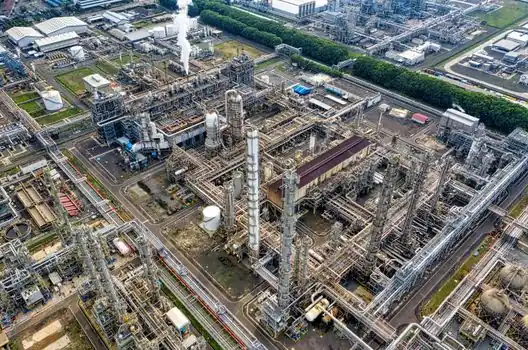
Five criteria separate a defensible chemical-plant vortex spec from a catalogue copy-paste. First, wetted material: 316L stainless for most steam and water service, Hastelloy C-276 or Alloy 20 for chloride-bearing or acidic streams; the body and bluff body must be quoted in the same alloy to avoid galvanic mismatch. Second, pressure and temperature class: match the ANSI flange class (typically 150# or 300#) and verify the meter body is rated above the maximum process temperature, not just the nominal operating point [S1][S3]. Third, output protocol: HART 7 on a 4-20 mA loop is the universal default; Foundation Fieldbus or PROFIBUS PA are specified on newer DCS projects where digital integration outweighs the analogue loop's familiarity. Fourth, hazardous-area certification: ATEX II 2 G Ex d IIC T4-T6 or IECEx equivalents for any European or global plant handling flammable media. Fifth, calibration and turndown: require a calibration certificate traceable to ISO/IEC 17025 at three or more flow points, and confirm the turndown ratio covers the minimum to maximum expected load.
For utility steam at moderate pressure and temperature, the MAC summary lists vortex as the most popular option because it balances accuracy, reliability, and cost, sitting above orifice plate (lower cost, higher permanent pressure loss) and below Coriolis (higher accuracy, higher capital cost) [S1]. For aggressive chemical liquids where mass-flow accuracy is the gate (reactor feeds, batch dosing), Coriolis is usually the right answer despite the higher price per point, because vortex cannot reach the ±0.1-0.2% range Coriolis delivers.
Where vortex is the wrong tool: known limits and failure modes
Vortex meters cannot measure very low flow rates: below a minimum Reynolds number threshold the vortex shedding becomes irregular or stops entirely, so the meter goes blind rather than reading low [S1]. Wet steam and condensate are the other common failure mode, because droplets disrupt the bluff-body shedding pattern and inject noise into the output; on a saturated steam line that is not properly drained, the reading can wander by several percent [S3]. Vibrant piping is a third limit: external vibration on the line near the bluff body's natural frequency can be mistaken for vortex shedding and produce a phantom flow reading. In retrofit installations with elbows, valves, or reducers in the upstream 10D, a flow conditioner or longer straight pipe run is mandatory, otherwise stated accuracy is not achievable [S1][S3].
For pure mass-flow accuracy on liquids and aggressive chemicals, the practical limit of vortex is what drives engineers to Coriolis flowmeter selections, and a useful reference is the Coriolis flowmeter tube, accuracy, and duty map spec path. For green-hydrogen and electrolyzer service where low-flow gas measurement dominates, vortex and Coriolis both have roles, and the 2026 electrolyzer spec map covers the broader instrument set: Green Hydrogen Instrumentation: Flow, Pressure, and DCS Spec Map for 2026 Electrolyzer.
Vortex vs the alternatives: a 2026 decision comparison
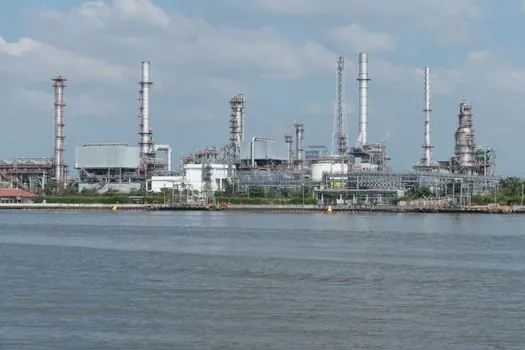
On a four-criterion matrix drawn from the MAC and Fuji Electric summaries, vortex sits as the balanced middle option [S1][S3]. Versus orifice plate: vortex has lower permanent pressure loss, wider turndown, no edge-erosion maintenance, at higher purchase cost. Versus Venturi: vortex has smaller face-to-face dimension and lower installed cost, while Venturi keeps the edge in minimum pressure loss on large transmission lines. Versus turbine: vortex has no moving parts to wear and tolerates wet steam better; turbine has faster response and higher accuracy in clean dry steam. Versus Coriolis: vortex is roughly one-third to one-half the installed cost per point and handles large line sizes economically, but Coriolis wins on mass-flow accuracy, low-flow turndown, and liquids with entrained gas. On a typical chemical-plant steam header, vortex is the default; on a custody-transfer or reactor-feed liquid line, Coriolis is the default.
Specifying the 2026 shortlist: model pattern and sourcing
A defensible 2026 chemical-plant shortlist on a 3-inch to 6-inch steam header runs along these lines: Panametrics PanaFlow MV84 inline multivariable vortex meter, 316L stainless wetted parts, ANSI 150# or 300# flanged body, HART 7 output, ATEX II 2 G Ex d IIC T4 certification, calibration to ±1% of reading across 10:1 turndown minimum [S2]. On larger line sizes above 8 inches where hot-tap installation matters, the MV82 insertion-style body covers the same multivariable compensation with a single tap point, which cuts installation cost on retrofits [S2]. For utility steam comparison shopping, MAC's 2026 summary treats vortex as the most common customer pick across the steam flowmeter category, sitting alongside orifice, Venturi, and turbine in the six-meter shortlist [S1].
Where the project is a chemical plant expanding into electrolyzer or hydrogen service in 2026, the metering envelope widens to include gas-blending and low-flow measurement, and the spec must be re-evaluated against the hydrogen duty map: Green Hydrogen Instrumentation: Flow, Pressure, and DCS Spec Map for 2026 Electrolyzer. For cable and signal-wiring choices feeding the new vortex and Coriolis points on a chemical-plant DCS, the semiconductor-cable reference is a useful proxy for noise-immune analogue and digital signal paths: Best Shielded Cable for Semiconductor: 2026 Spec Map.
Two trackable signals for the next 6 months: any OEM update that pushes multivariable vortex accuracy below ±1% of reading, and any move by the major DCS vendors to standardize multivariable compensation in the controller rather than the meter, which would shift the cost balance between single-variable and multivariable bodies on new chemical-plant builds.