Both bimetal dial thermometers and industrial liquid-in-glass thermometers are still specified for local temperature indication in 2026 process plants because they require no external power, no electronics, and no I.S. barrier [S3][S5].
The selection question is not "which is newer", it is "which physics matches the service": differential thermal expansion of two bonded metals versus thermal expansion of a calibrated liquid column [S3][S4]. Range, accuracy, vibration, and read-distance drive the choice more than price alone [S1][S2].
Operating Principles and Sensing Element
A bimetal thermometer uses a helical coil made of two metals with different expansion coefficients bonded together; differential expansion rotates the coil and drives a pointer across a graduated dial [S3][S4]. The classic pairing is brass bonded to Invar, where the large expansion difference produces a strong, repeatable mechanical deflection [S4].
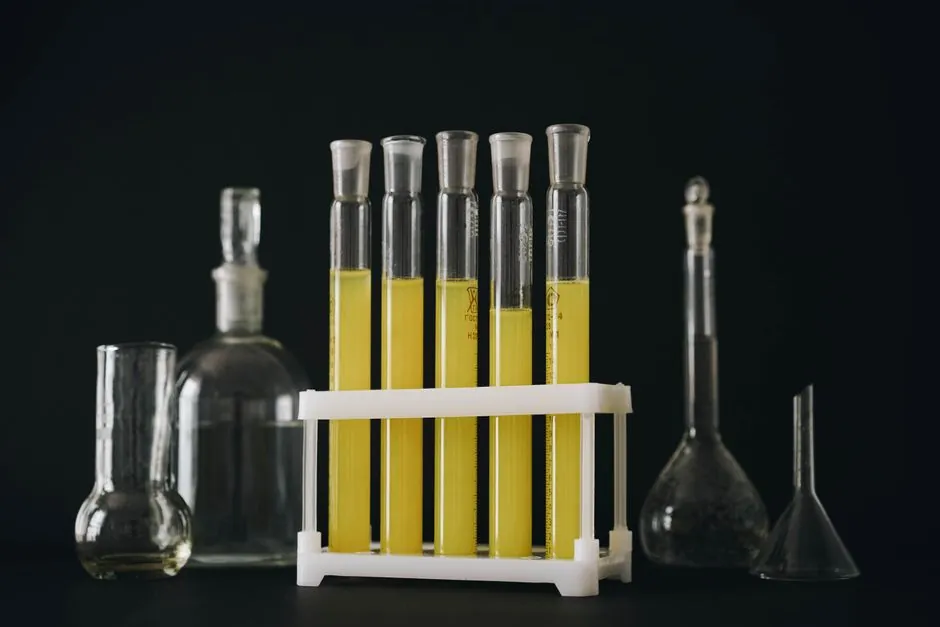
An industrial liquid-in-glass thermometer uses thermal expansion of a calibrated liquid inside a glass bulb plus capillary; the column height against an etched scale is the indication, and the system depends on the small bore of the capillary to convert a small volume change into a visible column travel [S3][S4]. Reference sight-glass designs follow the same glass-envelope approach used in industrial level gauges.
Temperature Range and Accuracy
Industrial liquid-in-glass thermometers cover roughly -200 °C to +1,000 °C depending on the fill liquid and glass, which is a wider span than most bimetal dial units [S6]. Mercury historically enabled -38 °C up to about +357 °C; modern non-mercury fills (e.g., hydrocarbon or alcohol-based fluids) are matched to narrower sub-ranges for the same envelope [S3].
Reotemp's industrial bimetal catalog lists ranges of -100 to 1,000 °F (-73 to 538 °C) with ±1% of full-scale accuracy across the 3, 4, and 5 inch dials, plus a dual-mode line reaching 1,200 °F [S5]. Bimetal accuracy is essentially a function of dial size, coil linearity, and stem immersion depth, not of the readout medium [S3][S5].
For comparison, a typical ASTM-style liquid-in-glass reference thermometer quotes accuracy around ±0.05 to ±0.5 °C depending on the partial-immersion specification, which is tighter than ±1% FS bimetal on wide ranges [S3][S6]. The liquid-in-glass design pays its accuracy cost in fragility: the glass envelope is the sensor and the indicator at the same time [S3].
Construction, Dial Size, and Readability
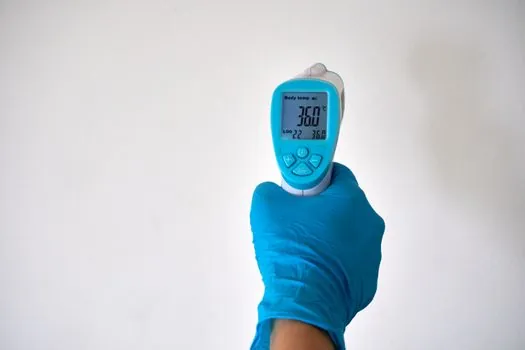
Bimetal dials cluster in 2, 3, 4, and 5 inch sizes for industrial service, with 2 and 3 inch being OEM-scale and 4 to 5 inch the workhorses for field reading at 1-3 m [S2][S5]. Pointer position can be read at a glance, so bimetal units are favored on operator-walked pipe racks and tank farms where the instrument must be read from outside the hazard boundary [S1][S2].
Liquid-in-glass industrial thermometers are typically straight or angle-form with 6 to 12 inch stems, an etched or printed scale on the glass, and a metal housing for pipeline mounting [S3][S7]. Read distance is limited to roughly the length of the scale (30-60 cm), so the operator must be close to the line, which constrains use in hot or toxic service [S3].
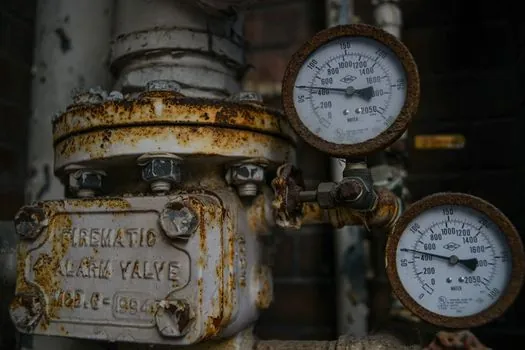
WIKA's product guidance notes that liquid-filled gas-actuated dial thermometers are preferred over bimetal on high-vibration services, since the viscous fill dampens pointer flutter and the gas-actuated Bourdon system has no gears to wear out [S1][S2]. A dry bimetal pointer will visibly vibrate on a compressor skid; a liquid-filled dial will not, which is why the choice of fill (dry vs. silicone oil) is itself a spec line on most bimetal data sheets [S2].
Cost, Lead Time, and Lifecycle
Bimetal thermometers are "much cheaper" than comparable gas-actuated dial thermometers, and the catalog spread (Reotemp's $ to $$$ series) shows that industrial 3-5 inch back-connect bimetal units are the cost baseline for any mechanical dial [S1][S5]. Stock OEM dials (1 to 2 inch) drop even lower, with ±1.5 to ±2% FS accuracy as the tradeoff [S5].
Industrial liquid-in-glass thermometers are also inexpensive as raw hardware, but the accuracy and certification work (NIST-traceable calibration, individual bath testing, partial vs. total immersion marking) add cost that a bimetal catalog unit does not carry [S3][S7]. Reotemp lists its 3-5 inch industrial bimetal configurations as "shippable in days" with highly customizable ranges, which is generally faster than special-range liquid-in-glass reference units [S5].
On lifecycle, a glass thermometer envelope can be broken by mechanical impact, thermal shock, or steam blow; a bimetal coil cannot be broken in the same way but its coil can be permanently deformed if the unit is overheated well past the upper range stop [S3]. Spares planning therefore differs: bimetal is a maintenance-stock item, while liquid-in-glass reference thermometers are typically replaced one-for-one from a calibration set [S3][S5].
Environmental and Regulatory Constraints
Mercury fill in liquid-in-glass thermometers is restricted or banned in many jurisdictions for environmental reasons, so modern industrial units use non-mercury fills matched to narrower temperature spans [S3]. Where mercury must still be used (some high-temperature ranges up to +357 °C), breakage containment and disposal are the dominant lifecycle issues [S3][S6].
Bimetal thermometers carry no fill-fluid regulatory burden, but they do need a thermowell in pressurized service to allow removal without depressurizing the line; thermowells also slow the bimetal's already-slower response versus a direct-immersion glass stem [S2][S5]. The same is true of industrial liquid-in-glass thermometer installations on process piping, where a thermowell is standard for any line above atmospheric or with process-side fouling risk [S7].
Selection Criteria: A Side-by-Side Comparison
On cost, bimetal wins for general-purpose local indication because the dial, coil, and stem are commodity items and most ranges ship from stock [S1][S5]. On accuracy, liquid-in-glass wins for reference-grade work because the calibrated liquid column can be read against an etched scale to fractions of a degree, against bimetal's typical ±1% FS [S3][S5][S6].
On vibration and read-distance, bimetal (preferably liquid-filled) is the right pick for compressor skids, pump skids, and outdoor pipe racks where the operator needs a 5 inch dial readable from 2-3 m [S1][S2]. On hazardous-area simplicity, liquid-in-glass is the right pick for laboratory, calibration bath, and clean utility loops where no power, no electronics, and direct column verification are mandatory [S3][S7].
On temperature span, industrial liquid-in-glass covers -200 to +1,000 °C with the right fill, versus bimetal's typical -73 to +538 °C (-100 to 1,000 °F) catalog ceiling; for any service above ~600 °C, specify a high-temperature fill in glass or move to thermocouple/RTD [S5][S6]. Engineers weighing a copper vs aluminum sealing washer for the thermowell process connection face the same "use the soft crush-washer to protect the thread" logic that applies to glass-stem thermometer packing nuts. For a broader look at how mechanical spec choices play into plant economics, see the analog chip market pull analysis on instrumentation supply in 2026.
When to Specify Each, and What to Verify

Specify a bimetal industrial thermometer (3-5 inch dial, ±1% FS, silicone-liquid fill) when the service is pipe or tank, the range sits within -100 to 1,000 °F, vibration is moderate to high, and the operator needs to read from outside the hazard boundary [S1][S2][S5]. Specify an industrial liquid-in-glass thermometer when the service demands reference-grade accuracy, the environment is clean, no power is preferred, and the operator can get close enough to read a 6-12 inch stem scale [S3][S7].
Always confirm four items before purchase: (1) thermowell material and process connection for both types, (2) immersion depth (total vs. partial) for the glass unit, (3) vibration rating and fill choice for the bimetal unit, and (4) calibration certificate scope (NIST-traceable for reference thermometers, factory ±1% FS statement for bimetal) [S2][S3][S7].
For deeper reference on bimetal dial design and its limits, see the bimetal thermometer encyclopedia page; for the glass envelope material behind liquid-in-glass stems, see optical glass and glass quartz for high-temperature variants. The next spec node to track is whether new non-mercury fills widen the upper end of industrial liquid-in-glass above the current ~+500 °C ceiling, since that would directly encroach on the bimetal 1,000 °F (538 °C) catalog line.