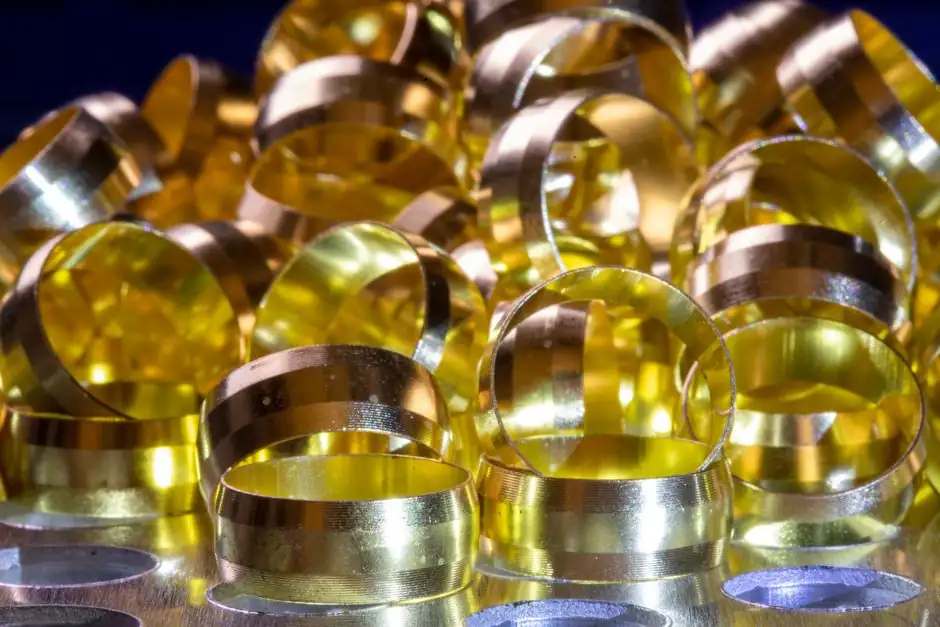
Copper sealing washers deform under load to form a hermetic seal in high-pressure hydraulic, brake, and fuel-line joints, with rated use up to roughly 10,000 PSI per industry market data, and they tolerate higher service temperatures than aluminum [S3].
Aluminum sealing washers sit at the soft end of the soft-metal-gasket family, crush at lower bolt torque, and are typically 20 to 40 percent cheaper per piece than equivalent copper crush washers, making them the default for OEM drain-plug applications on aluminum pans [S1][S2].
Material Behavior Under Crush Load
Both metals work as single-use soft-metal gaskets that flow into the micro-voids of a flange or plug face, but their stress-strain curves diverge sharply once torque is applied. Annealed copper is more malleable than work-hardened copper, which is why most production copper crush washers are specified in a dead-soft or fully annealed condition; a non-annealed copper ring can feel "too hard to deform correctly" on reassembly and produce a weeping seal [S2][S6].
Aluminum, by contrast, crushes at a lower threshold than annealed copper, and in service it cannot be re-annealed easily because aluminum needs a tightly controlled heat-treat cycle; this is why aluminum crush washers are treated as single-use, while copper can be re-annealed with a torch glow and reused [S3][S5]. Field reports back this up: re-annealing a copper washer on a trans-cooler line stopped a steady leak that a reused-as-is copper washer could not [S5].
For a broader view of how soft-metal gaskets fit into static sealing practice, see the sealing washer fundamentals and the capping sealing machine overview for high-volume assembly contexts.
Pressure, Temperature, and Chemical Compatibility
Copper washers are specified for high-pressure, high-temperature joints: brake banjo bolts, diesel fuel-line unions, and hydraulic fittings where system pressure can run into the thousands of PSI and skin temperatures exceed 200 degrees C [S1][S3]. S3 cites crush-washer assemblies holding seal integrity at pressures up to 10,000 PSI, which is the upper end of typical industrial hydraulic service.
Aluminum washers cap out at moderate pressures and lower continuous temperatures; they are the standard recommendation for engine oil drain plugs on aluminum oil pans in M12, M14, and M20 sizes [S1]. Matching washer metal to the parent fitting metal is the dominant chemical-compatibility rule: copper on an aluminum pan risks galvanic corrosion, while aluminum on an aluminum pan matches thermal expansion and avoids bimetallic attack [S1][S4].
Where the application is purely electrical, copper's conductivity and oxidation resistance push the choice further toward copper flat or copper-material sealing washers even when crush pressure is modest [S4].
Decision Matrix: Copper vs Aluminum Crush Washer
Use the table below as a pre-spec screening step. Each row is a decision criterion that the research sources back with a direct claim, and the column that "wins" reflects which material is the safer default for that criterion. [S1]
Crush pressure threshold: aluminum wins for low-torque drain plugs; copper wins for high-pressure hydraulic and brake service [S1][S3]. Maximum service temperature: copper wins, retaining integrity through repeated heat cycles above what aluminum tolerates [S1]. Galvanic compatibility with mating part: aluminum wins on aluminum housings, copper wins on steel or cast-iron housings [S1][S4]. Reusability: copper wins if you can re-anneal; aluminum is effectively single-use [S5]. Unit cost: aluminum wins, typically 20 to 40 percent cheaper than an equivalent copper crush washer [S1]. Storage and field handling: copper wins because copper is harder and resists deformation in bins and parts drawers, while aluminum scratches and dents easily [S1][S6].
For aluminum-housing oil pans, specify aluminum; for steel-pan drain plugs, brake banjo bolts, and high-pressure fuel lines, specify copper. This is the rule the sources converge on, and it tracks the same logic that drives spring washer and sealing washer selection elsewhere in the fastener catalog [S1][S5].
Application-Specific Recommendations
Oil drain plugs on modern aluminum pans: aluminum crush washer in M12, M14, or M20, replaced at every oil change. The thermal expansion rate matches the pan, and the lower crush pressure avoids distorting the pan's flange [S1].
Brake hose and caliper banjo bolts: copper crush washer, single-use, replaced at every brake service. Field data shows copper holds at the high PSI of brake circuits and tolerates the heat soak at the caliper [S1][S3].
Hydraulic paint-sprayer and contractor-equipment fittings: copper crush washer, replaced at every fitting open. S3 specifically calls out Graco and Wagner/Titan equipment holding seal integrity at pressures up to 10,000 PSI when fitted with a fresh copper crush washer.
Older steel oil pans and engine cases: copper crush washer; if the joint still weeps after a fresh annealed copper ring, suspect a nicked flange face and step up to a bonded seal or a wider OD crush washer of the same ID and thickness [S1][S5].
Electrical bonding and grounding lugs where a seal is also needed: copper flat or crush washer for conductivity and oxidation resistance, even at low mechanical load [S4].
Installation Torque, Reuse, and Failure Modes
Installation discipline matters as much as material choice. The most common failure pattern is not the wrong alloy, but a non-annealed copper ring that was stored in a work-hardened state; heating it to a dull red glow and letting it cool restores the dead-soft condition and the seal [S3][S5].
A second failure pattern is flange damage: even a small nick in the sealing face that extends past the washer's outer edge will bypass the seal, and the fix is usually a wider washer of the same ID and thickness, not a different alloy [S5]. A third pattern is over-torque: a too-tight bolt can extrude the soft metal past the joint and leave a gap on the inside diameter; stop using the torque wrench, feel the crush, and respect the single-use design intent [S3][S7].
Aluminum is softer than annealed copper, so it seals at a lower torque, but it cannot be re-annealed in the field, which is why it is treated as a consumable rather than a reusable part [S2][S5]. For lighter assemblies where weight and cost dominate, aluminum-alloy sealing washers remain the sensible default.
Standards, Sourcing, and Specification Notes
Specifying washers for OEM production runs means matching the callout to the mating standard. Common automotive and industrial sizes follow DIN and JIS tables, with M12, M14, and M20 covering most drain-plug and banjo-bolt service [S1]. Crush-washer production to IATF 16949 quality systems is the baseline tier for automotive OEM lots [S1].
For high-pressure hydraulic assemblies, the relevant guidance is the equipment maker's service manual, not a generic DIN callout: Graco and Wagner/Titan, for example, both publish torque values matched to their fitting geometry and the 10,000 PSI upper end of their seal design [S3]. Copper crush washers in the after-market range from pure copper to copper alloys; an alloy ring will need more torque to seal than a dead-soft copper ring, so the spec sheet should distinguish between C110 (ETP copper) and common brass alternatives [S2].
For related comparisons in the fastener and sealing catalog, see the DIN 22102 cover-grade decision map on rubber-compound selection, and the check valve vs counterbalance valve decision map for the fluid-power side of the same load-holding conversation. The aluminum-foil current-collector spec sheet at 8-15 micrometer aluminum foil production is a useful parallel read for anyone standardizing aluminum alloy callouts across a bill of materials.
Track, in the next sourcing cycle, whether your copper crush washer supplier is shipping annealed or work-hardened stock, whether the aluminum drain-plug washers are dropping in price as automotive production volumes recover, and whether any of your high-pressure hydraulic SKUs are migrating from copper to bonded seals as a way to eliminate the re-anneal step in field service.