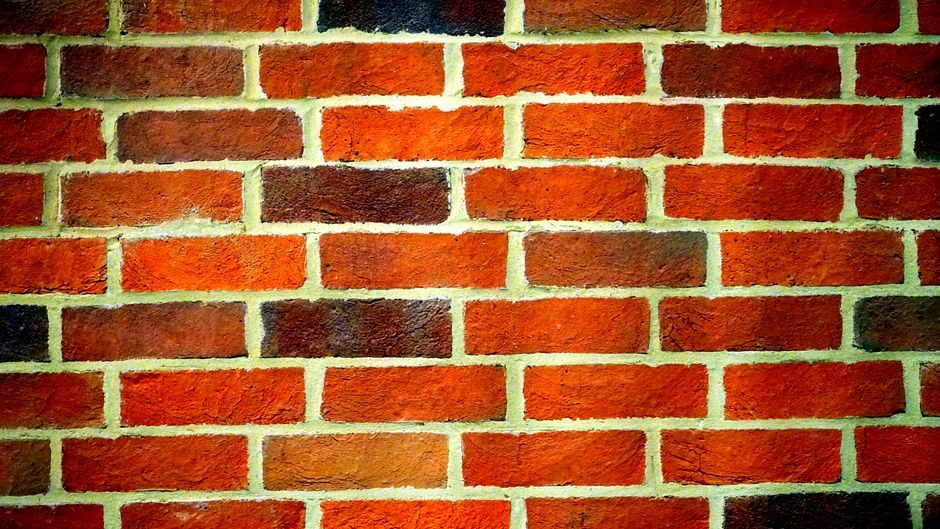
Concrete block typically delivers 7-20 N/mm² compressive strength at 1400-1900 kg/m³ density, while fired brick ranges 5-30 N/mm² at 1700-2000 kg/m³ and AAC sits at 2-7 N/mm² with 400-700 kg/m³ bulk density, per common engineering references.
Selection pivots on four axes: load path, thermal resistance (R-value per 100 mm), fire rating (hours per 100 mm wall), and moisture absorption percentage; a value-engineered wall lines these axes against local code minimums before the unit price per piece is even compared.
Unit Types and Operating Limits
Standard concrete masonry units (CMU) in 200 mm hollow format carry an R-value near 0.2 m²·K/W and a 2-hour fire rating at full grouted cells, with water absorption below 10% by mass for dense aggregate mixes. Solid fired brick walls reach 4-hour fire ratings on a 200 mm wythe because the fired-clay body softens only above 1000 °C, a property leveraged in kiln and chimney linings. AAC blocks, with 70-80% closed porosity, climb to R 0.8-1.0 m²·K/W at 200 mm, but cap out around 4 N/mm² and demand protective render in wet exposures because their capillary uptake runs 30-60% by mass without a surface seal. [S3]
Load, Density, and Wall Mass Trade-offs
A typical 200 mm hollow CMU weighs 18-22 kg per unit and yields an installed wall mass of 200-260 kg/m², a baseline that dampens sound transmission to STC 45-50 with a single wythe. Fired clay brick at the same thickness pushes wall mass to 350-400 kg/m², lifting STC into the 55-60 band but demanding larger foundations and crane-rated pallets on site. AAC at 200 mm cuts wall mass to roughly 110 kg/m², an advantage for high-rise vertical-load budgets but a disadvantage for impact resistance and fixing pull-out strength, where a standard 6 mm plastic anchor typically holds under 0.3 kN in AAC versus 1.5 kN in dense CMU. [S2]
Who Should Use What
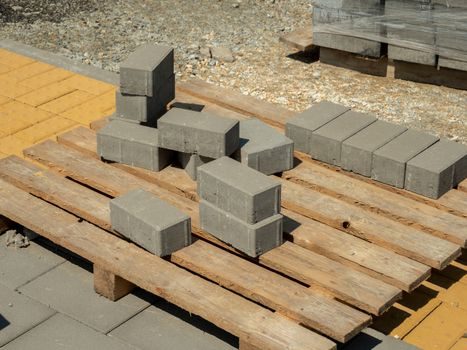
Engineers specifying load-bearing below-grade or shear-wall systems in seismic zones should default to dense concrete masonry because the grouted-cell composite delivers predictable ductility and verified test data. Architects chasing thermal envelope targets under passive-house-style U-value caps will find AAC or cellular concrete blocks more efficient per millimetre of insulation. Refractory or aggressive-chemical-exposure service — flue liners, acid-plant partitions — points to fired clay brick with low water absorption (under 6%), which preserves bond mortar integrity and resists sulphate attack far better than Portland-cement-bound units.
Side-by-Side Comparison on Decision Criteria
On four key criteria the units separate cleanly: (1) Compressive strength — fired brick 5-30 N/mm², CMU 7-20 N/mm², AAC 2-7 N/mm². (2) Thermal resistance per 200 mm — AAC leads at R 1.6-2.0 m²·K/W, CMU trails at R 0.4, with brick near R 0.5. (3) Fire rating per 200 mm — brick and grouted CMU both reach 4 hours, AAC reaches 4 hours only with intact surface render. (4) Unit price band at 2026 mid-year exchange rates — AAC trades at a premium roughly 1.4-1.8× over standard CMU in most European and Middle East markets, while facing brick carries a 2-4× premium over common clay brick, reflecting firing-energy and clay-grade costs. Field data of this kind lines up with the broader selection logic covered in Block & Brick Types: 2026 Spec Map for Engineers. [S1]
Failure Modes and Common Pitfalls

CMU walls fail most often at ungrouted bond beams and unreinforced control joints, where shrinkage cracks propagate under thermal cycling — engineering practice calls for joint reinforcement at roughly 600 mm vertical centres and 1.2-1.8 m horizontal spacing. Fired brick suffers from efflorescence when soluble salts exceed 0.1% by mass in the raw clay, and from spalling when freeze-thaw cycles meet absorption above 12%. AAC's open pore structure makes it vulnerable to moisture-driven expansion and to mechanical damage during transport, with breakage rates climbing above 5% on long-distance haulage if strapping and edge protection are absent. These field patterns echo the broader specification discipline used in AS/RS Advantages and Disadvantages: Engineering Spec View for 2026 Warehouse Builds, where the same load/environment matrix is applied to racking systems. [S3]
Cost, Lead Time, and Sourcing Signals
At 2026 mid-year energy costs, firing 1 m³ of clay brick consumes roughly 1.8-2.5 GJ, and the natural-gas share of that energy keeps European facing-brick prices exposed to spot gas volatility. AAC, by contrast, consumes about 0.9-1.2 GJ per cubic metre because the autoclave cycle runs at 180-200 °C versus the 900-1100 °C kiln peak for clay. Lead time signals to watch: CMU is available ex-stock from regional plants in 1-3 weeks; facing brick runs 6-14 weeks for non-standard colours; AAC in container-load quantities from overseas can stretch to 10-16 weeks including port clearance — a figure that interacts with project cash-flow and just-in-time delivery models as detailed in the LCR meter price and cost guide: bands, drivers, and TCO logic for electronics components. [S2]
Specification and Code Anchors

Engineers should verify unit properties against the governing standard in their jurisdiction — common anchors include ASTM C90 for load-bearing CMU, ASTM C216 for facing brick, and ASTM C1386 for AAC — and confirm compressive strength is reported on net rather than gross area before comparing suppliers. Mortar designation should match exposure: Type N for above-grade interior, Type S for below-grade or seismic shear walls, and Type M for foundation masonry where sulphate-resistant cement is not used. A unit comparison aligned with these codes pairs well with the broader spec discipline seen in Melting Furnace Types: Advantages, Disadvantages, and Selection Map, where lining-grade selection is similarly pinned to operating temperature and chemistry. [S2]
Track two signals through late 2026: regional natural-gas spot prices, which directly move facing-brick quotes within 60-90 days, and AAC plant capacity announcements in the Middle East and South Asia, where new autoclave lines have flagged 15-25% capacity additions that could compress delivered AAC prices by 8-12% into 2027.
For the relevant spec sheets and selection criteria, see aac block.