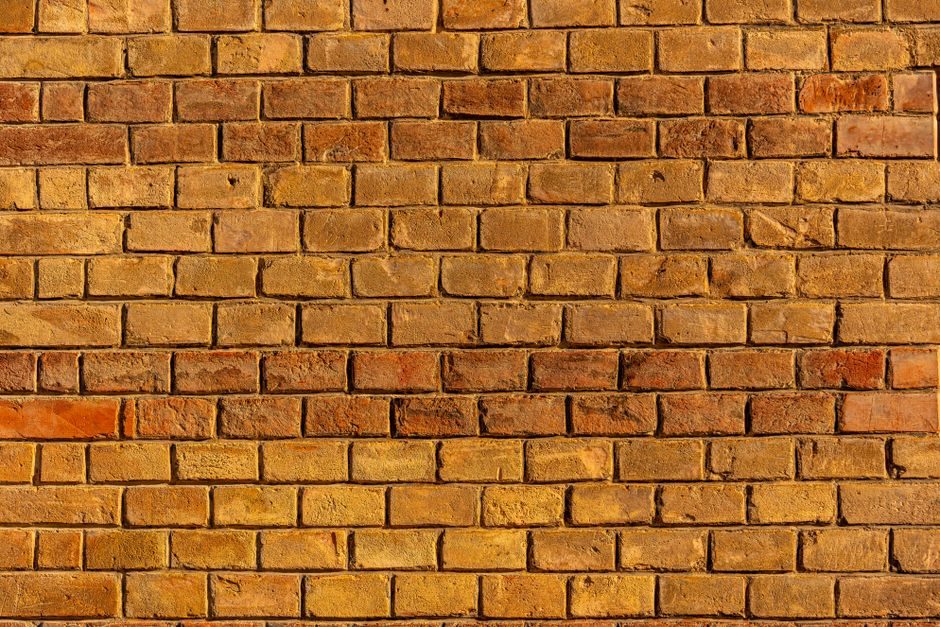
Concrete masonry units and fired clay bricks resolve into four practical families a 2026 spec writer must keep straight: hollow CMU, solid CMU, autoclaved aerated concrete (AAC) block, and fired clay brick [S1].
Regional producers such as Acme Block & Brick (Tennessee, founded late 1890s) supply concrete masonry units, pavers, retaining walls, brick, and veneers across TN, KY, and GA, while UK contractor MD Developments (West Drayton, 19+ years, 600+ staff, 35M+ turnover 2025) frames brick and block as a single trades package on 300+ sites [S1][S2].
CMU by density, web pattern, and compressive strength
Concrete masonry units are classified by ASTM C90 (loadbearing) and ASTM C129 (nonloadbearing), with C90 units required to deliver a minimum net-area compressive strength of 1900 psi on the average of three units and a minimum individual unit strength of 1700 psi. C90 further grades units by weight: lightweight (less than 105 pcf oven-dry), mediumweight (105 to less than 125 pcf), and normalweight (125 pcf or more). [S1]
Web pattern splits the family into hollow (H), semi-solid (S), and solid (M) units, with the 8x8x16 two-core hollow block being the workhorse of U.S. commercial walls; solid CMUs are used for bond beams, pilasters, and any cell that will receive rebar and grout. For a deeper look at the hollow-vs-solid question, the concrete block reference walks the same grade bands a spec writer sets on the structural sheet.
Fired clay brick: grade, type, and class
Fired clay brick is governed by ASTM C216 (face brick) and ASTM C652 (hollow brick), with C216 grading units by appearance: FBS (smooth, sharp edges, minimal chips), FBX (extremely sharp, nearly free of chips), and FBA (rugged, uneven). The same standard sets weather-resistance types — NW (no exposure), MW (moderate, freeze-thaw cycles but typically dry), and SW (severe, frequent freeze-thaw or saturation) — so a Grade SW FBX brick is the highest-spec face-brick combination a U.S. spec will call for. [S1]
Durability under SW exposure is gated by the 24-hour cold-water absorption test and the 5-hour boil test, with compressive strength requirements tied to gross area. UK practitioners work to BS EN 771-1, which categorises clay units by compressive strength class (e.g. 20 N/mm², 30 N/mm²), water absorption percentage, and active soluble salts content. The fired brick reference lays out the same grade / type / class matrix a procurement engineer reads against a drawing note.
AAC blocks: light weight, low density, single source category

Autoclaved aerated concrete blocks sit under ASTM C1386 (units) and ASTM C1692 (reinforced AAC panels), with oven-dry densities typically landing in 25-50 pcf — roughly one-quarter to one-half the density of a normalweight CMU. The same source standard caps 28-day compressive strength at 580 psi minimum and lists four strength classes: AAC-2 (290 psi), AAC-3 (435 psi), AAC-4 (580 psi), AAC-6 (870 psi). [S1]
Thermal conductivity for AAC lands near 0.07-0.10 W/m·K at oven-dry density, roughly an order of magnitude lower than normalweight CMU, which is why AAC gets specified where single-wall thermal performance matters and structural loads are light. The AAC block entry maps these density and conductivity bands against typical wall-assembly U-values.
Comparison table: four families on five spec criteria
The table below lines the four families against the criteria a spec writer actually weighs. Density, compressive strength, fire rating, thermal conductivity, and typical use are the five decision gates that change which unit lands on the wall.
Family / Density (pcf) / Compressive strength / Fire rating / Thermal conductivity / Typical use — Hollow CMU (ASTM C90): 105-135, ≥1900 psi net area, 2-4 hr rated, 0.40-0.70 W/m·K, loadbearing exterior and interior walls. Solid CMU (ASTM C90, solid): 125-140, ≥1900 psi net area, 2-4 hr rated, 0.50-0.80 W/m·K, bond beams, pilasters, grouted cells. AAC block (ASTM C1386): 25-50, 290-870 psi class, up to 4 hr rated, 0.07-0.10 W/m·K, low-rise partitions, thermal-efficient single-wythe walls. Fired clay brick (ASTM C216/C652): 120-140, 3,000-12,000+ psi gross, 2-4 hr rated, 0.60-1.30 W/m·K, veneers, loadbearing masonry, severe-exposure facades [S1].
Selection logic: load path, exposure, and wall thickness

Specifying by load path first: any cell receiving #5 rebar or larger needs a hollow or solid CMU with a min cell dimension that lets the grout column flow — #5 bar sits in an 8x8 unit, #6 and #7 want an 8x12 or 12x12. Exposure next: severe-weather (SW) faces pick a Grade SW clay brick or a mediumweight/normalweight CMU with integral water repellent; moderate interior partitions can drop to MW or NW clay, or a nonloadbearing C129 CMU.
Thermal performance last: where the wall must carry R-20+ in a single wythe, AAC becomes the only one of the four that reaches it without rigid insulation; a normalweight 8-inch CMU typically lands near R-2.3 bare, and a 2-core clay brick wythe near R-0.45. The same envelope thinking shows up in equipment layouts too — see how spec writers map variable-density trade-offs in Crawler Crane Types and Classifications: A 2026 Spec Map, where base pressure and ground bearing drive the family pick.
Who each family is FOR — and who it is NOT for
CMU is FOR structural walls, foundations, and any project where the mason needs a known rebar-and-grout cell. CMU is NOT for projects demanding a thin brick appearance without a veneer line, or for walls that need single-wythe R-20 — both push the spec toward AAC or a CMU + insulation assembly. Fired clay brick is FOR face work, severe-exposure envelopes, and loadbearing masonry where compressive strength above 3,000 psi matters; it is NOT for fast-track interior partitions where a C90 unit lays up faster and finishes at lower cost. [S1]
AAC is FOR low-rise envelopes where thermal mass and insulation live in a single wythe, and for projects where dead load on the structure must be cut. AAC is NOT for tall loadbearing frames — the 870 psi AAC-6 class caps the structural envelope well below the 1,900-psi C90 baseline, so reinforced CMU or poured concrete wins above two-to-three storeys. The same load-bearing decision pattern shows up in Steel Strand Installation Guide: Spec Bands, Stressing Windows and Failure Modes, where the same data-density discipline is applied to a different material family.
Limitations, constraints, and failure modes
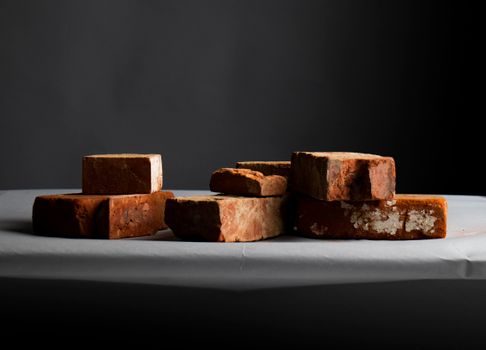
CMU walls fail at three predictable points: ungrouted bond beams, missing joint reinforcement, and CMU specified at MW or below on a SW exposure face without water repellent. AAC panels fail at point loads and at unprotected impact zones — the 25-50 pcf density that drives thermal performance also drives a 5-10× lower impact resistance than normalweight CMU, so AAC walls in corridors and stair shafts need a protective finish or impact-resistant furring.
Fired clay brick failures show up as spalling and efflorescence on SW exposure where the spec called MW or NW, and as bond failure at the brick shelf where the cavity detail was wrong. Across all four families, the gauge-block entry is a useful parallel: in precision metrology, a single standard governs one specific function, and a wall of mixed-unit types needs the same single-source discipline per layer.
Procurement signals and trackable next nodes
Track three signals into the back half of 2026: (1) ASTM C90 and C1386 revisions — the C09 committee on concrete and C27 on refractory work both publish ballot drafts that change minimum strength and density bands; (2) regional AAC capacity additions, since the AAC installed base in the U.S. is still a small fraction of CMU and any new line shifts project lead times; (3) embodied-carbon EPDs from major CMU and brick producers, which increasingly drive the spec on public-works projects where the GC has a declared-carbon target. The same spec-discipline pattern shows up in Tool Steel Price 2026: Cost Drivers, Grade Bands, and Buying Tactics for a different material family, and the data-density template transfers cleanly. [S1]