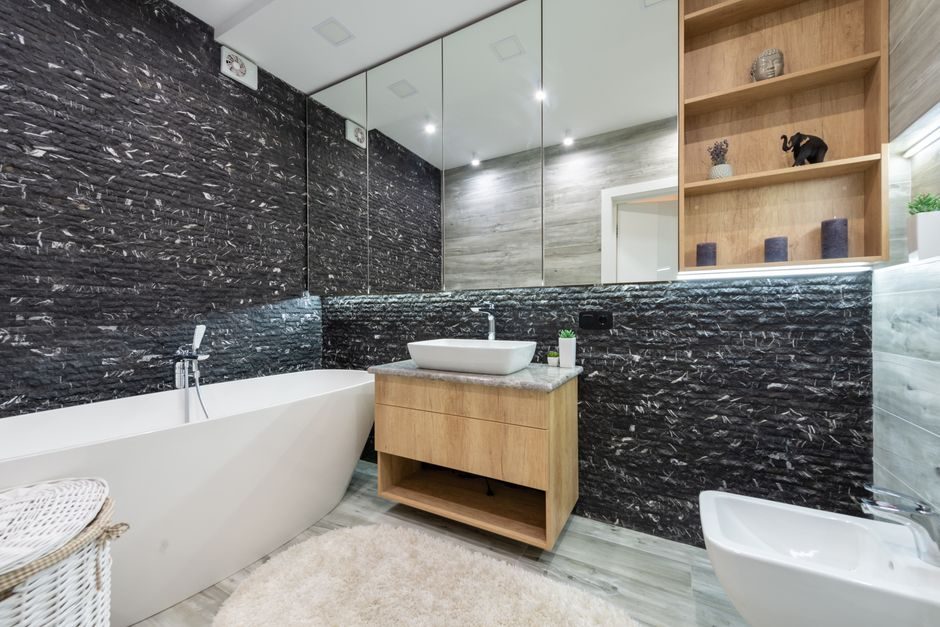
Building stone and ceramic tile are both cladding and flooring products, but they sit at opposite ends of the spec sheet: natural stone is a quarry-extracted, heterogeneous material graded on compressive strength (typically 70–210 MPa for granite) and absorption (0.1–0.6% for dense granite, up to 2–5% for some marbles), while ceramic tile is a manufactured, dimensionally controlled product graded on PEI wear class, Mohs hardness, water absorption (ISO 10545-3 groups Porcelain ≤0.5%, Stoneware 0.5–3%, Earthenware >10%) and breaking strength (ISO 10545-4 ≥1300 N for floor porcelain) [S2][S3].
The decision in 2026 is no longer "stone is premium, tile is cheap": large-format sintered stone slabs (often 800×2600 mm, 1200×2400 mm, 1200×2700 mm) now ship with water absorption under 0.1%, Mohs ≥7, and stain/acid resistance that beats most marbles, blurring the line between natural stone and engineered panel [S3]. Specifiers on Dongpeng's 2026 catalogue work with pressed porcelain and sintered stone in the same size brackets as natural marble slabs, so the choice has to be made on performance criteria, not tradition.
For context on adjacent finish-trade selection logic, the skylight selection criteria guide and the dry-mix mortar vs cement spec walkthrough follow the same spec-first pattern: pin the performance number first, then the product family.
Material Definition, Standards and the Two Product Families
Building stone covers granite, marble, limestone, sandstone, slate and basalt cut from quarries and finished as tiles, slabs, or cut-to-size cladding; it is graded under standards like ASTM C615 (granite), C503 (marble), C568 (limestone) and EN 1467/1468 for raw and finished stone, with key reported properties being density (granite 2.6–2.7 g/cm³, marble 2.6–2.8 g/cm³), compressive strength, modulus of rupture, and abrasion resistance (referenced via the Böhme or Capon test). [S1]
Sintered stone is the latest sub-family, made from a similar mineral mix but pressed at very high tonnage and fired around 1200–1300 °C, giving slab formats up to 1620×3240 mm with thickness 6–20 mm and water absorption under 0.1% [S3].
For background on the basic material classes, the encyclopedia entries on building stone, ceramic tile and industrial ceramic lay out the chemistry, body types and standard families in more depth.
Selection Criteria: The Six Numbers That Decide the Spec
1) Water absorption: dense granite and porcelain tile both sit under 0.5% and survive freeze-thaw wet environments; sandstone and earthenware are well above 2–10% and need to be kept dry or sealed. [S2]
2) Hardness and wear: granite typically measures 6–7 on Mohs, marble 3–5, porcelain tile 5–8, sintered stone ≥7; PEI wear class (I–V) is the parallel scale for glazed tile, with PEI IV–V specified for commercial floors.
3) Breaking strength and modulus of rupture: ISO 10545-4 requires ≥1300 N breaking strength and ≥35 N/mm² modulus of rupture for floor-grade porcelain; natural stone is graded on ASTM C99 modulus of rupture, where most granites sit at 10–20 MPa and marbles 7–15 MPa.
4) Slip resistance: the pendulum test value (PTV, EN 16165 / UK Slip Resistance Group) and the German R9–R13 rating (DIN 51130) drive floor choice in wet areas, with honed or flamed finishes rated higher than polished ones.
5) Chemical and stain resistance: porcelain and sintered stone resist acids (ISO 10545-13 class UA–ULC), while marbles containing calcite are etched by acids and need neutral cleaners.
Where Each One Fits: Floors, Walls, Facades and Wet Zones
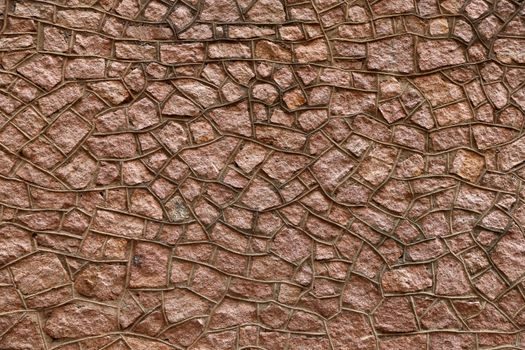
For high-traffic commercial floors (shopping centres, airports, hotel lobbies), porcelain tile in PEI IV–V and R10–R11 is the default pick because batch colour, thickness and slip rating are consistent from carton to carton, and replacement tiles in 5–10 years time still match [S1][S4].
Ceramic tile is available in sizes including 200×300 mm, 250×400 mm, 300×450 mm and 300×600 mm, which are commonly used for bathroom wall cladding due to their low cost [S3][S4].
For exterior facades, natural stone (granite, basalt) and large-format porcelain or sintered stone slabs are both specified; granite brings a 50–100 year proven service life and can be cut to 30–50 mm thickness, while porcelain facade panels (typically 600×1200 mm, 9–12 mm thick) need a tested clip or rail subframe and are lighter per m² [S3].
For monuments, columns and copings, cut natural stone dominates because of heritage matching and compressive strength; engineered panels are rarely accepted for restoration work on listed buildings.
Side-by-Side Comparison on Four Decision Criteria
Set against the four criteria that drive most spec calls, the comparison reads: (a) Water absorption — granite 0.1–0.6%, porcelain ≤0.5%, sintered stone <0.1%, marble 0.1–0.6%, sandstone 1–10%. (b) Mohs hardness — granite 6–7, porcelain 5–8, sintered stone ≥7, marble 3–5, sandstone 2–4. (d) Installed cost ballpark — calibrated granite tile 300×600 mm typically $25–60/m² material, porcelain floor tile $8–30/m², sintered stone slab $40–100/m²; these ranges reflect factory-gate and vary by region, not retail installed cost. [S3]
For a wider material-selection context, the EPS board cost and density guide and the steel-plastic composite pipe pricing guide follow the same pattern of pinning spec levers first, then cost.
Limitations and Failure Modes Specific to Each Family
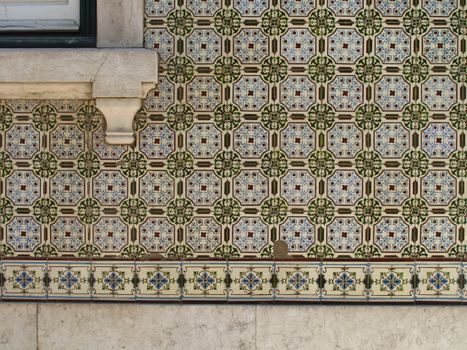
Natural stone failure modes are well documented: marble staining and acid etching in kitchens and bathrooms, sandstone spalling under freeze-thaw wet cycles if absorption exceeds ~5%, and granite thermal bowing on south-facing facades when dark colours push surface temperatures above 70–80 °C; sealing with a penetrating impregnator (typically fluoropolymer or silane/siloxane) every 2–5 years is standard maintenance [S1].
Ceramic tile failure modes are mostly installation-driven: hollow spots from poor thinset coverage, lippage between tiles because substrate flatness exceeded ±3 mm over 2 m, and cracked tiles at cut-outs around plumbing; rectified porcelain with 1.5–2 mm grout joints is more demanding on substrate prep than cushioned-edge wall tile with 3–4 mm joints [S1].
Sintered stone slab failure modes are recent and worth noting: large-format slabs (1200×2700 mm and up) need two-person mechanical handling, and edge chipping during transit and cut-out is the most common site damage; CNC waterjet cutting is standard for kitchen countertop cut-outs.
Sourcing, Standards and What to Demand on the PO
On the supplier side, established Chinese factories listed on Made-in-China and Alibaba (e.g. Xiamen Homemark Building Materials, Zibo Demai Building Materials) typically publish ISO 9001 management certification and offer both ceramic tile and stone-trading lines; verify the actual production origin, not just the trading company, when a custom size or finish is requested [S2][S4].
On installation, demand installer certification where the project is large: the Ceramic Tile Education Foundation (CTEF) certifies tile installers in North America, and similar credentialing bodies exist in Europe (e.g. TTA in the UK); for stone, the Natural Stone Institute (NSI) accreditation and the dimension-stone fixer trade qualification are the matching references [S1].
Decision Matrix in One Pass
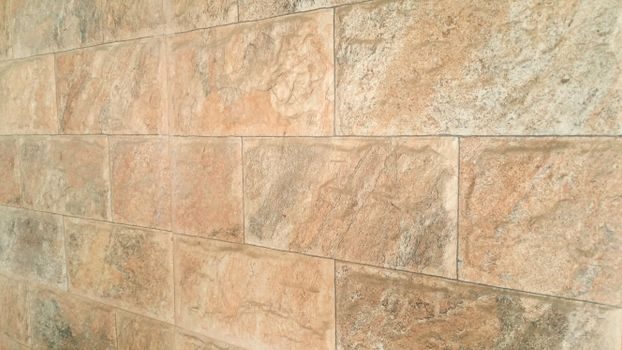
Use the matrix: pick natural stone (granite) when the spec needs heritage look, proven 50+ year service life, high compressive load (copings, columns, plinths), or unique veining that cannot be replicated. Pick sintered stone slab when the spec needs the marble aesthetic in a kitchen countertop or large wall, acid and stain resistance, and slab sizes over 2400 mm with thickness 6–12 mm. [S4]
Avoid using marble in commercial kitchen floors (acid attack and slip risk when wet), avoid polished porcelain in outdoor wet zones (R9 rating slips in rain), avoid sandstone in freeze-thaw wet climates unless sealed and rated below 2% absorption, and avoid sintered stone in thin (6 mm) floor installations without checking the substrate deflection limits (typically L/360 for residential, L/720 for commercial) [S3][S4].
Track these signals going forward: (1) the next revision of ISO 13006 / EN 14411, which is expected to add a more granular slip-resistance class and tighter thickness tolerance for large-format panels; (2) ASTM C615 updates around thin-stone cladding systems, where 12–20 mm granite is now being used on ventilated facades; (3) the new wave of 6 mm sintered stone slabs and whether manufacturers publish L/360 and L/720 substrate-deflection guidance for residential and commercial floors respectively.