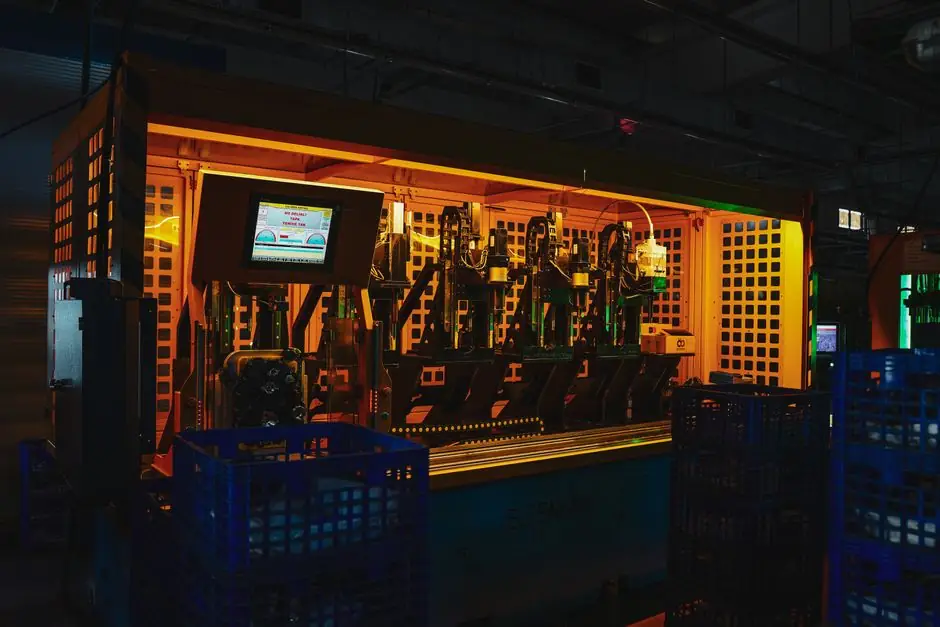
A bulk bag filling scale with densification and an inflatable spout seal combines weight control, material compaction, and inlet containment in one packaging operation.
The appropriate bulk bag filling system depends on the material, bag, target rate, and desired level of line automation.
Densification and Inflatable Seal Define the Fill Cycle
An inflatable spout seal clamps the bag inlet tightly to prevent dust escaping during filling. This makes the seal a process component rather than a cosmetic fitting, especially where powders or fine granules are handled.
Densification systems can be used during the filling process. One documented system uses twin electric vibrators with a flat-top densification platform and pallet-retaining structure [S5].
Weighing Selection Starts with Capacity and Accuracy
A documented bulk bag filler features a gain-in-weight scale and a densification system.
Choice Bagging's Model 5200 fills bags ranging from 1,000 to 4,400 lb.
Choice Bagging's Model 5200 stops at a target weight and offers slow-feed operation.
Frame and Throughput Choices Set the Operating Envelope
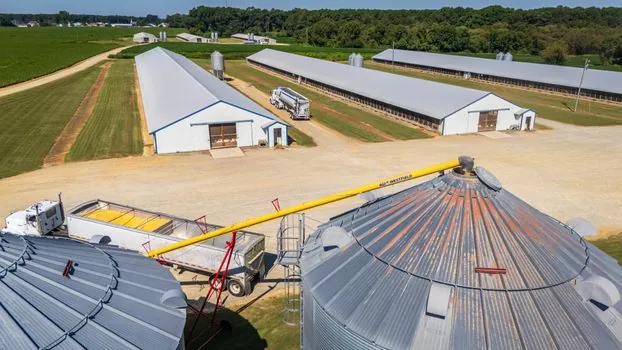
Basic frames are economical for very low-rate applications of 10 or fewer bulk bags per hour that do not require weighing or densification. Choice Bagging's Model 5200 fills up to 25 bags per hour.
Published specifications provide a useful comparison:
| Selection factor | Low-rate frame | Integrated heavy-duty system | High-rate integrated system | |---|---|---|---| | Rated throughput | 10 or fewer bags per hour | Up to 20 bags per hour | Up to 25 bags per hour | | Weighing | Optional | Integrated or application selected | Integrated scale | | Densification | Not required on basic frame | Available | Application selected | | Bag range | Basic frame application | 1,000–4,400 lb example | 1,000–4,400 lb example | | Construction | Basic support frame | Process-specific structural chassis | Heavy-wall 4 in box tubing | | Dust control | Added if required | Dust-tight head with controlled takeoff | Dust-tight head with controlled takeoff |
Dust Containment Requires More Than a Seal
A dust-tight fill head with an inflatable spout seal should be paired with a dust takeoff connected to a collector, not treated as a complete dust-control system [S2].
Displaced air generated during filling must have a defined route, while the spout seal prevents product from escaping around the inlet. The inflatable seal clamps the bag inlet tightly to prevent dust escaping during filling, and the dust extraction connection draws displaced air.
Fine powders, flakes, and granules require close attention to enclosure transitions, collection pickup, and bag-inlet condition.
Application Fit Determines the Required System

The system is appropriate for facilities replacing 50 lb bags with bulk containers, reducing spills and fugitive dust, or moving loose products into stackable and forklift-handled packages [S2].
Conversely, an automated high-rate system may be excessive for a process filling 10 or fewer bags per hour without weighing or densification [S8].
Material condition also drives the choice. A heavy-duty configuration is more defensible for abrasives and high-density solids than a light-duty frame [S4].
Procurement Tests Must Cover the Complete Sequence
A supplier trial should verify bag attachment, spout-seal inflation, bag pre-inflation, bulk feed, final trim feed, densification, target-weight capture, and removal. Dust emission around the inlet and at the collector connection should be checked with the intended bag and material, because a seal that fits one spout may not perform identically with another [S2][S7].
Useful acceptance checks include confirmed bag range, stated maximum throughput, scale capacity, bag-handling configuration, and dust extraction availability. A published 10,000 lb gain-in-weight configuration also shows how scale capacity, digital batch control, bag inflation, food-grade inflatable sealing, twin-vibrator densification, and pallet retention can be combined in one line [S5].
For scale selection, the difference between a bench scale and a filling scale matters because only the filling-scale arrangement is intended to control product entering the bag. The bulk bag filling system must also accommodate the chosen FIBC, including its inlet geometry and rated handling configuration.
Track 3 signals during commissioning: settled weight repeatability at the final trim-feed stage, visible bag geometry after densification, and dust capture at the inlet and collection connection. Those measurements provide a defensible baseline before the line reaches its rated cycle rate.