Multi-head capping-machine pricing cannot be reduced to a universal cost per cap head because published equipment data spans 3,600–12,000 bottles per hour and includes multiple closure technologies [S2].
The strongest published price reference is approximately Rs 2,10,000 per automatic screw capping unit [S4].
Published Price Baseline for Capping Equipment
One automatic screw capping machine is listed at approximately Rs 2,10,000 per unit [S4].
Dividing that machine price by a proposed head count would produce a false per-head unit price because the infeed conveyor, cap bowl, star wheels, frame, electrical cabinet, guarding, and controls are shared or partly shared assets.
Speed Makes Head Count a Poor Price Proxy
Published ROPP and screw multi-head configurations indicate output ranges of 3,600–6,000, 3,600–9,000, and 4,000–12,000 bottles per hour across the listed configurations [S2].
The comparison shows why output alone cannot price the head count. The multi-head ranges extend to 12,000 BPH [S2], yet the research contains no matching multi-head price. A buyer must obtain a machine price and verified head count for the same model before calculating cost per head.
What Drives the Price of Each Added Head
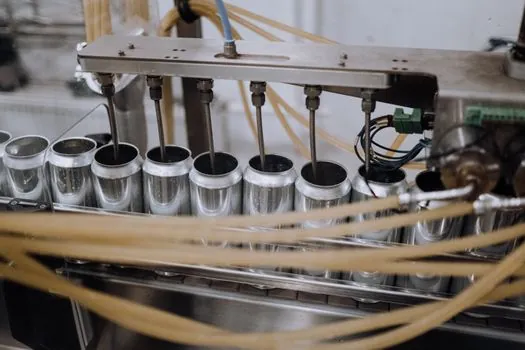
Head count affects price only through the equipment and processing content attached to each station. A screw-capping head must align with the container neck, engage the closure, rotate it onto the thread, and stop at the prescribed position and torque [S1]. Adding synchronized heads allows several bottles to be capped during the operating cycle [S1].
Closure technology changes the head design and price more than head count alone. The product catalogue also separates screw cap, ROPP cap, crown cap, vial crimping, perfume crimping, vacuum capping, pump cap, and press-on lid equipment into distinct machine types [S3]. A vendor quotation should identify the closure and sealing method rather than describe every machine simply as a “capping machine.”
Material specification is another cost boundary. Contact-part material, frame grade, cap-contact tooling, and washdown requirements should therefore be stated by grade in the purchase specification. A grade change affects purchase price, but it also changes cleaning exposure, corrosion resistance, service life, and replacement-part cost.
Automation depth also separates low-cost additions from integrated systems. Published screw-capping features include automatic bottle feeding, container separation and positioning, screw-cap supply, configurability according to bottle dimensions, cap specifications, required production capacity and packaging-line layout, and integration with downstream packaging equipment [S1]. These functions are not optional details for cost comparison because each one changes the machine architecture and installed scope.
Single-Head, Four-Head, and Multi-Head Economics Compared
The available automatic screw-capping reference has a listed price of approximately Rs 2,10,000 [S4]. It fits laboratories, pilot batches, lower-throughput filling lines, and manufacturers needing one closure format without paying for a multi-head transfer system.
A four-head screw-capping listing measures 21.1 in wide by 36.6 in and uses black metal construction, but it supplies neither an equipment price nor a rated output [S5]. It demonstrates a smaller, commercially available intermediate format, yet its cost and hourly output cannot be benchmarked fairly against the Rs 2,10,000 SS 304 machine [S4][S5].
High-speed multi-head systems offer 3,600–12,000 BPH across the published configurations [S2]. They are suitable for pharmaceutical, food, beverage, cosmetic, and chemical packaging lines where several synchronized heads can raise line output [S1]. They are not suitable when a low-volume product change, frequent format change, or small order set makes unused stations expensive.
On cost per usable head, a dedicated one-head machine may be cheaper because it has no multi-head synchronization or redundant tooling. A four-head machine spreads the fixed frame, conveyor, cabinet, and guarding cost over four stations, but its economical output depends on actual bottle geometry, closure torque, cap feeding, and line balance. A multi-head machine offers the highest concentration of shared machinery, but its cost per head can worsen when the line cannot sustain the advertised speed.
Installation and Operating Cost Matter More Than Head Price
The total-cost calculation must include the shared machine plus utilities, interfaces, tooling, service, and lost output. The MPASSC-60 weighs 600 kg and has an adjustable conveyor height of 850–950 mm [S4]. These physical requirements affect foundations, guarding, access, and installation labour even though the published Rs 2,10,000 price is a unit price [S4].
Electrical requirements are equally concrete. The single-head screw machine uses 415 V [S4], while the multi-head ROPP reference uses 3 kW, 415 V, and a three-phase supply [S4]. For a vendor comparison, request the connected load, average running load, air pressure, and changeover time. Published pages do not provide those values for every multi-head configuration, so an energy or service-cost estimate must not be converted into a fabricated currency figure.
Integration can add a larger share of the project cost than the capping heads themselves. A multi-head screw capper can connect with automatic filling, induction sealing, labelling, coding, and downstream packaging equipment [S1]. Interface engineering therefore includes conveyor speed matching, container centring, cap-transfer coordination, guarding, electrical connections, control logic, and acceptance testing. The related capping and sealing machine reference provides a suitable entry point for comparing standalone and integrated equipment scopes.
Maintenance should be evaluated by serviceable wear components, including cap-contact chucks, rails, pickup parts, sensors, belts, and change parts [S1]. An automatic coding machine may be required downstream for traceability, while an automatic filling machine can supply the containers entering the capper. These integrated devices affect line balance and cost, but their prices must be quoted separately rather than hidden inside a fabricated per-head figure.
Application Fit and Closure Requirements Set the Buying Decision
Multi-head screw capping is appropriate where several containers must receive threaded closures in parallel and synchronized torque is required [S1]. The scope covers bottle infeed, container separation, cap feeding and sorting, cap placement, bottle positioning, screw engagement, torque-controlled tightening, and discharge [S1].
ROPP equipment is the relevant option for glass bottles where the specified closure is ROPP rather than a threaded screw cap [S4]. The listed MPARCS-60 handles 22–100 mm containers, 28–40 mm caps, and bottle diameters of 30–80 mm at 20–40 bpm with 1 kW power [S4]. Its published capacity of 1,200–2,400 BPH makes it unsuitable as evidence for a high-speed 12,000 BPH multi-head configuration [S2][S4].
The buying specification should state bottle dimensions, cap diameter, closure type, required torque, target BPH, container material, product characteristics, line speed, utility availability, changeover requirements, and required standards for the destination market. The published sources establish machine configurations and operating ranges [S1][S2][S3][S4][S5], but they do not provide enough information to assign a universal market price per capping head or to claim that one closure type is universally cheaper.
A defensible cost comparison should request at least 3 machine quotations tied to identical output, head count, closure type, material grade, controls, utilities, and line scope. The requester should then divide the complete installed machine price by the verified active head count, while separately tracking format-specific tooling, change parts, maintenance, energy, and acceptance-test requirements.
The next trackable signal is a quotation containing both model and head count, because the published Rs 2,10,000 and Rs 2,11,000 figures apply to single-head references [S4], while the documented multi-head data supplies speed ranges without prices [S2].