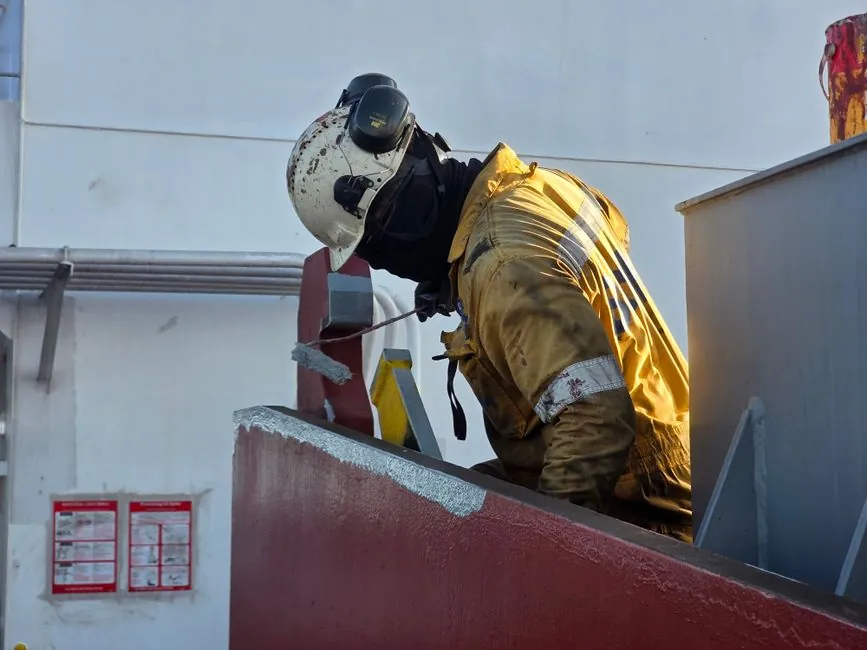
Bump caps are NOT ANSI Z89.1 hard hats and cannot be substituted where Z89.1 head protection is required: OSHA-cited rules treat ANSI Z89.1 as the compliance baseline, and the standard explicitly excludes bump caps from its scope [S6][S2].
Bump caps are covered by a separate document, ANSI/ISEA 100-2024, which rates them as Level 1 or Level 2 based on penetration and force-transmission testing, a regime designed for nuisance contact rather than for falling or flying objects [S7][S4].
Z89.1 protection classes, voltages, and impact zones
Under ANSI Z89.1 every industrial hard hat carries a Type and a Class stamp moulded inside the shell, and the 2026 revision (ANSI/ISEA Z89.1-2026, approved in September 2026) preserves the four-decade-old Type I / Type II impact geometry with refreshed testing [S3].
Type I reduces force from an impact to the top of the head only; Type II adds front, back and side impact attenuation plus off-centre penetration and optional chinstrap-retention tests [S5]. The electrical classes are independent of impact class: Class G (general) is proof-tested to 2,200 V for one minute with maximum 3 mA leakage, Class E (electrical) is proof-tested to 20,000 V for three minutes after impact with maximum 9 mA leakage, and Class C (conductive) is not tested for dielectric insulation [S1][S5].
Force-transmission limits on Type I are hard numbers: a single sample cannot exceed 1,000 lbf on the test head form, and the average of conditioned samples (hot, cold, ambient) cannot exceed 850 lbf [S5]. Apex penetration requires the striker to miss the head form entirely, the same pass/fail used for decades [S5].
What a bump cap actually protects against
Bump caps are padded plastic shells worn like a baseball cap, engineered for worker-generated impact, the contact a worker initiates against pipes, low ceilings, manifolds, or cargo, in tight-quarter environments such as crawl spaces, food-processing lines, mechanical rooms, or under-sink service work [S1].
Typical features buyers should look for: impact and puncture resistance, strategic venting, foam padding, micro-brim or full-brim options, and hands-free LED lighting on some models [S1]. Applications called out for bump caps include mechanics, airline ground staff, in-home service technicians, light assembly, and food processing [S1].
The protection envelope is small: bump caps do not meet ANSI Z89.1, they offer no tested resistance to falling objects, and OSHA does not list them as compliant head protection under 29 CFR 1910.135 (general industry) or 29 CFR 1926.100 (construction) [S2][S3][S6]. The previous European benchmark, EN 812, sat alone as the only bump-cap-specific standard for over a decade until ANSI/ISEA 100-2024 was released for the US market [S1][S8].
Decision matrix: bump cap vs Z89.1 hard hat

Across four engineering criteria the two product families diverge sharply, which is why procurement cannot treat them as substitutes on the same BOM line. [S5]
Protection envelope: Z89.1 covers top impact (Type I) or top+side (Type II), penetration, flammability, and (for G/E) dielectric; bump caps under ANSI/ISEA 100-2024 cover only low-energy contact, with no falling-object or voltage rating [S2][S7]. Compliance scope: Z89.1 satisfies OSHA 29 CFR 1910.135 and 29 CFR 1926.100; bump caps do not satisfy either citation [S2][S3]. Weight and ergonomics: hard hats run roughly 300-450 g with a full suspension harness; bump caps typically weigh 150-250 g and feel like a baseball cap, which is why crews in confined spaces prefer them for shift-long comfort [S1]. Cost and lifecycle: bump caps cost 30-60% of a comparable Type I Class G hard hat, but they cannot be deployed where Z89.1 PPE is mandated, so the "savings" vanish the moment a hard hat is also required on the same worker [S1][S2].
Where each one is the correct specification
Specify a Z89.1 hard hat on any site where objects can fall from above, where workers are exposed to fixed overhead hazards they could strike at speed, or where any electrical contact risk exists. That includes construction, demolition, steel erection, tower work, line work, oil and gas drilling and servicing, and most outdoor utility jobs [S2][S3].
Specify a bump cap where the documented hazard is repeated minor contact with stationary objects: under-bench automotive work, low-clearance warehouse aisles, food-processing lines with overhead conveyors, aircraft fuselage interiors during routine servicing, and inside-plant maintenance where overhead piping is the dominant head-strike source [S1][S2].
Do not specify a bump cap on active construction sites, on any task that involves work at height, in any classified electrical work zone, or anywhere a dropped tool, falling fixture, or swinging load is foreseeable [S3][S4]. A common field error is letting crews wear bump caps in mixed-use warehouses where forklifts elevate pallets overhead; that is a falling-object scenario and requires Z89.1, not a comfort-driven substitution.
Selection rules that survive an OSHA inspection
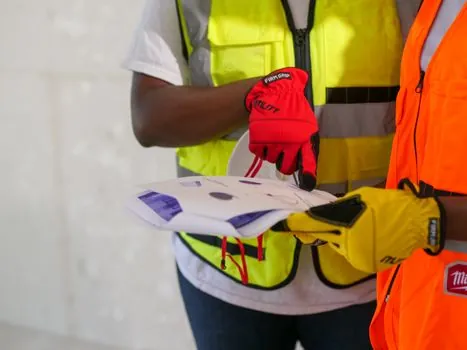
Mark each hard hat with the required interior markings: manufacturer, ANSI standard, ANSI type (I or II), ANSI class (G, E, or C), size, and date of manufacture, plus LT for low-temperature and HV for high-visibility models where applicable [S2]. Keep the Z89.1 hat's suspension intact and replace the shell after any significant impact; bump caps are non-recoverable after a real blow and should be retired, not reissued.
For sites that need both products, write the PPE matrix into the safety plan: a Z89.1 hard hat for overhead-fall zones, a bump cap for designated low-clearance aisles, and physical demarcation (signage, floor markings, tool-tether stations) so workers know which zone they are entering. If a single worker can move between zones in a shift, the default is the Z89.1 hard hat, because compliance is not a per-task toggle.
For process plants specifying safety instrumentation in the same review cycle, the discipline is similar: a microprocessor-based protection relay carries a defined overcurrent and earth-fault envelope, just as a Type II Class E hard hat carries a defined impact and dielectric envelope, and a bump cap is a different instrument for a different hazard, not a cheaper version of the same one. The same logic shows up in motor protection relay selection, where thermal overload, locked-rotor, and phase-loss coverage map to discrete hazard classes rather than a single "more or less" rating.
Track for review: the next ISEA cycle on ANSI/ISEA 100 bump-cap revisions (Level 1 vs Level 2 marking visibility on shells), and any state-OSHA adoption of ANSI/ISEA Z89.1-2026 that tightens chinstrap retention rules for Type II helmets in vertical work.
Spec-level background on the components involved: protection relay.
Background reading: Bolt guard locking vs tongue actuator guard locking: ISO 14119 selection map.