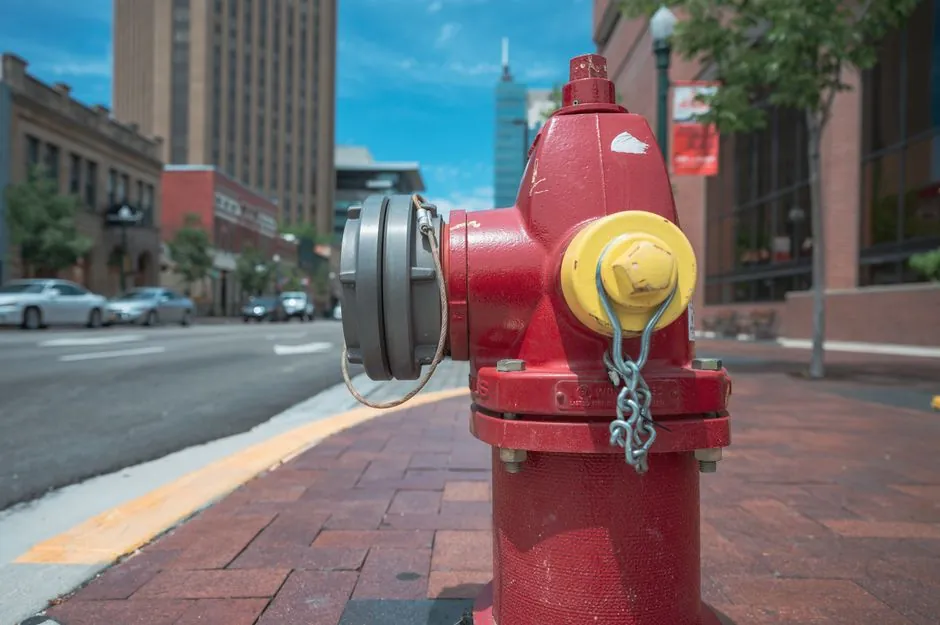
AWWA C503-2018 is the controlling standard for wet-barrel fire hydrants used in water-supply service where freezing temperatures do not occur, and AWWA opened a public comment period on C503-21 in 2025 to refresh that edition [S1][S5].
Under normal operating conditions the entire interior of a wet-barrel hydrant is pressurised at all times, so the standard prescribes minimum requirements for materials, design, inspection, testing, marking, and shipping on units that typically carry a 200 PSI or 250 PSI working pressure rating [S2][S4][S7].
Scope, Climate Boundary, and Why Wet Barrel Differs from Dry Barrel
AWWA C503 explicitly does not cover dry-barrel hydrants; the standard applies only to wet-barrel hydrants in mild-climate water service where the column stays liquid year-round [S2].
Because the barrel is constantly under system pressure, each outlet is closed by an individual valve rather than a single main valve at the base, which is the defining engineering difference from a dry-barrel design and the reason the same C503-2018 text is paired with separate AWWA C502 work for compression and slide-gate main-valve hydrants [S2][S8].
Specifiers working in temperate, subtropical, or warm-arid service zones such as the US Southwest, Gulf Coast, Southern California, and much of the Pacific rim continue to default to C503 for above-ground hydrants in municipal, refinery, airport, and port fire-protection networks [S4].
Working Pressure Ratings: 200 PSI vs 250 PSI Comparison
C503-compliant hydrants are sold at two common working-pressure tiers, and the choice has direct procurement consequences for flange class, test-rig capacity, and spec language: 200 PSI and 250 PSI [S4][S6][S7].
The 200 PSI tier is the most widely specified and is what the Clow valve spec sheet, AVK 24-96-003 catalog entry, and most municipal bid documents call out, with 200 PSI working pressure plus UL listing and FM approval as the baseline [S6][S7].
The 250 PSI tier is offered for higher-margin municipal and industrial runs, as in the United Water Products F08/F08M line, which is rated for 250 PSI working pressure across an ambient window of 33°F to 126°F and uses an AWWA C110/ANSI B16.1 Class 125 flanged inlet with raised-face options on request [S4].
Specifying engineers should pin the pressure tier in the bid line rather than leaving "per C503" open, because C503 itself establishes the minimum framework while individual utilities tighten working pressure, flange class, and third-party listing requirements through their own amendments.
Materials of Construction: Ductile Iron, Stainless Steel, and Bronze Trim

C503 permits multiple body materials as long as the hydrant satisfies the standard's mechanical and corrosion-resistance requirements, and the current market is split between ductile iron and stainless steel bodies with bronze or stainless steel trim [S2][S3][S4].
For ductile iron, ASTM A536 Grade 65-45-12 is the dominant specification, giving 65 ksi tensile, 45 ksi yield, and 12% elongation, and is the body material for the F08/F08M hydrant family [S4].
For stainless bodies, the AVK Series 24 is offered in cast 304 stainless steel in 2-way and 3-way configurations, certified to NSF 61 and NSF 372 for Safe Drinking Water Act compliance, with the rubber encapsulated bronze-cored disc providing chemical resistance against aggressive water and volatile organics [S3].
Stem material tracks the body: high-strength, low-lead, low-zinc bronze is common for corrosion and dezincification resistance, while blow-out proof stems on the F08/F08M line are alternatively supplied in heavy-duty silicon bronze or stainless steel [S3][S4].
The C503-2018 edition also tightened the alloy table (Table 1) and gasket/coating language, revisions that originated in the C503-97 update to add copper alloys, stainless-steel components, and revised gasket and coating language in Sections 4.4.13 and 4.7 [S2].
Flanged Inlet, Nozzle Pattern, and Outlet Threading
Standard C503 hydrants share a 6" flanged inlet and a six-bolt drilling pattern, and the F08/F08M specification conforms to AWWA C110/ANSI B16.1 Class 125 for the 6" flange [S4].
The AVK Series 24 base flange is designed so the standard C503 six-bolt pattern can be drilled, with optional ANSI eight-bolt or San Diego six-bolt patterns available as factory options, a useful provision for utilities transitioning between legacy drillings [S3].
Outlet configuration is typically a 3-way arrangement of two hose nozzles and one pumper nozzle on municipal hydrants, with the F08M monitor-flange variant offering 3" or 4" monitor flanges for industrial and refinery sites that need a deck-mounted monitor [S4].
Nozzle threads are field-replaceable and can be machined to NFPA, local jurisdiction, or AHJ thread specs, but pumper and hose nozzle threads are commonly cut to the local fire department standard so that the hydrant drops into existing hose inventories [S3][S4].
Sealing, Coatings, and Internal Corrosion Control
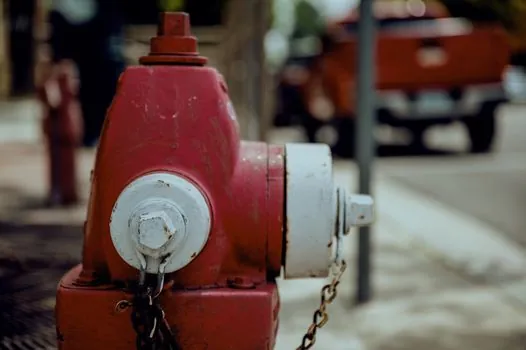
Internal sealing on C503 hydrants is dominated by NBR or XNBR elastomer seats and O-rings, and the AVK Series 24 specifies NBR O-rings for resistance to volatile organic compounds plus flat NBR cap gaskets with scalloped edges that vent trapped air as the cap is tightened, a feature called out specifically as required by AWWA C503 [S3].
The disc itself on the AVK design is a bronze core fully encapsulated in XNBR rubber, mounted to the stem with stainless steel thrust collars so the disc can stop rotating on the bronze nozzle seat and still allow the operator to keep turning the stem to compress the seal, a clutch action that protects the rubber from stone damage [S3].
External and internal corrosion protection is provided by fusion-bonded epoxy powder coating to AWWA C550, with a UV-resistant topcoat applied to body, caps, and dummy nuts after assembly to customer colour specifications, a coating stack that satisfies C503's Section 4.7 coating language [S3].
Testing, Listing, and Quality Requirements
Every C503 hydrant is required to be proof-tested at twice its rated working pressure during manufacture, and the AVK production line in Minden, Nevada runs that 2x proof test on each unit before serial-number engraving and shipment [S3].
Third-party listing is the second procurement gate: UL listing and FM approval are typically called out in bid documents, with AVK's stainless Series 24 listed by UL and FM and built in an ISO 9001/ISO 14001 certified facility, while the F08/F08M hydrant ships with the same UL/FM approvals as a comparable baseline [S3][S4].
Maximum permissible head loss through the hydrant is bounded by Table 3 in the C503 text, a table that was revised in the C503-97 update and is the metric inspectors use to grade flow performance during acceptance testing [S2].
Drinking-water compliance is closed by NSF/ANSI 61 and NSF 372 certification for the wetted components, mandatory for any hydrant tied to a potable distribution system in the US and explicitly listed on the AVK Series 24 documentation [S3].
Operating Nuts, Nozzle Caps, and Tamper Resistance

C503 requires the valve operating nut and nozzle-cap nut geometry to be pentagonal, sized to the standards of the purchasing water system rather than a single fixed dimension across the standard, so a 1.125" to 1.75" pentagon is the common utility range [S3][S9].
The AVK Series 24 ships with ductile-iron "dummy" operating nuts that resist wrench damage, and the coded serial number is engraved on the cast-on pentagon of the pumper stem for asset-traceability across the hydrant's service life [S3].
Where crews need to keep an outlet capped but serviceable, removable cap chains and breakaway traffic flanges such as the F08-301 are offered as C503-compatible accessories, allowing a vehicle strike to shear the flange without damaging the hydrant body [S4].
Selection Criteria: When to Specify C503 and When to Walk Away
Specify C503 when the project is in a frost-free service area, the system can accept an above-ground hydrant, and the utility standard already calls for 200 or 250 PSI working pressure with UL/FM third-party listing, the typical profile for municipal distribution, refinery, airport, and port fire-water loops [S2][S4].
Do not specify C503 in climates where the temperature drops below freezing for sustained periods, where a dry-barrel hydrant is mandated by code, or where the specifier needs a compression or slide-gate main-valve design (that is AWWA C502 territory, covered separately) [S2][S8].
For readers cross-checking AWWA C502 main-valve choices against C503 outlet-valve choices, the AWWA C502 compression vs slide-gate hydrant main valves comparison sits one tier below the C503 outlet-valve decision and is the natural second spec to pull when sizing a complete hydrant assembly.
2026 Procurement Signals to Track
Track the AWWA C503-21 comment closure and publication date, which was the active revision vehicle on the AWWA standards docket as of 2025 and will replace C503-2018 once consensus review completes [S5].
Track the AWWA C550 coating alignment language, because epoxy and UV-topcoat stacks on C503 hydrants are referenced through C550 and any C550 revision ripples into the wet-barrel coating call-out in Section 4.7 [S3].
For the broader fire-protection ecosystem, the fire hydrant reference page indexes the full set of AWWA hydrant standards and dry vs wet trade-offs, and the fire safety encyclopedia entry maps C503 into the wider suppression and detection stack used in industrial plants.
For the relevant spec sheets and selection criteria, see fire door.