
Choose a C2 cementitious tile adhesive when the installation requires at least 1.0 N/mm² adhesion; the minimum for C1 is 0.5 N/mm² [S2][S3][S6].
C1 and C2 describe base adhesion performance under EN 12004, while additional letters identify reduced slip, extended open time, fast setting and deformation [S3][S4].
What C1 and C2 Mean
C1 is the normal-performance cementitious adhesive class, while C2 is the improved-performance class under EN 12004 [S1][S3]. The initial letter C identifies the adhesive technology as cementitious; the number 1 or 2 identifies its performance class [S4].
C1 must achieve at least 0.5 N/mm² adhesion, whereas C2 must achieve at least 1.0 N/mm² [S2][S3][S6]. EN 12004 classifies tile adhesives by adhesion strength, but laboratory classification alone does not establish suitability for every site tile, substrate or exposure condition [S2].
The classifications do not describe one product for every service condition. They form part of a coded system covering adhesion class, slip, open time, setting behavior and deformation, with relevant cementitious designations including C1, C1T, C1TE, C2, C2T, C2E, C2TE and C2TES1 [S3][S4].
C1 and C2 Compared Against Four Criteria
Adhesion strength is the clearest distinction: C1 provides at least 0.5 N/mm², while C2 provides at least 1.0 N/mm², twice the minimum value [S2][S3][S6]. C2 therefore has the higher declared adhesion requirement for low-porosity porcelain, large-format tiles and demanding substrates [S2].
Tile suitability is the second criterion. C1 is normally associated with ceramic and porcelain tiles having higher water absorption, while C2 accommodates all ceramic and porcelain tile types and nearly all substrates, including installation over old tiles [S2].
Flexibility must be checked independently because neither C1 nor C2 implies deformability. S1 denotes a deformable adhesive and S2 a highly deformable adhesive; S1 applies to low-absorption porcelain, larger formats, gypsum plasterboard, heated floors and tile-over-tile work, while S2 addresses very large tiles and special cases [S2].
Application control is the fourth criterion. T means reduced slip, E means extended open time and F means fast setting, so C1TE and C2TE are not interchangeable merely because both contain E: the number still separates normal from improved adhesion performance [S3][S4].
Where C1 Is a Practical Choice
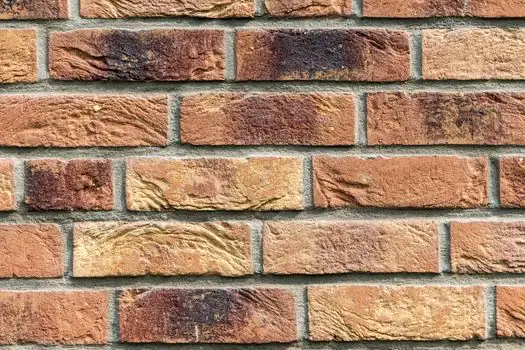
C1 is appropriate when the tile, substrate and exposure conditions remain within the normal-performance envelope, including ceramic and higher-absorption porcelain tiles in dry internal areas [S1][S2]. Its 0.5 N/mm² minimum adhesion makes it unsuitable where the project specification requires the C2 threshold [S2][S6].
C1 can also be used outdoors, in high humidity, over underfloor heating, and on drywall or waterproofing systems when the complete installation and product requirements are satisfied [S2]. A specified C1 adhesive may still be modified with a higher dosage of dispersible polymer powder to improve flexibility and bonding power for demanding conditions [S2].
C1 should not be selected by price or tile appearance alone. The 0.5 N/mm² adhesion floor and the absence of an S1 or S2 designation distinguish C1 from C2 in the cited classification information [S2][S3].
Where C2 Should Be Specified
C2 is the default choice for large-format or low-water-absorption porcelain tiles, old-tile substrates, demanding applications and installations requiring at least 1.0 N/mm² adhesion [S2][S3][S6]. Its minimum strength requirement is also more appropriate where the tile and substrate do not resemble the ideal laboratory configuration used for EN 12004 evaluation [S2].
C2 alone does not solve every movement problem. Low-porosity porcelain can exceed the working limits of even an unmodified C2 adhesive, making a flexible C2S1 specification more appropriate for such demanding tiles [S2]. S1 corresponds to transverse deformation above 2.5 mm and below 5 mm, while S2 exceeds 5 mm [S3][S5].
For installations combining improved adhesion, reduced slip, extended open time and deformation, C2TES1 identifies all four characteristics [S3][S4]. The same adhesion class can therefore serve very different service environments, which is why the complete designation must be compared rather than the C2 number alone.
Reading the Full EN 12004 Code

The designation combines adhesive type, performance class and optional characteristics. C identifies cementitious adhesive, while 1 and 2 identify normal and improved performance; F, T, E, S1 and S2 identify fast setting, reduced slip, extended open time, deformability and highly deformability respectively [S3][S4].
Typical examples illustrate how the code functions. C1T combines C1 adhesion with reduced slip, C1TE adds extended open time, C2TE combines improved adhesion with reduced slip and extended open time, and C2TES1 adds deformability [S3][S4]. EN 12004 permits additional combinations, so the code must be read against the product declaration rather than inferred from a partial label [S4].
The standard classification should also be separated from product qualification. EN 12004 is the classification framework for tile adhesives, while EN 12004-2 is identified as the test standard used for comparison with the standard tile described in the testing context [S2]. Related EN systems cover grout, screed and liquid-applied waterproofing products, confirming that adhesive selection is only one part of a complete tile installation [S4].
Installation Risks and Failure Controls
Four variables can defeat an otherwise compliant class designation: tile surface condition, substrate movement, open time and environmental exposure. Standard ceramic tile and concrete slab provide controlled reference points, whereas porcelain, patterned tile backs, mesh-backed thin tiles, old tiles and gypsum plasterboard behave differently from that laboratory condition [S2].
Project specifications should therefore state the full adhesive class, tile type and format, substrate type, exposure, required deformation class and any slip or working-time requirement. Exterior façades, heated floors, large-format tile and tile-over-tile work require particular attention to S1 or S2, T and E rather than C1 versus C2 alone [S2][S3].
For a product assembly, specify a compatible dry mortar or cementitious adhesive system rather than mixing isolated adhesive classes with unrelated installation components. The broader properties of concrete admixtures matter where the substrate or screed behavior affects the finished tile system, but they do not replace adhesive performance testing.
Specification Decision by Application
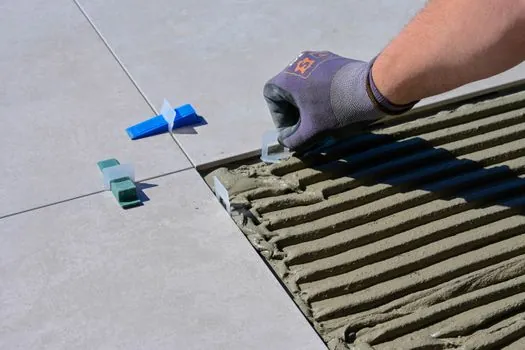
Specify C1 for ordinary interior tiling with higher-absorption tile, a controlled substrate, no special deformation demand and a maximum format within 30 × 30 cm; specify C2 for low-porosity porcelain, formats above that practical C1 range, tile-over-tile work or a project requirement of 1.0 N/mm² [S2][S3][S6].
Add S1 when the installation involves minor substrate movement, heated floors, critical substrates, low-absorption porcelain or larger formats; reserve S2 for highly deformable requirements associated with very large tiles and special cases [S2][S3][S5]. Add T for reduced slip and E for extended open time, while F should be selected only where accelerated setting is operationally required [S3][S4].
Use the product’s declared EN 12004 classification and technical data sheet as the next traceability step, then confirm compatibility with the specified tile and substrate. For a related substrate issue, XPS tile backer board with cement mortar coating addresses a distinct installation scenario rather than replacing the C1-versus-C2 classification decision.