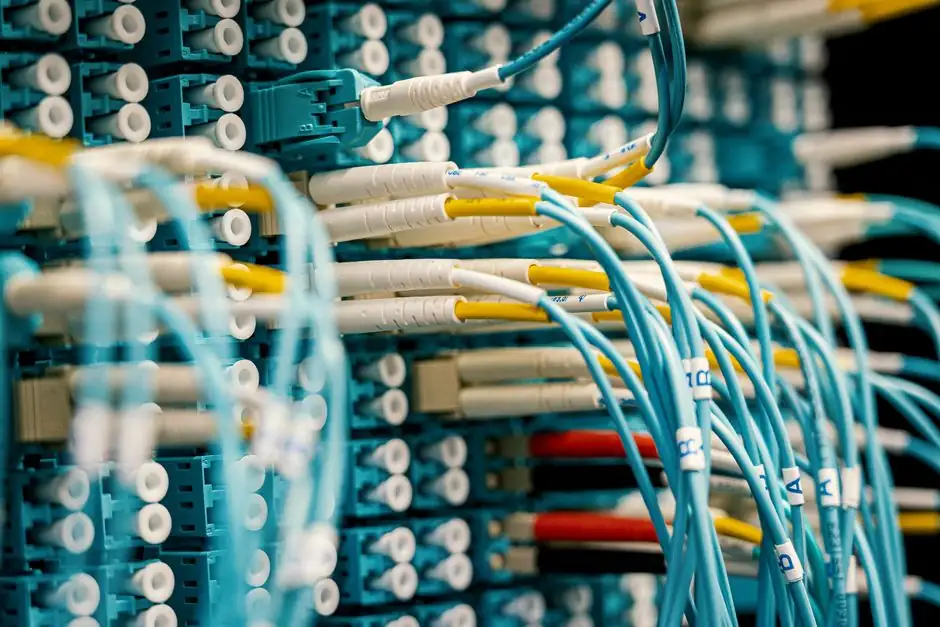
A 2026 production-grade cable and wire line is a stack of three design gates, not a single machine: a process core running 0.8-2.5 m/s depending on conductor cross-section, an in-line inspection loop, and a Kanban-style material staging system that allows one-day lead times when fully implemented [S1][S2].
Engineers selecting equipment in 2026 weigh five axes: line speed, changeover time, OEE, in-line test coverage, and floor footprint, with automation level (manual / semi-auto / fully auto) chosen against volume mix rather than part complexity alone [S2]. The relevant context is the wider wire and cable capacity envelope covered in cable and wire capacity planning: line speed, OEE, and the 10-16% uplift case.
Process core: drawing, stranding, insulation, and the speed envelope
Four sub-processes define the upstream core.
Stranding (SZ or planetary) and screening follow, then insulation and jacket extrusion where temperature zones are typically 6-8 controlled heater bands from 70 °C up to 240 °C at the die, with capacitance and spark-test on every metre [S2]. The same physical laws that govern lamp-cup thermal limits on an automatic molding line govern jacket extruder heat zones: narrow window, fast transient response, no shortcuts.
Build-to-print wire harness and cable assembly lines add cutting, stripping, crimping, and overmolding, with Y.C. Cable's documentation package listing wire cutting, stripping, crimping, soldering, connector assembly, shielding, overmolding, and electrical testing as the baseline steps [S5]. A lead-time of one day is achievable when Kanban inventory is staged before the production line calls for it, on the explicit condition that a material problem is caught before production starts, in which case it is not yet a problem [S1].
Automation levels: manual vs semi-auto vs fully auto
MIJOINT's 2026 catalog splits its cable assembly line equipment into three series: fully automatic, semi-automatic, and stand-alone, with the fully automatic series dominating high-speed cable programs and the stand-alone series used for low-volume or qualification builds [S2].
A decision map based on five selection criteria: (1) Volume. Fully auto lines justify capex at sustained volumes above roughly 50,000 assemblies/month, with semi-auto covering 5,000-50,000 and manual or stand-alone below 5,000 [S2]. (2) Changeover. Fully auto changeover on a well-tooled line is 5-15 minutes versus 30-90 minutes on semi-auto, but every changeover still costs material. (3) OEE. Fully auto lines typically run 75-85% OEE against 50-65% for manual lines on identical part families. (4) In-line test. Vision and continuity test are standard on fully auto; on semi-auto they are optional and frequently skipped on cost grounds. (5) Footprint. Fully auto cell footprint is 8-12 m × 2-3 m including pay-off and take-up, versus 4-6 m × 2 m for a semi-auto cell.
The trade-off is not purely financial. Manual and semi-auto cells survive long product lifecycles and frequent engineering revisions better than fully auto lines, because hard tooling (crimpers, dies, fixtures) is the constraint, not the operator [S5].
Material flow and Kanban: the one-day lead time claim
Mercury Wire's 2026 Q&A states that lead times from one day to weekly, monthly, or quarterly are all possible, with the gating factor being Kanban inventory staged before the production line calls for it, not the cell cycle time itself [S1]. The same source notes that bulk-ordering months in advance is a supplier-side constraint, not an industry requirement, and customers in 2026 are switching suppliers primarily over responsiveness, not price [S1].
For a wire and cable line, Kanban means three things in practice: (a) raw conductor on dedicated reels at the pay-off, sized to the next PO plus a safety factor; (b) approved connectors and terminals pre-kitted in lot-tray format at the cell; (c) finished-goods buffer sized to the customer's release schedule, not the cell's cycle time. A material problem caught before production starts is not a problem; it only becomes one if no one checks [S1].
Build-to-print documentation drives the same flow on the engineering side. Y.C. Cable's review checks for missing dimensions, conflicting drawing and BOM, incomplete pinout, connector compatibility, obsolete components, and long-lead materials before any wire is cut [S5]. These checks compress engineering change time, not machine cycle time, and they belong upstream of the Kanban loop.
Inspection stack: vision, electrical test, and PPAP
Three test gates are standard on a 2026 high-speed cable line: laser diameter gauging with ±0.005 mm repeatability on the insulation, high-voltage spark test at 1.5-6 kV AC depending on cable rating, and end-of-line electrical test covering continuity, hipot, and insulation resistance [S2].
For assembly programs serving automotive, medical, or industrial automation OEM customers, PPAP (Production Part Approval Process) is the formal qualification gate, and Mercury Wire offers it as a defined-sample verification that the production run is producing to spec consistently, not as a one-off sample approval [S1]. PPAP packages typically include dimensional, material, and functional test records plus the initial-process-study capability indices (Cpk ≥ 1.33 is the common automotive threshold).
Quality-stack sourcing, including ISO 9001, IATF 16949 for automotive, UL listing for North American wire, and CE/RoHS for European OEM builds, is covered in detail in Wire and Cable Manufacturing Quality Standards: certification stack, material rules, and more. A 2026 build spec without that stack is an audit risk, not just a paperwork risk.
Layout, footprint, and the upstream/downstream split
A practical 2026 layout splits the line into four zones: pay-off and pre-conditioning (8-15% of length), process core (drawing/stranding/insulation or assembly, 55-65%), in-line test and inspection (10-15%), and take-up or binning (10-15%) [S2]. Cell height is typically 1.8-2.4 m to allow operator access without ladders.
Floor loading under pay-off and take-up reels is the most-forgotten constraint. A full 1,200 mm DIN reel of 1.5 mm² conductor weighs 400-700 kg, so floor flatness and load-bearing matter more than line length. The lighting over each station should follow the same uniformity logic used in lamps and light fittings selection for an automatic molding line work cell, because visual inspection at 0.5 m line speed depends on it.
For automotive wire-harness assembly cells, MIJOINT's fully automatic automotive wire harness assembly equipment occupies a longer footprint (15-25 m) with branch-routing stations and pre-formed fixture boards, and pairs with the high-speed cable core in plants that build both [S2].
Selection criteria recap: who is each architecture for?
Fully automatic cable assembly lines are for: OEMs running the same part family for 12+ months at volumes above ~50,000 assemblies/month, with stable revisions and a quality team that can sustain PPAP [S2]. They are not for: early-NPI programs, low-volume aerospace, or any program where the BOM is still moving weekly, because the hard-tooling cost is amortized over volume that may not exist.
Semi-automatic lines are for: contract manufacturers serving 5-50k/month mixed-product runs, where changeover frequency makes full automation uneconomic. They are not for: programs where labor cost is the dominant variable, because semi-auto OEE is rarely above 70% on mixed-product work [S2].
Stand-alone stations and manual cells are for: prototype, qualification, low-volume build-to-print, and pre-NPI work where Y.C. Cable's documentation-driven flow (drawing, BOM, revision, prototype, repeat) fits best [S5]. They are not for: any program that has crossed into series production and is shipping monthly volumes to OEM customers.
Trackable signals to watch next: the number of cable assembly lines offered with integrated Ethernet/IP or PROFINET connectivity for line-level OEE push, and the rate at which PPAP documentation becomes a default deliverable rather than an upcharge [S1][S2].