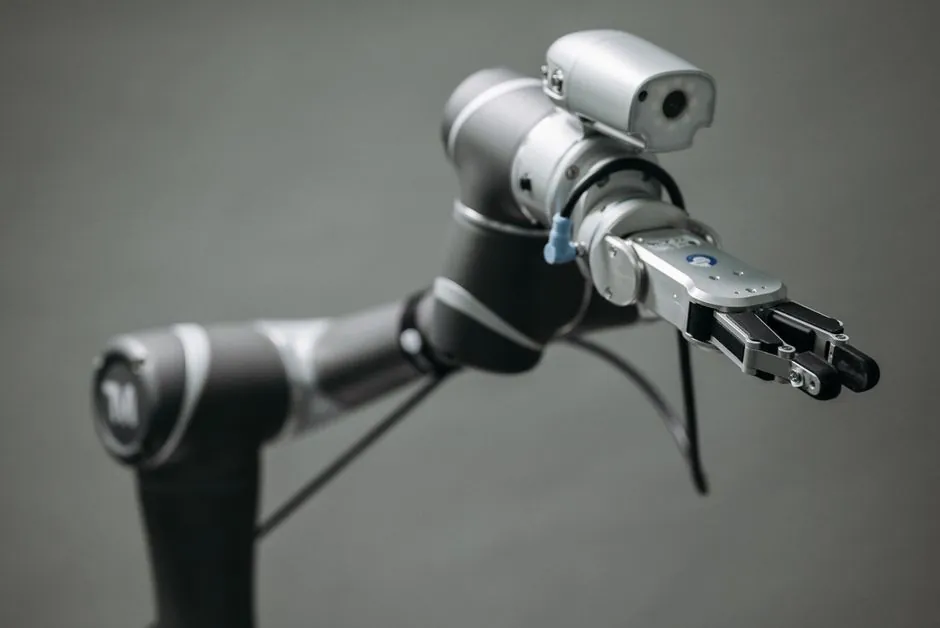
A capable USB webcam for camera-based obstacle detection costs ₹500–₹2,000 [S2].
For autonomous mobile robots, camera-only sensing minimizes hardware cost but increases perception-engineering risk, whereas LiDAR provides direct distance measurement and more reliable geometry in difficult lighting [S4][S5].
Camera versus LiDAR cost comparison
A capable USB webcam costs ₹500–₹2,000, while entry-level single-point LiDAR modules start at approximately ₹8,000–₹12,000 [S2].
The comparison is not directly uniform: the webcam figure describes a capable USB webcam for visual perception, while the ₹8,000–₹12,000 figure describes entry-level LiDAR modules for basic single-point units [S2]. The purchase-price decision must therefore include mounting, compute, cabling, integration, validation, and maintenance rather than compare sensor labels alone.
At the component level, camera systems have the clear advantage on capital expenditure and form factor. A camera is inexpensive, lightweight, and straightforward to integrate into an AMR robot, but its depth estimate is inferred from visual cues rather than directly measured [S4]. LiDAR has the higher hardware cost and greater power demand, but its time-of-flight output provides direct range and 3D structure [S4][S6].
Selection criteria beyond purchase price
The primary selection criteria are acquisition cost, direct range measurement, scene semantics, field of view, lighting performance, compute burden, and safety certification. These criteria determine whether a low sensor price produces a low-cost robot after algorithm development and validation are counted. [S1]
LiDAR measures elapsed time between emitted and returned laser pulses and constructs a 3D point cloud. The described point clouds can achieve centimeter-level precision, while cameras supply color, texture, pattern, text, and object-class information that geometry alone cannot provide [S4]. LiDAR is therefore stronger for precise obstacle distance, operating in darkness, and certain rain, fog, and glare conditions; cameras are stronger for distinguishing a person from a mannequin or reading a label on a box [S4].
A camera system also carries hidden costs: multi-camera calibration, lighting design, training or validation datasets, inference compute, and performance testing for edge cases. LiDAR shifts complexity toward sensor procurement, power and data integration, point-cloud processing, mounting, and potentially safety-rated hardware. Neither architecture has a universally lower lifecycle cost without a defined environment and obstacle-response requirement.
Safety LiDAR, navigation LiDAR, and camera roles
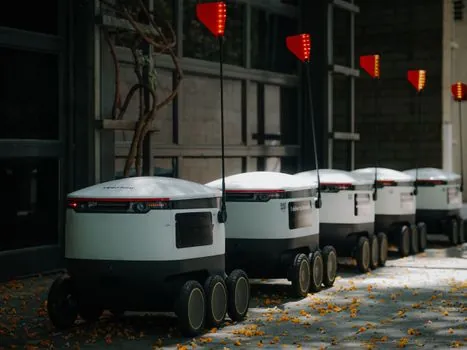
Safety-certified 2D LiDAR, navigation LiDAR, and cameras serve different engineering roles. A safety LiDAR is selected for protective-stop coverage, while navigation LiDAR supports localization and mapping; adding a camera does not automatically satisfy a protective-device requirement. [S1]
LiDAR field of view and blind-spot geometry require separate engineering even after purchase. For an AMR safety layout, compare the scanner height, detection range, protected field dimensions, stopping distance, and interaction with chassis obstructions. The AMR safety LiDAR field-of-view and blind-spot analysis provides the next technical check for a LiDAR-first design.
Which sensing option fits each use case
Camera-first sensing fits low-speed indoor applications with controlled lighting, modest budgets, and strong semantic requirements such as object classification, label reading, or shelf recognition. LiDAR-first sensing fits routes with variable illumination, tight clearance limits, precise localization, or a need to detect geometric obstacles more consistently [S4][S5].
For structured indoor navigation, a camera-only system is the economical starting point when the robot can tolerate added vision validation work. Its hardware cost is much lower than a safety LiDAR, and one image can contain dense visual information for scene understanding [S2][S4]. However, a camera must infer distance from visual cues, so obstacles with weak texture, poor contrast, unusual appearance, or misleading perspective can expose failure modes [S4].
For safety-critical obstacle detection, LiDAR-first is the more defensible baseline when direct range measurement, consistent geometry, or operation in darkness is required [S4][S5]. For a high-throughput warehouse AGV, the added sensor cost may be small compared with the value of reduced collision risk, simpler depth validation, and predictable coverage.
For mixed environments, combine both modalities: cameras for semantic context and LiDAR for geometric depth. This arrangement raises hardware and integration cost, but it reduces the probability that a weakness in one sensing principle becomes a robot-wide failure. It is the preferred architecture when obstacle classes, lighting, and route geometry vary too much for one sensor to dominate [S4].
Failure modes and system constraints
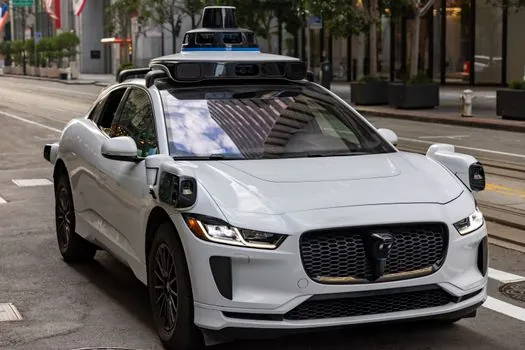
The main camera failure mode is unreliable depth inference under challenging visual conditions, while the main LiDAR failure mode is weak semantics plus unreliable returns from transparent or reflective objects. LiDAR can detect that a solid object is present without establishing whether it is a pedestrian, sign, or carton [S4].
Glass doors and polished metal can produce unpredictable laser returns, while bright illumination can degrade camera visibility [S4]. Cameras also require sufficient scene texture for dependable geometric inference, and multiple cameras add calibration and synchronization work. LiDAR needs a clear field of view, adequate power, and processing for dense point clouds.
Cost estimates should be recorded per sensing zone rather than per robot. A robot with 360-degree coverage may require multiple sensors, increasing both camera and LiDAR counts. Safety architecture, emergency stopping, controller response, and validation effort can therefore dominate the quoted sensor price, even when a camera has a lower purchase cost [S1][S6].
Cost model for the engineering decision
A defensible cost comparison separates sensor hardware from engineering, safety, and lifetime costs. Published figures provide sensor-price anchors: ₹500–₹2,000 for a capable webcam, ₹8,000–₹12,000 for basic single-point LiDAR, $1,500–$5,000 for safety-certified 2D LiDAR, and approximately $12,000 for some complete LiDAR systems [S1][S2].
Against cost, cameras win because a capable webcam costs a fraction of a safety LiDAR [S2]. Against direct range measurement, LiDAR wins because time-of-flight provides measured distance and a 3D point cloud without relying on visual inference [S4]. Against semantic object understanding, cameras win because they capture color, texture, and readable labels [S4]. Against lighting resilience, LiDAR has the stronger case in darkness, while automotive-grade LiDAR also performs more reasonably through rain, fog, and glare [S4].
Against integration effort, cameras can be mechanically simple, but vision software and validation may offset that advantage. LiDAR simplifies depth interpretation, but protective functions and field-of-view design require specialist engineering. The final choice should be based on a documented hazard analysis and measured stop-distance performance, not on nominal sensor cost alone.
For procurement, request unit prices for the exact safety rating, range, field of view, interface, enclosure, mounting accessories, compute, cabling, and validation support. Track two signals during evaluation: the all-in cost per protected direction and the rate of missed or late obstacle detections under the intended lighting, floor, load, and traffic conditions.