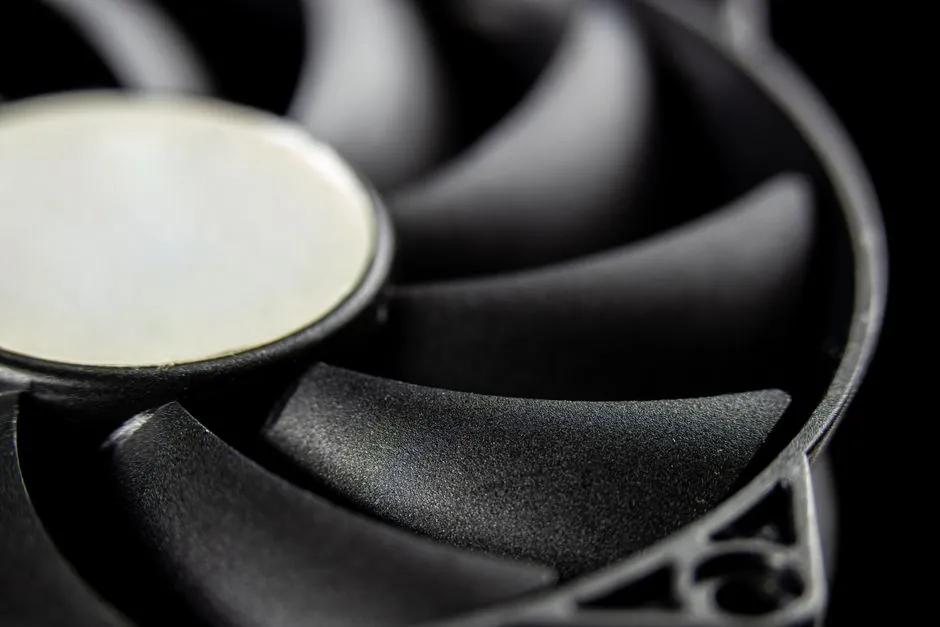
Air-cooled retrofits with rear-door heat exchangers and tightened containment can sustain rack densities of 10 to 30 kW for 6 to 18 months while direct-to-chip liquid systems are on order, per a 2026-05 engineering review [S1].
That window collapses fast above 50 kW per rack, where single-phase cold plates become the only credible thermal path and air stops being a standalone answer [S4]. The decision is no longer air versus liquid, it is how to sequence the hybrid transition so capex, leak risk, and electrical rework stay inside budget.
Where the 30 kW ceiling actually sits
Direct-to-chip liquid cooling supports rack densities of 30 to 100+ kW and cuts Power Usage Effectiveness (PUE) to a typical range of 1.05 to 1.15, versus 1.4 to 1.8 for conventional air [S1]. Rear-door heat exchangers (RDHx) are the practical bridge: they mount on standard 19-inch racks with no server modification, intercept hot exhaust at 10 to 30 kW, and have already shipped in volume at European colocation sites [S1].
RDHx systems do not remove the need for CRAC or CRAH units. Networking, storage, and PSU exhaust still dump roughly 25 kW per rack into the room even when NVIDIA NVL72 cold plates carry 100 kW of chip heat, which is why Uptime Institute's 2024 survey reported only 1% of operators running racks above 100 kW [S4]. A stopgap that only handles the GPU side leaves the rest of the rack, and the hot-aisle envelope, to overworked fans.
What air can deliver during a liquid-cooling lead-time gap
Airflow remediation is the lowest-cost first move and can defer liquid by 6 to 12 months on its own: blanking panels, raised-floor tile retuning, and hot-aisle/cold-aisle containment typically raise delta-T and lower CRAC load without new capital hardware [S7]. Chatsworth's 2025 deployment notes describe these measures as "simple, low-cost, and highly effective" for sites still under 20 kW per rack [S7].
For 20 to 30 kW racks, in-row coolers and overhead supplemental units raise density without touching the server. gbc engineers' 2026 comparison table lists air as viable "up to 15 kW" standard and 10 to 30 kW for RDHx-assisted configurations, with no server modification and a 1.2 to 1.5 PUE band [S1]. Operators who need 40 to 60 kW per rack for inference clusters before delivery slots open in 2027 should not treat any air-side package as sufficient; hybrid is the only honest specification [S5].
Comparing the four cooling options against decision criteria
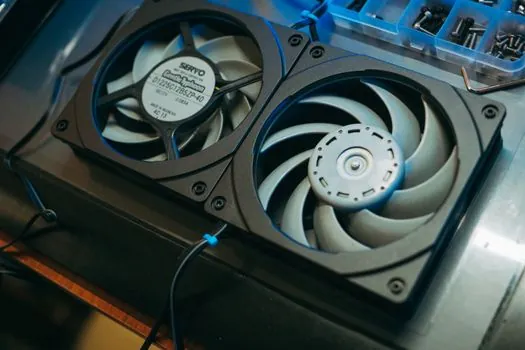
The matrix below synthesises the 2026 gbc engineers data set so the choice can be audited against capex, density, and retrofit risk [S1]:
- Air cooling: up to 15 kW per rack, PUE 1.4 to 1.8, lowest capex, no server modification, full retrofit compatibility, fits standard enterprise loads. - Rear-door heat exchanger: 10 to 30 kW per rack, PUE 1.2 to 1.5, medium capex, no server modification, full retrofit, suits mid-density upgrades. - Direct liquid cooling (cold plates): 30 to 100+ kW per rack, PUE 1.05 to 1.15, medium-to-high capex, cold plates required, partial retrofit, the AI/HPC default. - Immersion cooling: 100+ kW per tank, PUE 1.02 to 1.08, high capex, full submersion, retrofit limited to greenfield or wholesale rack replacement, reserved for ultra-dense AI and research builds.
Cross-checked against Park Place Technologies' 2025 operator survey, the air versus liquid gap is also commercial: nearly one-quarter of data centers were already running some form of liquid cooling in 2025, mostly cold-plate DLC, which means contractor lead time for manifolds, coolant distribution units, and facility-grade dielectric fluid is now a 9 to 15 month queue at most hyperscale integrators [S2]. That queue is what makes the air-side stopgap commercially interesting rather than technically novel.
Why liquid cooling lead times stretch into 2027
Designing a liquid-cooled facility is not a parts swap. Engineers must reserve space for manifolds, valves, coolant distribution units, and leak-detection before the slab is poured, and the room must be piped and pressure-tested before IT arrives [S6]. Apex Piping's 2025-10 design notes make the point that retrofit projects need to expose the slab, core-drill for supply and return, and re-balance the CRAC ring, which adds 8 to 12 weeks on top of equipment delivery.
MoonShout's 2026-04 convergence article argues that the constraint is no longer just thermal. NVIDIA DGX GB systems run compute trays, NVLink switch trays, power shelves, a bus bar, and liquid manifolds as one integrated rack rated at approximately 120 kW, converting AC to nominal 50 to 51 VDC at the rack bus bar [S4]. The facility's switchgear, PDU sizing, and bus-duct routing have to be co-designed with the cooling plant, which pushes critical-path engineering into the same review cycle as the long-lead cold plates.
Selection criteria for operators on a stopgap budget
Three gates decide whether air-side retrofitting is worth the spend during a liquid cooling lead time: [S2]
- Density ceiling. Confirm per-rack power and growth trajectory against the 15 kW (air) and 30 kW (RDHx) caps; above 30 kW, only cold-plate DLC is honest [S1]. - PUE headroom. If the existing facility PUE is already 1.5 or lower and tariff pressure is moderate, a containment-plus-RDHx package buys time without a full liquid retrofit [S1][S7]. - Electrical and controls convergence. Any rack planning to cross 100 kW in the next two years should be specified as a hybrid from day one, because reworking the bus bar and PDU later costs more than the original liquid scope [S4].
Operators with hyperscale or sovereign-AI rollouts should treat air-side stopgaps as a 12 to 18 month bridge at most, and tie the spec to an orderable CDU and manifold package, not a vendor roadmap. For enterprise and edge sites under 20 kW per rack, containment tuning and RDHx will remain the primary answer through 2027 because the lead-time penalty for liquid simply does not amortise at that scale [S5][S7].
Limitations, failure modes, and the leak-risk overhang
Liquid cooling does not eliminate air cooling, it shifts the air-side heat to networking, storage, and PSU bays that RDHx and cold plates cannot reach. Uptime's analysis of the NVL72 reports cold plates at 100 kW with air exhaust still above 25 kW per rack, which means CRAC sizing must hold even on a fully liquid build [S4]. Air-cooled stopgaps carry their own failure mode: duct leakage, tile imbalance, and CRAC fan degradation all erode delta-T quickly, and operators often do not notice until inlet temperatures cross ASHRAE A1 limits. Fluid leaks near IT gear remain the primary non-thermal risk on any retrofit that introduces water-bearing hardware, which is why rear-door loops are preferred over overhead drip trays for bridging work [S1].
Watch the next two signals: liquid-cooling component lead-time disclosures from CDUs and manifold fabricators in 2026-Q4 earnings, and any Uptime Institute update to the share of operators running racks above 50 kW. A move from 1% above 100 kW toward even 5% would confirm the air-versus-liquid conversation is no longer a stopgap question, it is the build sequence. For operators who already specify rear-door heat exchangers for stopgap duty, the same engineering controls discipline that governs pneumatic tooling leak-down and actuated valve sequencing on the plant side applies to CDU loop testing, which is where the real commissioning risk now lives.
This topic is covered further in ASTM D1002 lap shear test method: specimen geometry, load rate, and acceptance limits.