
Lead time for high-voltage cable joints and terminations in 2026 is dominated by three knobs: factory pre-termination versus field jointing, regional capacity concentration in Europe, and qualification of cold-shrink versus heat-shrink technologies. The Europe Cable Joint Market is estimated at USD 3,375.1 million in 2026 and is forecast to reach USD 5,747.0 million by 2033, a 7.9% CAGR, with Power application holding 32.9% share and outdoor types leading by installation environment [S3].
Pre-terminated HV cables, factory assembled with stress cones, plug-in connectors, or joints, are now specified for substation builds operating above 36 kV, replacing field termination as the default schedule risk mitigation [S2]. Separately, the global cold-shrink cable joint and termination category is valued at USD 2.6 billion in 2025 with a 6.8% CAGR projection to USD 4.74 billion by 2034 [S4], while the broader HV cable termination segment sits at USD 493.79 million in 2026 expanding to USD 851.49 million by 2036 at 5.6% CAGR [S1].
Pre-terminated HV cables above 36 kV: where the schedule win actually sits
Pre-terminated HV cables for onshore substations are factory-assembled with ready-to-use terminations including plug-in connectors, stress cones, or joints, and are designed for voltages above 36 kV [S2]. The schedule benefit is structural: traditional on-site termination is time-intensive and dependent on jointer availability, weather windows, and on-site partial-discharge testing, whereas factory pre-termination replaces that field critical path with a tested, customised deliverable.
For data-hall and substation builders in 2026, the trade is no longer whether to pre-terminate, it is how to engineer the cable routings so the factory can pre-build to a fixed geometry. This is the same logic that drives busway and bus duct lead times for 2026 data halls: prefabricated busway runs win the schedule when the routing is fixed at design freeze. Cable is the same problem class, just with longer reel lengths and a jointer instead of a busway fitter.
Europe cable joint capacity: USD 3.375 Bn in 2026, Germany-led
Europe cable joint revenue is estimated at USD 3,375.1 million in 2026 and is expected to reach USD 5,747.0 million by 2033 at a 7.9% CAGR [S3]. Power is the dominant application with 32.9% share, driven by grid modernisation and electrification initiatives, and Rest of Europe (including Celtic Interconnector projects between France and Ireland) holds 24.8% by country. Outdoor-type joints lead the installation environment segment because of renewable-energy expansion [S3].
Germany, China, and Poland are the top global exporters of cable jointing by shipment count, with Germany at roughly 5,450 shipments, China near 1,220, and Poland close to 1,030 in the rolling 12-month window through September 2024 [S3]. Poland's own export volume jumped about 240% year-on-year to roughly 280 shipments over the same window, with India, Peru, and the Philippines as primary destinations, which signals that European-graded jointing kits are being shipped into fast-growing renewable grids outside the EU.
Cold-shrink versus heat-shrink versus pre-moulded: selection criteria for HV projects
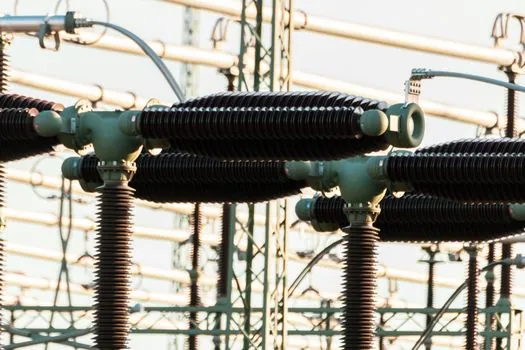
Cold-shrink joints and terminations use elastomeric tubes pre-stretched over a removable core; the core is pulled on-site so the tube shrinks and seals without torch, heat, or separate adhesive. Heat-shrink versions require controlled flame or hot-air application and skilled labour, while pre-moulded (slip-on or push-on) terminations use factory-moulded silicone rubber stress cones. Cold-shrink is the technology class behind the USD 2.6 billion 2025 market growing to USD 4.74 billion by 2034 at 6.8% CAGR [S4], and it is preferred where on-site heat sources are restricted, for example inside energised substations, confined spaces, or near cable trays with combustible sheathing.
Selection criteria worth pinning into a spec for HV projects in 2026: voltage class (36 kV, 52 kV, 72.5 kV, 145 kV, 245 kV), conductor cross-section range, screen type (copper wire or laminate), armoured or unarmoured construction, indoor versus outdoor termination, pollution class, and short-circuit rating. For transmission builds, a VCB-based switchgear lineup is the typical receiving end, and the VCBs at transmission voltage line is shifting upward into the 145 kV and 245 kV range in 2026, which raises the bar on termination partial-discharge performance.
Compare the three families on four axes: installation time, field-skill dependency, tooling, and qualification scope. Cold-shrink wins on installation time and field-skill dependency (no torch, short training), with moderate tooling and broad qualification. Heat-shrink is the lowest direct cost option but the highest field-skill dependency and the longest installation time per joint. Pre-moulded is the fastest to install at very high voltage classes but has the tightest dimensional tolerance and the longest factory lead time, which is where pre-terminated cable builds collapse the schedule.
Standards, certification, and the qualification bottleneck
Cable joints and terminations above 36 kV are governed by IEC 60840 (power cables with extruded insulation and their accessories for rated voltages above 30 kV up to 150 kV) and IEC 62067 (for voltages above 150 kV), with type tests covering partial discharge, heating cycle, impulse, and short-circuit withstand. HV cable terminations in the FMI market view are described as transitioning from a supply-constrained commodity cycle into a specification-driven procurement environment where end-use qualification standards define purchasing decisions, and tightening quality benchmarks are accelerating the shift toward certified grades [S1].
Key suppliers named in the FMI HV cable termination landscape include 3M, Nexans, Pfisterer, Prysmian, ABB, Siemens, and Elastimold [S1]. The vendor base is consolidating: smaller producers are described as facing escalating compliance costs and qualification barriers, and FMI names the primary market constraint as not volume availability, but qualification [S1]. For a project buyer in 2026 that means long-tail vendors can quote a lower price but they cannot pass the IEC 60840 type-test dossier, so the realistic shortlist is short.
Where the schedule risk still hides in 2026
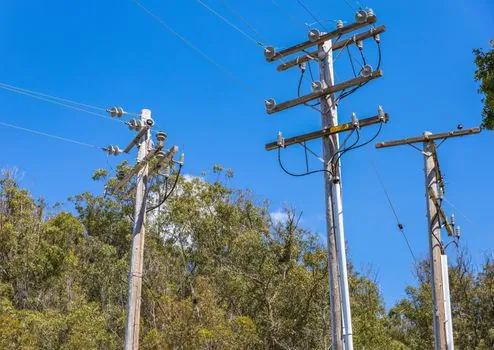
Three failure modes drive lead-time slip on HV joint and termination packages in 2026. First, jointer availability: HV jointers are a small, ageing trade, and NEN 3840 training in the Netherlands and equivalent HV jointer training schemes elsewhere are gating how many joints per day a contractor can complete [S2]. Second, factory slot booking for pre-moulded and pre-terminated assemblies: the factory has a finite press and cure schedule, so a late drawing freeze cascades into a 8 to 16 week factory queue. Third, test instrument and mobile HV test van availability for on-site partial discharge and AC withstand after installation.
The Reynard data point on offshore wind energisation is the canonical example: an offshore wind farm is built over a decade from seabed survey to energisation, and the HV cable testing step on the way to energisation is one of the last serial activities before back-feed [S2]. Related, the heavy-lift side is also tight in 2026: breakbulk and heavy-lift capacity tightens around transformers and turbines in 2026, which means the transformer and the HV cable landside interface have to be scheduled together, not independently.
Decision framework: who should pre-terminate, who should field-build, and who should walk away
Pre-terminate if the cable routings are fixed at design freeze, if the substation has restricted hot-work permits, if the jointer labour pool in the project country is thin, or if the energisation milestone carries a contractual delay liquidated damages. Field-build with cold-shrink if the cable run is long and tortuous, if drawings are still moving, or if the cable is being pulled in sections with intermediate joints. Field-build with heat-shrink is the lowest direct cost but the worst schedule risk and is generally a poor fit for HV above 36 kV on a 2026 critical-path project. [S2]
Who it is for: EPC contractors on 145 kV and 245 kV transmission builds, data-hall substation upgrades, offshore wind onshore substations, and interconnector projects (Celtic Interconnector and similar). Who it is not for: brownfield retrofits where the existing cable geometry cannot be matched, or projects with a moving cable routing that needs a layout change in month 4 of a 6 month build. Walk away from any quote that does not include an IEC 60840 or IEC 62067 type-test dossier for the exact voltage class, and any pre-terminated scope where the factory cannot show a partial discharge test report per assembly.
Market signals to watch through 2027
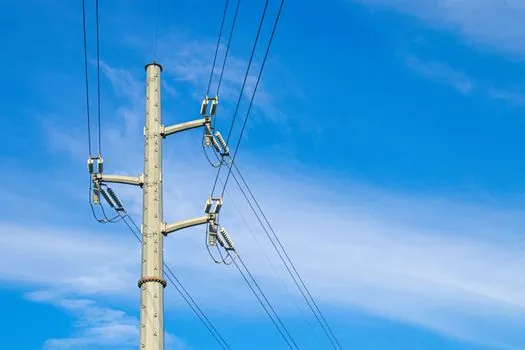
Three trackable signals: (1) Europe cable joint revenue versus the 7.9% CAGR trajectory, with any quarterly undershoot signalling that renewable buildout is decelerating; (2) cold-shrink share of the USD 4.74 billion 2034 forecast, since a faster pivot to cold-shrink confirms the field-labour and hot-work restrictions are tightening; (3) HV jointer training throughput in Germany, the Netherlands, and the UK, since the qualified jointer headcount is the binding constraint behind most schedule slips above 36 kV. [S3]
For the relevant spec sheets and selection criteria, see lead screw, time relay, and expansion joint.