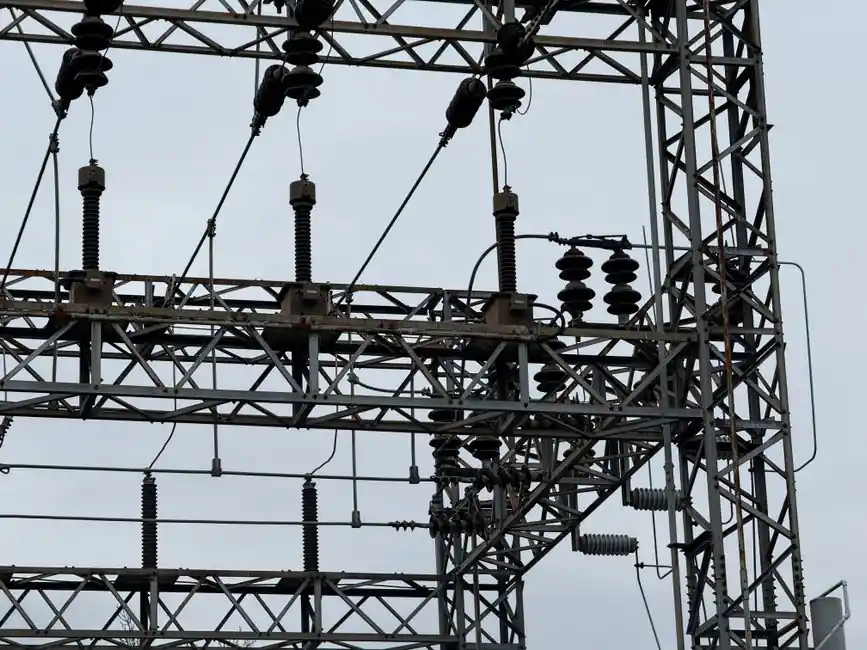
Direct in-line patenting, or DLP, can eliminate the customer’s separate lead-patenting operation by treating hot-rolled high-carbon wire rod before drawing, with reported commercial use dating to 1985 [S2].
The viable comparison is metallurgical and operational: DLP uses molten salt for cooling and pearlite transformation, while lead patenting uses molten lead; both aim to produce fine pearlite that supports repeated wire drawing [S2][S3].
What Direct In-Line Patenting Changes
DLP wire rods are heat-treated in line with the wire-rod production process and can omit lead patenting by the customer [S2].
This arrangement is not simply a lead-bath substitution. It changes the order of operations: the rod producer heat-treats and patents the material, so the wire drawer can omit a separate lead-patenting operation that would otherwise occur before or during drawing [S2][S5].
Lead Patenting Performance Requirements
Lead patenting heats high-carbon steel wire, rapidly cools it in air or molten lead, and forms a controlled pearlitic structure for wire rope, spring wire, and other high-strength applications [S4]. For hypereutectoid wire, the principal process variables are austenitizing temperature, lead-bath temperature, and phase-transformation time [S3].
A 2017 industrial study used an L-18 Taguchi orthogonal array to evaluate four inputs: steel type, wire diameter, lead-bath temperature, and transformation time. The measured responses were ultimate tensile strength, torsion strength, and reduction in area, with optical microscopy used to quantify pearlite phase [S1].
The patent literature confirms the operational objective: a high-carbon wire rod that can omit patenting before or during wire drawing must preserve drawability and exhibit low drawing force or related drawing defects [S5]. Carbon content also matters because finer pearlite interlamellar spacing increases strength through the Hall-Petch relationship [S3].
DLP Versus Lead Patenting by Decision Criteria
DLP and lead patenting both target fine pearlite, but they differ in equipment ownership, process integration, material exposure, and validation requirements. The comparison below organizes the choice around the criteria that affect production qualification. [S3]
The comparison does not establish universal interchangeability. DLP suitability must still be proved against the specified carbon grade, wire diameter, final tensile and torsion requirements, reduction in area, and downstream drawing conditions [S1][S3].
Who Should Specify DLP Wire Rod
DLP is suited to wire drawers that want one supplier to deliver draw-ready, patented high-carbon rod and remove a separate heat-treatment operation. The commercial rationale for DLP includes energy conservation and elimination of lead at the customer [S2].
It is less suitable for processors that require multiple patenting routes for different wire grades within one production line, need to alter transformation treatment after each rod batch, or cannot qualify the incoming rod against their own drawing criteria. DLP is a product and process architecture, not an automatic drop-in substitute for every wire-drawing recipe.
For engineering teams evaluating downstream performance, the performance of prestressing strand depends on the wire’s strength, drawability, fatigue behavior, and consistency before stranding. For producers purchasing feedstock, wire rod should be selected by the intended final wire specification rather than by carbon grade alone.
Applications and Qualification Tests
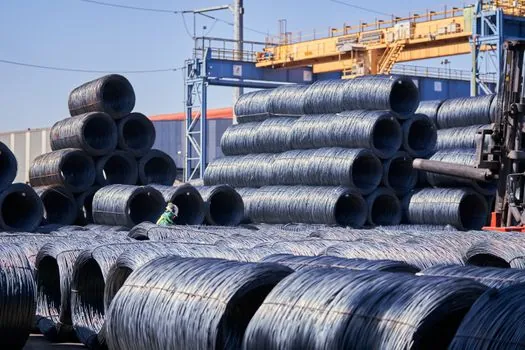
A qualification program should compare DLP rod with the incumbent lead-patent route using at least four controlled measures: final ultimate tensile strength, torsion strength, reduction in area, and wire-drawing performance. Pearlite morphology and interlamellar spacing should also be checked because these are the metallurgical links between treatment and drawability [S1][S3].
A supplier grade should therefore be tied to the target wire diameter and mechanical specification.
For strand or rope applications, steel wire remains the relevant downstream component, and the patenting decision should be made before wire drawing rather than compensated for during strand or rope fabrication.
Process Risks and Failure Modes
The main DLP risk is inadequate cooling or transformation control, which can leave too coarse a pearlite structure for demanding drawing. The main lead-patent risk is loss of control over austenitizing temperature, lead-bath temperature, or transformation time, each of which can alter the final mechanical response [S2][S3].
Three failures dominate commercial qualification. First, a rod may appear drawable yet show inadequate reduction in area or torsion performance. Second, lot-to-lot variation in transformation can make downstream die wear and tensile scatter unacceptable. Third, changing wire diameter or carbon grade can invalidate a process window established on one product family [S1][S3].
Lead also creates a distinct occupational and environmental management burden. DLP removes lead from the customer’s patenting operation and produces wire rod described as containing no lead [S2]. That benefit does not remove the need to verify salt-bath control, furnace uniformity, transport condition, and delivered rod quality.
Decision Basis for Process Replacement
DLP can replace lead patenting for high-carbon wire rod when the producer can qualify fine-pearlite structure, drawability, and final mechanical properties against the incumbent route. Its strongest case is the integrated supply chain: patented rod arrives ready for drawing, the customer omits a separate patenting operation, and no lead is applied in that treatment [S2][S5].
Track three signals before approving conversion: DLP rod tensile and torsion results against the lead-patent control, drawing-force or wire-breakage behavior through the customer’s target reduction schedule, and batch-to-batch pearlite consistency. Confirm the exact grade, diameter, chemistry, and downstream product because high-carbon wire performance spans bridge, tire, spring, and prestressing applications with different strength demands [S1][S3].