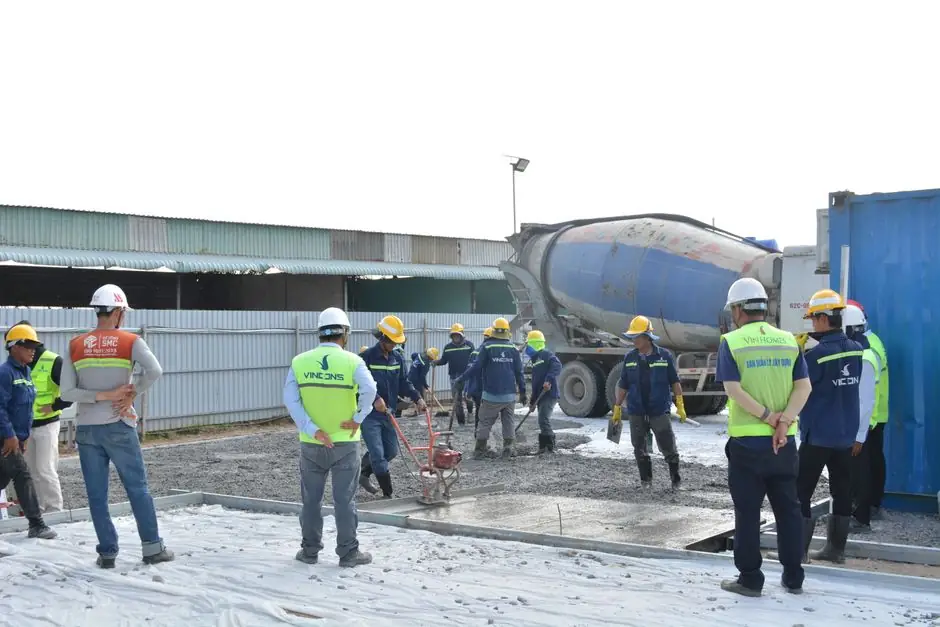
Thermoplastic vulcanizate waterstop can replace PVC in demanding joints: one TPV product is specified for prolonged exposure from -78°F to 275°F and contains no plasticizer, stabilizer, or filler that can leach into aggressive fluids [S3][S4].
Replacement is credible for chemical, industrial, environmental, potable-water, and retrofit applications, but profile design, joint movement, welding controls, concrete cover, and anchorage remain more important than the material label alone [S2][S3][S5].
TPV versus PVC: performance and installation trade-offs
TPV has the stronger case where a joint contacts fuels, oils, solvents, ozone, or aggressive industrial fluids. Published product data states that alcohol, ketones, glycols, esters, and aqueous acids, salts, and bases have little effect on Earth Shield TPV, while its formulation contains no plasticizer, stabilizer, or filler that can leach out [S3][S4].
PVC remains a reasonable selection for ordinary joints where exposure is benign, movement is limited, and installed cost is the governing criterion. The distinction is application-specific rather than universal: TPV is not automatically superior for every tank, slab, wall, or expansion joint [S2][S3].
The practical selection rule is straightforward: specify TPV when exposure severity or temperature reliability governs the risk register, retain PVC for ordinary service when lifecycle value supports it, and avoid choosing either material without matching the profile to joint geometry and movement [S2][S3].
Where TPV replacement is justified
Chemical containment is the clearest application. Earth Shield TPV is used as a fluid-tight diaphragm across concrete joints in primary and secondary containment, industrial wastewater treatment, and ozone-contact structures [S3].
Drinking-water exposure also favors a documented TPV option because one Earth Shield line is NSF/ANSI 61 certified for potable use [S3][S4]. That certification belongs to the specified product, not automatically to every TPV waterstop sold under the generic material name. The submittal should therefore request third-party certification for the actual profile and manufacturer [S4].
Retrofit work can move from PVC to TPV when the joint connects new concrete to an existing structure. The cited PVC retrofit system uses T- or L-shaped profiles, stainless steel batten bars and anchor bolts, 10-foot standard lengths, batten holes at 6-inch centers, and base widths of 3, 6, or 9 inches for concrete sections 6 inches thick and above [S5]. TPV retrofit profiles, including a T-shaped JP 325T product and stainless-steel anchoring hardware, are also available [S3].
For slab-on-grade and large containment slabs, profile selection still depends on movement and hydrostatic pressure. A flat strip waterstop is ideal for limited-movement construction and contraction joints. This movement and pressure decision must be made before the TPV or PVC material is finalized.
Installation controls for welded TPV joints
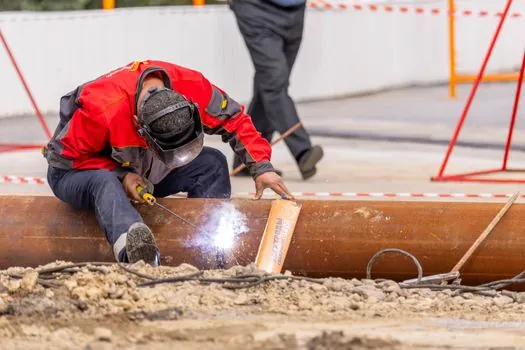
TPV does not remove the need for disciplined fabrication. The installation presentation specifies an iron temperature of 380°F to 390°F for PVC and 390°F to 410°F for TPER and PE. Overlapping is prohibited; installers must avoid charring and pinholes [S1].
Factory fabrication is the preferred route at intersections and direction changes, leaving straight butt welds for field work [S1][S4]. After a weld cools, a field bend test around a curved object can verify continuity, while factory-made intersections reduce the chance of weak field junctions [S1]. The installation presentation highly recommends factory-made fabrications at intersections.
Anchorage controls displacement during the concrete pour. The waterstop must not be punctured to accommodate reinforcing steel that would otherwise interfere with it at the base of a wall and top of slab. At the base of a wall, a keyway profile can conflict with the upper reinforcement mat, so the detail must be coordinated before placement [S1].
Retrofit installation has an additional bond requirement.
Limits and failure modes to control
A welded waterstop is only as reliable as its profile geometry, splice, anchorage, and concrete placement. TPV can be heat-welded into a continuous, homogeneous diaphragm, but improper welding can introduce charring or pinholes, while overlapping creates a discontinuity that is expressly prohibited [S1][S2].
Movement is another failure mode. A flat strip waterstop is ideal for limited-movement construction and contraction joints. TPV chemistry cannot compensate for selecting a static profile for a moving joint.
Chemical compatibility still requires project-specific confirmation. The broad resistance statements in the product data cover several chemical families, but they do not establish compatibility with every concentration, temperature, or mixture [S3][S4]. Specifiers should obtain compatibility evidence for the actual process fluid and operating temperature, then require manufacturer certification when warranted.
TPV is also not a substitute for every strip-applied product. Hydrophilic and mastic systems use different sealing mechanisms, and the reviewed installation guidance notes that mastic has no swelling action and no chemical resistance, while bentonite and hydrophilic products require verified concrete cover and can be affected by exposure conditions [S1]. The waterstop guide is useful for separating internal embedded systems from strip-applied alternatives.
Specification decisions and procurement checks
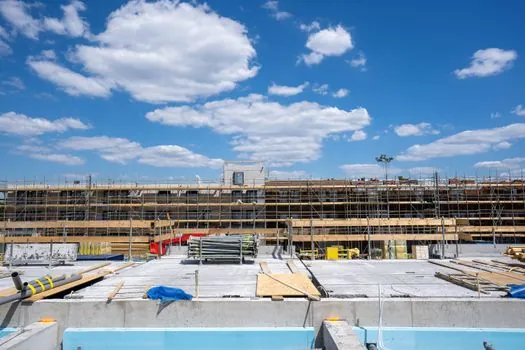
A complete TPV specification should identify thermoplastic vulcanizate waterstop, the exact profile, width, movement class, and joint application. Earth Shield JP636 ribbed centerbulb is offered in 4-inch, 6-inch, and 9-inch widths, with brass eyelets available as factory-installed accessories [S3]. Expansion-joint details must leave the centerbulb unembedded so it can move as designed [S4].
Compatibility documentation matters as much as the generic description. One TPV retrofit product is identified as Section 03150 under MasterFormat 03 15 13, and its published system includes NSF 61-certified profiles, welding tools, accessories, and project-specific corrosion-resistance certification options [S3]. These features support specification, but they do not replace contractor qualification or project-specific chemical checks.
For procurement, compare installed cost rather than unit price. Include profile fabrication, stainless steel anchors, certified welders, iron temperature controls, inspection bends, concrete placement, and potential rework. A simple TPV substitution that omits factory intersections or allows overlaps can cost more and perform worse than the original PVC system [S1][S4].
The engineering decision is to use TPV where its published chemical and temperature performance addresses a defined exposure risk, then preserve PVC where those risks do not exist. For waterstops embedded around joints, review the TPV and PVC compatibility evidence only as broader construction-material context, while specifying the actual waterstop product by performance and profile.
Track two controls before approval: obtain project-specific chemical and temperature compatibility documentation, and require a weld method statement covering the 410°F to 430°F iron range, factory intersections, bend testing, and no-overlap rule [S1][S4]. These are the clearest indicators that a TPV replacement has moved beyond a material substitution into a complete joint design.