
A capacitance level transmitter detects the change in electrical capacitance between an insulated probe and the reference (vessel wall or second probe) as dielectric material rises around it, then converts that delta-C into a 4-20 mA or HART signal proportional to level [S1][S3].
Working delta-C in commercial RF admittance units sits in the 25 to 2000 pF range, with recommended probe-to-wall capacitance swing that drives linear output [S1]. Process-temperature windows on standard industrial units run from -40 C up to +200 C, and process-side electronics are commonly housed in IP65 enclosures for dusty solids service [S1].
Operating Principle and Measurable Capacitance Range
The probe, the medium and the metal tank wall form a coaxial-style capacitor whose dielectric constant shifts as material fills the vessel [S3]. The transmitter excites the probe with a low-energy RF signal, measures the resulting capacitance at empty (C_air) and full (C_full), and linearises the difference dC = C_full - C_air against height [S1].
Vendor guidance puts the usable dC band at 25 to 2000 pF; below 25 pF the signal-to-noise ratio collapses, above 2000 pF linearity drifts unless the probe is re-tuned [S1]. That 80:1 dynamic window is the first number a buyer should demand on the data sheet, because a vendor quoting accuracy without a dC range is hiding the hardest constraint of the technology.
Selection Criteria: Probe, Coating, Process Connection
The FineTek EB series is published at -40 C to +200 C process temperature with IP65 housing and HART 7 output, targeting solids, high-temperature and pharmaceutical service [S1].
For aggressive chemicals, a fully PFA- or PVDF-coated probe is the default; for abrasive fly ash, cement or mineral ore, a bare 316L stainless rod with a thick-wall insulator sleeve handles the wear better than thin PFA [S1]. Buyers should also fix the process connection (NPT, BSP, flanged ANSI 150/300) at the RFQ stage; switching from threaded to flanged after delivery usually costs more than the transmitter itself.
Where Capacitance Wins, Where It Fails
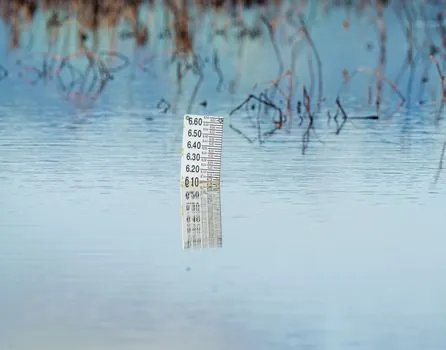
Capacitance level instruments are the low-cost workhorse for water/wastewater, fuel oil, acids, slurries, fine powders, and conductive liquids where guided-wave radar or non-contact radar would overspend [S1][S3]. The EB-style RF admittance design also claims no blind distance, which makes it useful on short, stubby vessels where a guided-wave radar would lose 200 to 300 mm of measurement near the top [S1].
The technology falls short on three classic failure modes: build-up of conductive coating on the probe (false high reading), changing dielectric of the medium (calibration drift), and non-conductive foam that mimics a low level. In hydrocarbon service with paraffin or asphalt, the probe will foul within weeks unless a periodic wash-cycle is built into the engineering package. When any of those conditions are guaranteed, switch to a magnetostrictive level transmitter or a non-contact radar instead.
Capacitance vs RF Admittance vs Guided-Wave Radar
Standard capacitance uses a low-frequency excitation and trips on conductive coating; RF admittance adds a reference path and a phase-sensitive guard circuit so a thin conductive film on the probe is rejected as a constant offset rather than counted as level [S1]. That is the engineering reason the EB-series datasheet quotes dC = 25 to 2000 pF with a temperature effect of 0.2 % FS/C or 0.1 pF/C, an order of magnitude tighter than legacy capacitive units [S1].
Guided-wave radar (GWR) costs roughly 2.5x to 4x a capacitance probe and is preferred when the dielectric constant of the medium varies batch-to-batch, because the time-of-flight measurement is largely independent of dielectric. For a wider framing of how these competing technologies line up on range, output, and price, the Radar Level Meter vs Level Transmitter: Spec-First Selection comparison is the cleanest reference published in 2026.
Interface, Output and Calibration Practicalities
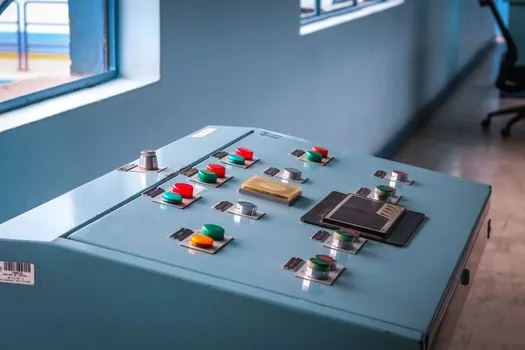
Most 2026-spec capacitance units expose 4-20 mA plus HART 7, with optional Modbus RTU over RS-485 on the same two-wire loop for SCADA migration projects [S1]. Two-point calibration is the field norm: calibrate empty (C_air) with the probe dry, then fill to a known level and lock the full-scale point; vendors recommend any two points, not a full 11-point NIST sweep, because the dominant non-linearity is the probe-end fringing field, not the electronics [S1].
For a 4-20 mA-only plant, a level transmitter without HART still functions, but the buyer loses the ability to re-range from the control room, which is the single feature that prevents a 30-minute tank climb every time the recipe changes. Power budget on RF admittance units stays low: the EB datasheet specifies 20 mA maximum loop current, leaving headroom on a standard 24 VDC IS barrier [S1].
Buyer Shortlist Logic and One Cross-Reference
Match the four filter rules in order: (1) dielectric stable? if yes, capacitance is fine; if no, jump to GWR. (2) Conductive coating on the probe likely? if yes, specify RF admittance with a guarded reference path, not bare capacitance. (3) Process temperature above 150 C? if yes, confirm the upper data-sheet number, not the marketing bullet; the EB-series 200 C ceiling is one of the higher published values [S1]. (4) Hazardous area? insist on ATEX/IECEx zone marking on the serial label, not in the brochure.
For plants that already run HART multivariable transmitters, browse the differential pressure transmitter encyclopaedia entry before specifying a new level device, because DP-based level measurement on pressurised tanks is often more stable than a probe in a foam-prone service. If the surrounding measurement loop is temperature-heavy rather than level-heavy, the Temperature Transmitter Selection Guide: RTD, TC, HART, and Form Factor Tradeoffs article pairs cleanly with this one for a full tank-farm spec package.