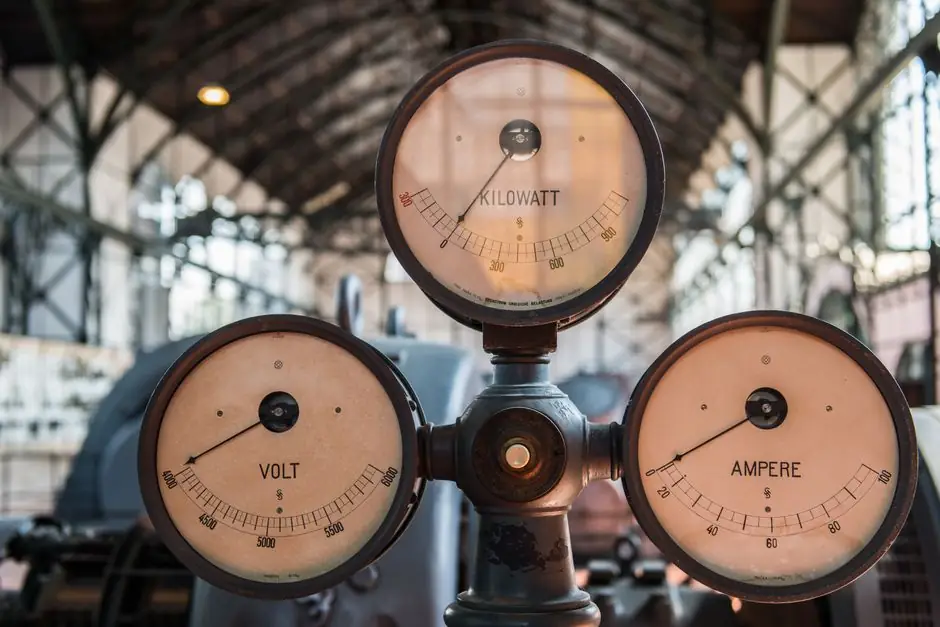
A magnetostrictive level transmitter resolves liquid level to 0.1–1 mm by timing a torsional pulse on a waveguide against a float-borne permanent magnet, making it the go-to technology when capacitance level transmitters drift in conductive media and where ultrasonic or radar units lose accuracy on foam, vapor, or turbulent surfaces [S3][S4].
Typical industrial stems run 50–5,500 mm at process temperatures of -40 to +200 °C and pressures to 30 bar, with 4–20 mA two-wire, HART, RS-485, and Foundation Fieldbus outputs available across the major lines [S3][S4][S5]. For high-risk duties such as separator and compressor level, magnetostrictive is the only level transmitter family with multiple vendors offering SIL2 and SIL3 certification per IEC 61508 [S9].
Operating Principle and Why It Beats Competing Technologies
A current pulse is fired down a magnetostrictive waveguide wire; interaction with the float's permanent-magnet ring produces a torsional wave that returns in microseconds, with elapsed time proportional to float position and therefore to liquid level [S4]. Because the measurement is a time-of-flight on a rigid stem rather than a dielectric or echo response, the result is essentially independent of foam, vapor, dielectric constant, and most density shifts, which is why a magnetostrictive level transmitter typically holds ±0.01 mm repeatability on a clean-liquid service where radar can wander by several millimeters [S4][S8].
Single-float designs return total level; two-float versions resolve an interface between two immiscible liquids (for example hydrocarbon over water) by reporting each float's position independently, a duty that the EG series and FJM-L are both built around [S3][S4]. Compared with differential pressure transmitters used on the same separator, the magnetostrictive stem needs no impulse lines, no seal pots, and no recalibration when the gas density changes.
Spec Boundaries: Stem Length, Temperature, Pressure, and Accuracy
Procurement should lock four numbers before vendor selection: minimum and maximum stem length, process temperature span, maximum process pressure, and required accuracy. Across the 2026 catalog snapshot, the public minimum stem is 50 mm and the maximum is 5,500 mm (FineTek EG), with the Feejoy FJM-L topping out at 5,000 mm and the H780 industrial unit advertising 0.01 mm accuracy at 0.03 mm resolution [S3][S4][S8].
Process-temperature windows cluster tightly at -40 °C on the low side, with maxima of +195 °C on the EG and +200 °C on the FJM-L, so any service above +200 °C typically requires a remote-mounted probe head or a different technology [S3][S4]. Pressure ratings land in two common bands, 5 bar (72.5 psi) and 30 bar (435 psi) for the EG; the AT600 external-mount design avoids this limit entirely by clamping to a magnetic level gauge rather than penetrating the vessel wall [S2][S3].
ABB's LMT200 documentation lists the family as the only magnetostrictive line certified for SIL2 and SIL3 loops per IEC 61508, the detail that should drive any safety-instrumented-function (SIF) selection rather than raw accuracy [S9].
Output Protocols, Power, and Hazardous-Area Ratings
Loop-powered 4–20 mA two-wire remains the workhorse output, with HART superimposed on the same pair for diagnostics and remote ranging, while RS-485 and Foundation Fieldbus appear on multi-tank or DCS-integrated installations [S3][S4]. The H780 runs on 18–30 V DC and weighs roughly 50 g, useful when a lightweight probe is needed on a long riser; the EG accepts the same supply range through its two-wire loop [S3][S8].
Hazardous-area coverage is the second-tier filter: explosion-proof FJM-L housings are rated to IP65, while ABB's LMT family and the K-TEK AT600 carry the certifications needed for refinery and platform service, and Yokogawa's ISE-Magtech LTM-300FF device description (DD revision 01/01) confirms Foundation Fieldbus interoperability for the Japanese-channel supply chain [S1][S2][S4][S6]. Buyers should match the Ex rating to the actual zone classification (for example ATEX 2014/34/EU for Europe, IECEx for international projects) rather than to a generic "explosion-proof" label on the datasheet.
Comparison: Four Representative Magnetostrictive Models on Decision Criteria
The four representative units below cover most 2026 spec envelopes, and line up cleanly against the decision criteria a buyer actually scores [S1][S2][S3][S4][S6][S8][S9].
1) FineTek EG series, 50–5,500 mm stem, -40 to +195 °C, 5 or 30 bar, 4–20 mA + RS-485, stainless steel, with digital display, two-float interface option. Best fit: general storage tanks, food and beverage, marine, and small-batch chemical skids where one vendor needs to cover several tanks of different heights [S3].
2) Feejoy FJM-L, 50–5,000 mm stem, -40 to +200 °C, 4–20 mA, IP65 explosion-proof housing, 0.1 mm accuracy class. Best fit: budget petrochemical, medical, and underground gas-station service where the wider temperature window matters and the buyer accepts the China-channel support model [S4].
3) ABB K-TEK AT600 (and LMT200/LMT100 family), external-mount to a KM26 magnetic level gauge, 4–20 mA, SIL2/SIL3 capable, designed for separator, compressor, and interface service. Best fit: refinery SIF loops where the magnetostrictive element must clamp to an existing chamber without breaking the pressure boundary [S2][S6][S9].
4) Yokogawa ISE-Magtech LTM-300FF, Foundation Fieldbus device (DD rev 01/01), 4–20 mA + FF, designed for the DCS-integrated Japanese-channel supply chain. Best fit: CENTUM VP and other FF-native systems in LNG, power, and offshore [S1].
Compared on cost-vs-performance, a buyer looking for sub-millimeter accuracy and SIL3 will end up in the ABB LMT family despite the premium, while a non-SIL storage-tank application usually finds the EG or FJM-L the lowest total cost of ownership; for a side-by-side view of magnetostrictive against switch-based point level, the Level Switch vs Magnetostrictive Level Transmitter comparison maps the duty split cleanly.
When NOT to Pick a Magnetostrictive Transmitter

Magnetostrictive probes do not tolerate heavy coating, crystallization, or high-viscosity sludge inside the float chamber, because the float stalls on the stem and the pulse timing then no longer represents the liquid surface. For dirty, coating, or slurry services, a non-contact radar or ultrasonic level meter is the safer call. [S3]
Long vertical stilling wells above 6 m are also a poor fit, since the maximum stem length in the 2026 catalog snapshot stops at 5,500 mm (FineTek EG) and most competing lines cap at 5,000 mm [S3][S4]. Stems also need to enter the vessel vertically, with adequate clearance for the float, so horizontal or inverted installations are not realistic; buyers with restricted mounting geometry should pivot to a side-mount external design like the AT600 [S2].
Sourcing Reality: Lead Time, MOQ, and Unit Cost Bands
Reference FOB pricing on the H780 sits in three tiered bands: US$210 for 1–99 pieces, US$150 for 100–199 pieces, and US$120 at 200+ pieces, with a 10-piece MOQ on general magnetostrictive listings and a one-year warranty on the H780 [S7][S8]. Lead times on China-channel OEM SKUs typically run 2–4 weeks for stock probe lengths and 6–8 weeks for non-standard stems above 4 m, while ABB and Yokogawa branded units are project-quoted with 8–12 week lead times on confirmed orders.
Specifiers should treat the published tiered FOB numbers as a starting envelope only, since real landed cost on a refinery order includes housing material upgrades (for example 316L SS vs standard 304 SS), NACE MR0175 compliance for sour service, and third-party SIL documentation, all of which are typically itemized separately on ABB and Yokogawa quotes [S1][S2][S6][S9].
Installation, Calibration, and Lifecycle Constraints

Magnetostrictive probes are shipped with factory calibration that is essentially permanent, which is why vendors such as Feejoy advertise "set it and forget it" operation with no re-calibration under normal service [S4]. Field work mostly reduces to zero-and-span checks against the HMI, plus routine inspection of the float for fouling or metal loss; ABB's dual-compartment LMT housing separates the wiring compartment from the electronics, simplifying hot-swap on a live loop [S4][S6].
For installations where the loop is powering the transmitter and a long cable run could drop the supply below 18 V DC, the H780's 18–30 V DC window is the safe reference, and any cable specification should be checked against that floor before procurement closes [S8]. A more general view of the broader pressure-and-level sourcing landscape, including how magnetostrictive compares with manometer-based and absolute-pressure methods, is laid out in the manometer price guide.