
output is a continuous 4-20 mA or HART signal proportional to the liquid level between two electrodes, and the working principle relies on the stored liquid acting as the dielectric medium between those electrodes [S2]. The two devices share an electrode geometry and a similar electronics package, but their failure modes and dielectric constant requirements diverge sharply once the process fluid drops below an approximate dielectric constant of 2.0.
How the dielectric constant sets the working range
Capacitance level transmitters store the process liquid as a dielectric medium between two electrodes, so the measured capacitance swing scales roughly with the difference between the dielectric constant of the liquid and that of the air or vapor above it [S2]. Most OEM datasheets for general-purpose capacitance probes specify a minimum effective dielectric constant shift of around 1.5 to 2.0 between the empty and full conditions; below that, the millivolt-level change is swamped by cable capacitance and temperature drift. RF admittance level switch devices use the same probe arrangement but interpret the impedance change as a trip threshold, which makes them less sensitive to absolute dielectric value and more dependent on the conductivity of the media and the build-up resistance on the electrode.
Yokogawa's DPharp EJX differential pressure family, including the EJA110E and EJX110A traditional-mount models, is one of the workhorses used in tandem with capacitance probes where a reference leg is required for sealed or pressurized vessels [S3]. Where the dielectric constant of the process media is high, such as in water-based fluids around a dielectric constant of 80, both capacitance and RF admittance devices can be set without special calibration. Where the process media is a hydrocarbon near a dielectric constant of 2.0, or a liquefied gas near 1.5, a coaxial or dual-rod guarded probe is normally required to keep the measurement path inside the wet region only.
Transmitter vs switch: output type and the data you actually get
A capacitance level transmitter delivers a continuous proportional output suited to control loops, inventory trending, and overfill prevention on bulk storage, with typical outputs of 4-20 mA plus HART 7 superimposed on the analog loop, or Foundation Fieldbus / PROFIBUS PA on selected models [S2]. An RF admittance level switch delivers a single discrete state, normally a 1 A or 2 A SPDT contact, a PNP/NPN transistor output, or a 4-wire AC/DC switching output, and it is not designed to give a percentage reading of the tank. The two devices are therefore not interchangeable: a switch cannot replace a transmitter in a regulatory metering loop, and a transmitter is overkill and slow where only a high-level cut-off is required.
DirectIndustry's index of ATEX-rated level devices lists 33 manufacturers and 92 ATEX-certified level transmitter products on a single filter page, with offerings from ABB Measurement & Analytics, AMETEK Drexelbrook, Bürkert, Chemitec, Delta Mobrey, Emerson Rosemount, Endress+Hauser, and Flowline, confirming that the European process market treats ATEX/IECEx dual certification as a standard procurement requirement for new builds [S4]. Where the process fluid is conductive above about 1 mS/cm, a standard bare-rod RF admittance probe is acceptable; where the fluid is highly resistive but still has a usable dielectric shift, a guarded probe with active shield compensation is normally specified to ignore coating build-up on the inner rod.
Dielectric-driven selection: which option fits which application
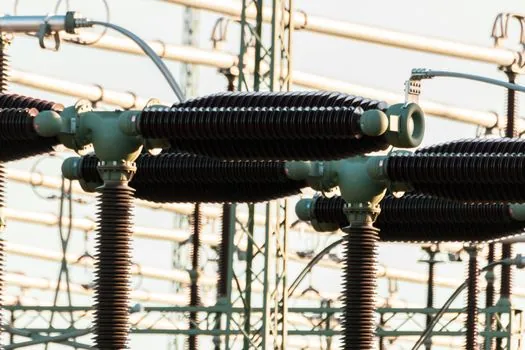
For continuous level monitoring of conductive water-based media, light hydrocarbons near a dielectric constant of 2.0 to 5.0, and acid or caustic solutions where the dielectric constant stays above 2.5, capacitance level transmitter units with a 4-20 mA plus HART output are the most cost-effective choice. For high-level or low-level alarms in the same fluids, an RF admittance level switch is the simpler point-level device, especially where the goal is to avoid overfilling a tank, trigger a pump cut-out, or interlock a valve. For dielectric constants below about 1.5, which covers most liquefied gases and cryogenic media, neither capacitance nor RF admittance is reliable; that range is normally handed to guided-wave radar, free-space radar, or differential pressure methods. [S3]
For outdoor tank farms storing fuels, solvents, or chemicals, a common configuration pairs a radar primary level gauge with an RF admittance point-level switch for independent high-high and low-low interlocks, an architecture that decouples regulatory measurement from safety logic. A practical procurement rule from the OEM data reviewed: if the dielectric constant of the process media is above 2.5 and continuous level is required, specify a capacitance transmitter with HART output; if the dielectric constant is between 1.5 and 2.5, specify a guarded coaxial probe on either device; if the dielectric constant is below 1.5, switch to guided-wave radar or differential pressure transmitter methods [S2][S4].
Probe geometry, build-up, and hazardous-area certification
Probe selection is as important as electronics selection, because the same dielectric medium produces a different signal-to-noise ratio on a bare-rod, a coaxial, or a dual-rod guarded probe. AMETEK Drexelbrook alone accounts for 11 of the 92 ATEX-certified products listed in the DirectIndustry filter, which is consistent with its long-standing focus on RF admittance and capacitance point-level devices for sticky, coating-prone, or foam-top services [S4]. Coaxial capacitance probes are more sensitive at low dielectric constants because the field is fully contained inside the tube, but they foul faster in slurries and are harder to clean. Dual-rod guarded probes are easier to clean and tolerate coating on the outer rod up to a few millimeters, at the cost of lower sensitivity at low dielectric constants.
For hazardous-area installations, the standard procurement requirement is ATEX category 1 or 2 for Zone 0 or Zone 1, plus an IECEx certificate for plants outside the EU, with most of the European and US OEMs offering both ratings on a single part number [S4]. Explosion-proof enclosures are typically specified as IP66 or IP67 with stainless steel 316L process connections, and the electronics housing on most ATEX/IECEx dual-certified units is rated for an ambient temperature of -40 to 85 degrees Celsius. The probe itself is generally a 316L stainless steel rod with PTFE, PEEK, or Halar insulation, and the material choice is dictated by the chemical compatibility of the process media, not the dielectric requirement.
When neither technology is the right pick
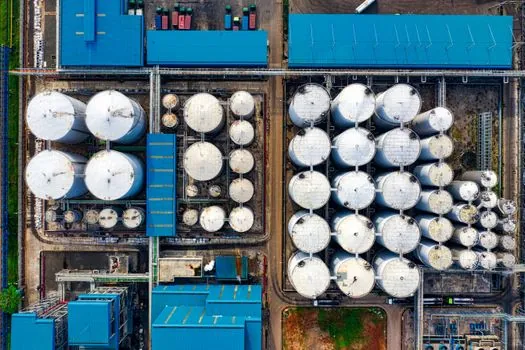
Capacitance and RF admittance both fail in roughly the same conditions: vacuum or near-vacuum vessels, heavily agitated tanks with vortexing, foaming service with conductive foam, and any media where the dielectric constant of the foam is similar to that of the liquid. They also fail on the first batch of media where the dielectric constant is too close to that of air for the device to resolve the difference, which is the most common commissioning failure on light hydrocarbon service. In those cases the correct alternative is magnetostrictive level transmitter for clean liquids, or guided-wave radar for low-DK media. [S1]
For a guide on how radar-based level measurement handles the same low-dielectric-constant problem on outdoor tank farms, the article on outdoor tank farm radar level meter selection: 26 GHz vs 80 GHz, antennas, zones provides a direct spec comparison against the same dielectric limit. Where the requirement is a level device on a hazardous-area temperature point, the thermocouple selection for hazardous-area temperature points article maps out the corresponding ATEX/IECEx selection logic for a sister measurement.
Sourcing, lead time, and standards anchor
On the supply side, the manufacturer list reviewed includes ABB, AMETEK Drexelbrook, Bürkert, Chemitec, Delta Mobrey, Emerson Rosemount, Endress+Hauser, Flowline, and ZYZL Instruments, with a typical ATEX/IECEx capacitance probe listed at a FOB price of about USD 10 per piece for a basic RF admittance unit from Chinese OEMs and a 10 to 15 day delivery time on standard catalog part numbers [S4][S5][S10]. US and European dual-certified parts are typically 3 to 5 times that price on a like-for-like probe, and lead time on a custom-immersed-length and custom-connection unit is closer to 6 to 10 weeks.
For long-term reliability, the procurement datasheet should require that the device carries ATEX 2014/34/EU category 1 G or 2 G for Zone 0 or Zone 1, IEC 60079-0 and IEC 60079-11 for intrinsic safety, and an IECEx certificate of conformity for non-EU plants [S4]. For oil and gas service, sour service compatibility per NACE MR0175 must be specified separately on the wetted metal, and for hygienic service the probe needs 3-A sanitary certification. The single most common procurement error is specifying a bare-rod probe for a low-dielectric hydrocarbon service, so the dielectric constant of the process media should be on every RFQ and matched to a probe geometry before a part number is released.