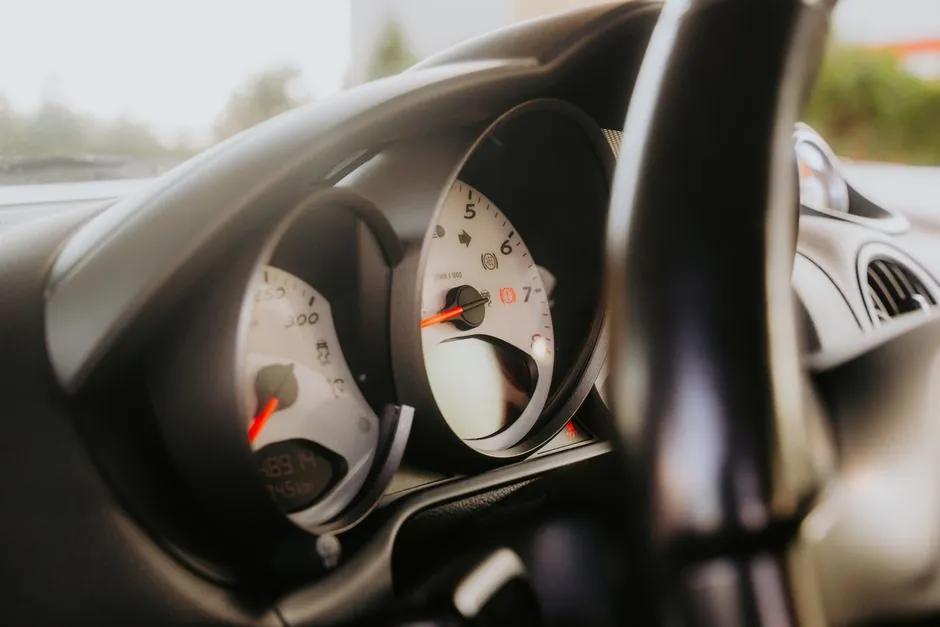
A vacuum gauge is any instrument dedicated to measuring pressure below atmospheric, defined formally as "a gauge indicating degree of rarefaction below atmospheric pressure" [S5]; a manometer is a pressure comparator that reads the height difference of a fluid column (or equivalent) and is indifferent to whether the reading is positive or negative gauge pressure. In practice, the two terms overlap: a U-tube mercury manometer with one leg evacuated is itself a vacuum gauge, and many electronic vacuum gauge modules use a manometric sensing element internally.
The distinction matters when you spec an instrument for a process. A manometer is a differential-pressure reference; a vacuum gauge is a single-ended absolute or gauge-pressure transmitter aimed at the sub-atmospheric band. Engineers specify one or the other based on range, accuracy class, gas compatibility, and whether the system already has a reference vacuum available.
Operating Range and Where Each Technology Stops Working
Standard industrial Bourdon-tube and diaphragm vacuum gauges cover roughly -1 barG to 0 barG, with common process-vacuum instruments (Y-60 type cases) quoted at US$1–7 per piece in the China export catalog and higher-spec digital units around US$10 per piece [S3]. That -1 to 0 barG band is exactly where a U-tube or well-type manometer also operates, and the two compete head-to-head on accuracy class, not on range.
Below about 1 mbar (100 Pa), neither a Bourdon vacuum gauge nor a liquid-column manometer is useful: the column would have to be taller than 10 mm of mercury to resolve 1 mbar, and Bourdon elements saturate mechanically. The rough-vacuum band (atmospheric down to ~1 mbar) is the natural overlap zone; from ~1 mbar down to 10^-9 mbar, you need Pirani, thermocouple, capacitance, hot-cathode or cold-cathode ionization gauges, none of which a manometer can replicate. The vacuum gauge family splits into mechanical (Bourdon, diaphragm, capsule) for rough vacuum and thermal/ionization for high and ultra-high vacuum.
Resistance-type designs, catalogued in Chinese-English dictionaries as "resistance monometer" (电阻真空计), translate the pressure-dependent thermal conductivity of the gas into a resistance change [S4]. That sensing principle is Pirani-family and operates in the 10^-4 to 10 mbar window, well outside any manometer's useful band.
Accuracy, Calibration, and Reference Quality
A liquid-column manometer, when properly leveled, temperature-corrected, and read with a cathetometer, is a primary standard: its accuracy traces back to length and density, both SI-defined quantities. That is why deadweight testers and manometer columns are still used in calibration labs rather than discarded in favor of electronic gauges. Industrial vacuum gauges with a 1.0% or 1.6% full-scale accuracy class are secondary instruments, periodically sent back to a manometer-based calibration rig. [S3]
For field process work, accuracy class alone does not pick a winner. A 1.6% Bourdon vacuum gauge has repeatability around 0.5% but hysteresis of 1–2% over its life; a digital capacitance manometer (e.g. the MKS Baratron type or an INFICON CDG) holds 0.1–0.25% of reading and is gas-type independent, but costs one to two orders of magnitude more. When gas composition varies (water vapor, solvent vapor, corrosive condensables), capacitance manometers outperform Pirani and thermocouple gauges, which depend on thermal conductivity and therefore on gas species.
The same gas-dependence issue applies to convection-enhanced Pirani gauges calibrated for air or nitrogen: a process running argon, helium, or solvent-saturated vapor will read 30–60% off true pressure unless corrected. Capacitance manometers do not have this error mechanism; they are effectively gas-independent, which is why they dominate semiconductor, pharmaceutical lyophilization, and vacuum packaging machine lines where repeatable absolute pressure is the quality parameter, not just a number on a display.
Selection Criteria: Decision Matrix
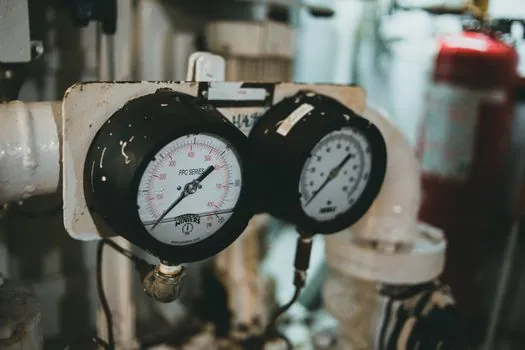
Four criteria reliably separate vacuum gauge from manometer in the field: pressure range, required accuracy class, gas-type dependence, and the need for continuous electronic output versus a one-time visual reading. The comparison below maps the main instrument families against these criteria. [S5]
For rough-vacuum (atmospheric to 1 mbar) with air/nitrogen and a need for a cheap local readout, a Bourdon or diaphragm vacuum gauge (Y-60 pattern, US$1–10 per piece [S3]) wins on cost and simplicity. For the same range but with strict accuracy and traceable calibration, a U-tube or inclined water manometer wins on reference quality, at the price of fragility and slow response. For 1 mbar to 10^-4 mbar with air/nitrogen, a Pirani or thermocouple vacuum gauge is the only practical choice; manometers simply cannot resolve those pressures.
For sub-10^-4 mbar work, hot-filament ionization (Bayard-Alpert) and cold-cathode (Penning, magnetron) gauges take over; for mixed-gas or vapor-loaded processes, a capacitance diaphragm gauge is the safest pick regardless of range. A practical rule from process engineering: if the reading drives a control loop or interlocks a vacuum pump or vacuum generator, spend on a capacitance or ionization gauge; if the reading is only a panel indicator, a $5 Bourdon is fine.
Engineers choosing between vacuum gauge selection criteria pressure range and gas type on real skids will also find a related decision map for vacuum gauge selection criteria for water treatment skids useful, since water vapor is the worst-case gas-dependence test for thermal-conductivity gauges.
Use Cases: When Each Tool Earns Its Place
Manometers are the right tool when you need a differential pressure that may swing through zero, or when you need a calibration reference. Filter ΔP across a vacuum generator ejector, for example, is normally read on an inclined water manometer (resolution 1–5 mm water column), because the differential is small and bidirectional, and the manometer gives an absolute reading traceable to the density of water. A single-ended vacuum gauge would have to be re-zeroed on every measurement. [S3]
Vacuum gauges dominate when the process needs a single absolute or gauge-pressure number below atmosphere, displayed continuously and optionally retransmitted. Chamber pressure in a vacuum die casting machine, vacuum level in a vacuum packaging machine chamber, foreline pressure ahead of a high-vacuum pump, and roughing-line pressure during pump-down are all single-ended sub-atmospheric measurements where a dedicated vacuum gauge, not a manometer, is the right sensor.
Hybrid setups are common in metrology labs and OEM test stands: a capacitance manometer head reads process vacuum, while a mercury or oil U-tube manometer in parallel serves as the in-house calibration check. The two readings should agree within the manometer's resolution; if they do not, the electronic gauge is the suspect, not the manometer. The same logic explains why Chinese vacuum instrument makers such as Chengdu Navigators Vacuum list "Vacuum Gauge, Vacuum Transmitter, Ionization Complex Vacuum Gauge, Multiple Vacuum Gauge" as their core product line, with the transmitter products being the manometer-replacement class for continuous electronic readout [S7].
Failure Modes and Cross-Sensitivity Reality
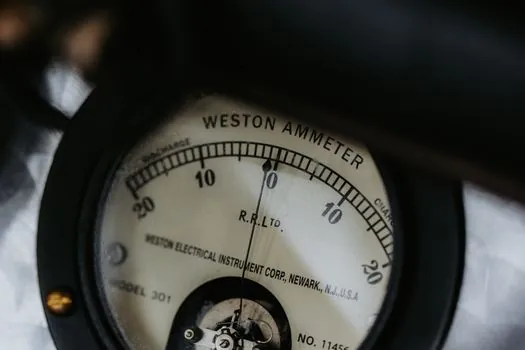
Bourdon and diaphragm vacuum gauges fail by mechanical fatigue, loss of calibration after thermal cycling, and contamination of the sensing element by process condensables. The failure is usually slow drift, not a hard zero, which is why a yearly bench check against a reference manometer catches the drift before it costs a batch. Vacuum gauge suppliers such as Htc vacuum (日揚科技) bundle gauge heads and controllers specifically so that the controller can flag a head that has gone out of spec [S6].
Pirani and thermocouple gauges fail by filament burn-out (typical MTBF 20,000–40,000 hours in clean service) and by calibration shift when the gas composition changes. Switching from air to helium, for example, makes a nitrogen-calibrated Pirani read roughly 0.5× the true pressure below 1 mbar; the gauge is not broken, it is gas-dependent. Capacitance diaphragm gauges fail by contamination of the diaphragm (solder flux, oil vapor, particulate) and by over-pressure, which permanently deforms the diaphragm and shifts the zero. None of these failure modes exist for a manometer, which has no filament and no thin diaphragm, which is the structural reason manometers survive as calibration references.
Manometers have their own failure modes: mercury spills (toxic, regulated), water-column evaporation in inclined designs, meniscus misreading in vibration, and level zeroing errors in field installations. They are also slow: a typical water manometer needs 5–10 seconds to settle, and a mercury manometer 2–3 seconds. A Pirani responds in under 100 ms, a Baratron in 20–50 ms. For control loops faster than 0.5 Hz, a manometer simply cannot close the loop.
Standards, Sourcing, and What to Verify on the Datasheet
Process vacuum measurement has no single dominant international standard the way API 6D governs pipeline valves; instead, vacuum instrument datasheets typically reference ISO 3567 (vacuum gauges, calibration by comparison), AVS R series recommended practices from the American Vacuum Society, and manufacturer-specific calibration procedures. For hygienic and pharmaceutical skids, additional requirements under 3-A sanitary standards and cGMP calibration traceability apply to the gauge head and its connection to the chamber, not to the sensing principle itself. Always verify the stated accuracy is "% of reading" rather than "% of full scale", since the latter is the typical cheap-gauge convention and the former is the only meaningful number for sub-atmospheric work where the operating point is often near the bottom of the range. [S3]
Sourcing reality, as of the current Made-in-China catalog: industrial Y-60 pattern analog vacuum gauges list at roughly US$1–7 per piece in factory direct quantity, transparent plastic case units around US$10 per piece, and digital vacuum gauge controllers with display and 4–20 mA or RS-485 output scale upward into the US$50–300 band depending on range and accuracy class [S3]. Manometer pricing is harder to generalize because most manometer columns are sold as part of a calibration rig rather than as catalog line items, but a benchtop U-tube mercury manometer with scale typically lists in the US$200–800 band and a precision digital manometer (e.g. MKS, GE Druck) at US$1,500–6,000.
Two practical filters when reviewing a candidate gauge or manometer: confirm the gas-dependence statement in the datasheet (nitrogen-calibrated vs true pressure, with a stated correction factor chart), and confirm the calibration certificate traceability to a national institute (NIST, NPL, NIM, PTB). If either item is missing, the instrument is not suitable as anything other than a panel indicator. For OEM process skids, a capacitance manometer with a 0.25% of reading accuracy, nitrogen calibration, and a NIST-traceable certificate is the most defensible single-ended vacuum measurement; for lab reference work, a mercury or oil U-tube manometer plus cathetometer remains the cheapest primary standard available.
Trackable next signals: new releases of ISO 3567 revisions affecting calibration intervals for industrial vacuum gauges, and the wave of MEMS-based Pirani replacements now entering the low-cost digital vacuum gauge market that the Made-in-China supplier pages still list under the analog Y-60 family [S3]. For deeper reading, the vacuum gauge selection criteria pressure range and gas type decision map lays the same range and gas-type logic across the full catalog.