Choosing between a capacitance level sensor and a laser level sensor is a medium-and-distance decision, not a brand decision: capacitance probes read liquids by dielectric change (DC values from 2 for hydrocarbons to 80 for water [S3]), while laser units like the BinMaster LL-100 shoot a 1° optical beam up to 48.77 m at 8 readings per second [S2].
For a process engineer sizing new instrumentation in 2026, the practical envelope is capacitance probes for conductive liquids, interfaces and aggressive chemistry, and laser for non-contact bulk-solids, pellet and opaque-liquid service. The two technologies rarely compete head-to-head on the same duty [S1][S3].
Operating Envelope: Distance, Temperature, Medium
Capacitance probes are contact devices: their effective span is set by probe length, with rod probes requiring sufficient headroom per installation and a viscosity ceiling of 2000 cst [S3]. Temperature is bounded by the probe insulation, not the sensing principle itself, and a fully PTFE-coated probe lets the same instrument survive aggressive media [S3].
Laser level sensors are non-contact optical distance devices, so the limiting parameters are optical path, beam angle and ambient light. The LL-100 reads 0.3 m to 48.77 m at -20 °C to +50 °C with a ±1 inch accuracy, and its 1° beam is meant to dodge silo structure while staying unaffected by surface angle, texture or color [S2]. Wider temperature extremes exist on competing laser units: the TL400 lists 4 m range at -20 °C to +80 °C, and the Dropsa 0295131 oil-reservoir laser sits at -25 °C to +60 °C [S1]. Capacitance units in the same catalogue window are quoted up to 60 m of probe length with -40 °C to +125 °C process temperature when remote electronics are used [S1].
Selection Criteria: Dielectric, Surface, Dust and Vapor
Capacitance is a dielectric-driven measurement: a medium with low DC (hydrocarbon DC ≈ 2) produces a very small capacitance change against water (DC ≈ 80), and the probe therefore discriminates the interface layer rather than the top surface [S3]. For interface work, the rule is concrete: conductive media above 100 μS/cm, non-conductive media below 1 μS/cm, and any emulsion layer between 1 and 100 μS/cm is invisible to the probe [S3]. That makes capacitance the standard pick for oil-on-water separation, conductive acid/caustic tanks, and sticky slurries where a coated probe can be inserted.
Laser is a time-of-flight optical measurement, so it is indifferent to dielectric but sensitive to dust, vapor and target reflectivity. The LL-100 is specced for low-dust bulk solids, pellets, granular material of all dielectrics, and opaque liquids even with heavy vapors or pressurised headspace, and ships with integrated dust protection plus an air-purge option for lens cleaning [S2]. The IDEC SA1W/SA1W-MK applies the same optical principle to a different problem: a laser tuned to the resonant frequency of an H2O molecule for fast water detection, including in pump reservoirs and harsh industrial fluids [S1].
Failure Modes and Field Constraints
Coating and fouling are the documented killers of capacitance probes: a process that builds up on the rod creates a parasitic capacitance path that biases the reading high, and most vendors therefore offer a coating-compensation routine to cancel the offset [S3]. Probes mounted directly in the vessel typically cannot be replaced with the process in service unless they sit inside a sensor cage with isolation valves, and the same rod geometry demands vertical headroom that does not exist in short, flanged nozzles [S3]. A non-conductive build-up on the probe is the other common failure mode and is the one coating compensation cannot fully neutralise [S3].
Laser level sensors fail differently: they misread on highly transparent liquids, on foaming surfaces, and on angle-of-repose cones that fall outside the beam footprint. The narrow 1° beam of the LL-100 is a deliberate answer to structure and buildup interference in silos, and its air-purge port is the maintenance counter-measure for dusty minerals, rock crushers, fertilizer and biomass service [S2]. The SA1W's resonant-H2O tuning means it ignores most non-aqueous films and only triggers on free water, which is a different failure-immune design choice for a different duty [S1].
Decision Matrix: Capacitance vs Laser on Four Criteria
Four decision criteria separate these technologies cleanly. (1) Contact vs non-contact: capacitance is intrusive, laser is non-intrusive [S1][S3]. (2) Dielectric dependence: capacitance requires the medium DC to shift the reading; laser is dielectric-blind and depends on optical reflectivity instead [S3][S2]. (3) Distance envelope: capacitance is limited by probe length (up to 60 m in catalogue listings); laser is limited by beam range (0.3-48.77 m for the LL-100, 4 m for the TL400) [S1][S2]. (4) Maintenance access: capacitance probes are typically not hot-swappable without a sensor cage; laser units like the LL-100 can be configured over USB without filling or emptying the silo and accept field-swap optics with air-purge [S2][S3].
The decision rule that falls out: specify capacitance when the medium is conductive or interface-grade, the chemistry is aggressive (PTFE-coated probe), the tank is short, and viscosity stays below 2000 cst; specify laser when the target is bulk solid, pellet, grain, opaque liquid or molten metal, the vessel is tall and narrow, and no probe intrusion is allowed. For a deeper look at the radar alternative that bridges these two extremes, the guided wave radar vs laser level sensor selection map lines up GWR against the same laser envelope in more detail.
Integration, Outputs and Field Configuration
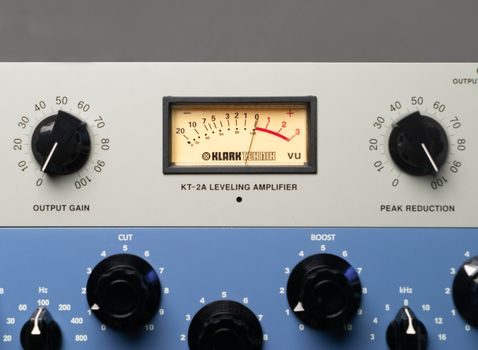
Capacitance transmitters are usually loop-powered 4-20 mA devices with HART or Foundation Fieldbus options, and they calibrate against an empty-tank and a full-tank capacitance reading per [S3]. Configuration is by empty/empty offset, span and, where the medium dielectric is variable, a dielectric-compensation routine that is mandatory when the liquid being measured does not hold a constant DC value [S3].
Laser level sensors integrate over the same industrial protocols but add optical-specific setup: the LL-100 uses a USB port for in-field configuration without filling or emptying the silo, an adjustable mounting flange flexible up to 10° for angled roofs, and a discrete output set on a Dropsa 0295131 to feed pump reservoir control logic [S2][S1]. The TL400 is described as a low-power laser sensor, which makes it a candidate for solar or battery-powered telemetry in remote sites where running cable is the dominant cost [S1].
Where Each Technology Wins and Where It Loses
Capacitance wins in small conductive-liquid tanks, interface detection (oil-water, with the 100 μS/cm vs 1 μS/cm cut-off), aggressive chemical service behind a PTFE or PFA coating, and any application where the vessel is short enough to take a rod probe and too turbulent for a stable optical return. It loses in non-conductive bulk solids, in tall vessels where a rod will not physically fit, in viscous fluids above 2000 cst, and in any service where hot-swap without a sensor cage is required [S3].
Laser wins in narrow silos with internal structure, in low-dust bulk-solid inventory, in opaque liquid and molten-metal service (LMI sensors are deployed at the pouring spout for sub-millimetre level), and in pump reservoirs with a discrete water-detection output. It loses on transparent liquids where the beam passes through, on foaming or vapor-heavy interfaces that scatter the return, and on highly reflective targets that saturate the detector [S2][S1]. For a process engineer building a wired instrumentation cabinet next to a concrete pump truck or vibrator on a plant site, the laser option's low-power, USB-configured form factor is often the cheaper install; for a chemical skid it almost never is.
Sourcing, Standards and Trackable Signals
Capacitance probe selection is governed by the same generic hazardous-area framework as any other in-vessel probe: ATEX/IECEx categories for the zone, NACE MR0175 compliance for sour service, and a documented DC value for the medium being measured [S3]. Laser level sensors carry the usual ingress ratings (IP65/IP67 for the LL-100 family) and laser-class eye-safety markings per IEC 60825, which is the gating compliance item when a sensor is mounted where operators look down the beam [S2].
Trackable signals to watch in late 2026: (1) more BLE and edge-computing capacitance probes from vendors offering wireless 0.05 m to 60 m variants, with custom firmware for fog/edge analytics [S1]; (2) lower-power laser sensors like the TL400 proliferating in solar-powered tank farms, where cable cost dominates [S1]; (3) resonant-H2O optical water-detection sensors such as the SA1W/SA1W-MK expanding from pump reservoirs into process-water and coolant monitoring duties [S1]. For buyers evaluating these technologies side by side, a load cell module vs ultrasonic sensor spec-first selection approach is the same engineering discipline applied to mass and distance measurement.
The underlying component specifications are covered under capacitance level transmitter, laser level, and laser displacement sensor.