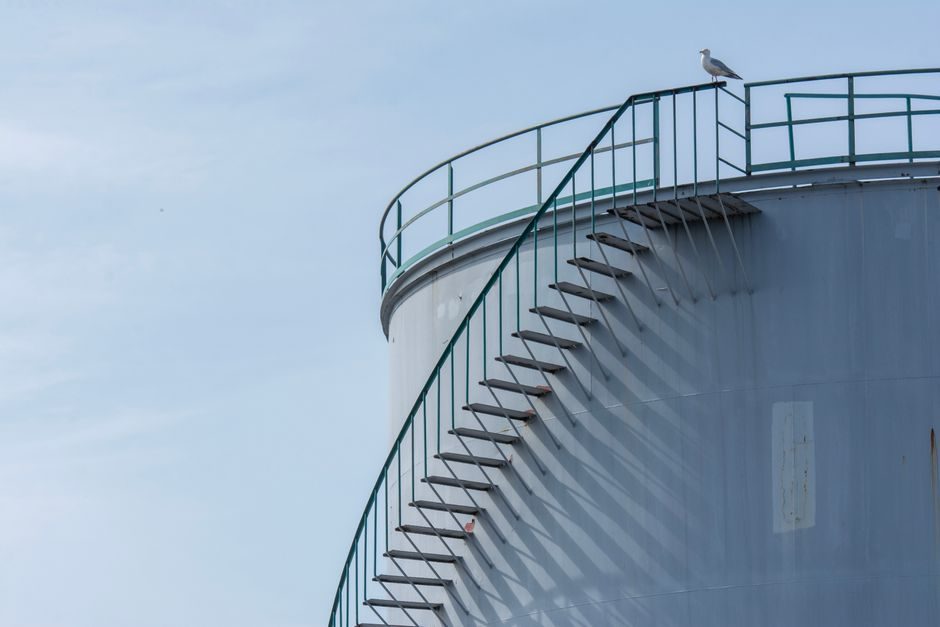
Guided wave radar (GWR) and laser level meters are both non-contact in principle, but their physics, range envelopes and application fit differ enough that the wrong pick costs weeks of commissioning and field rework [S1][S2].
GWR sends a low-energy microwave pulse down a probe and times the return from the media surface or interface; laser level meters time a focused optical pulse from a surface and rely on a clear optical path [S1][S2]. For a spec-driven reader, the short version: GWR is the workhorse for harsh process tanks, laser is the right answer for short-range, high-precision positioning in clear atmospheres.
Core Operating Envelope: GWR vs Laser
GWR is specified across a wide process envelope: the VEGAFLEX 86 TDR-guided wave radar from VEGA Grieshaber is rated 0–75 m measuring range, 0–400 bar process pressure and −196 °C to +450 °C process temperature, with Modbus, PROFIBUS and 4–20 mA interfaces and IP66/IP67/IP68 housing options [S2]. The same vendor's VEGAFLEX 82 covers bulk solids up to 75 m in stainless steel, flange-mount construction [S6]. By contrast, typical industrial laser level meters operate inside a few tens of metres in clean air, with the trade-off that the optical beam is blocked by foam, heavy dust or opaque vapour. If the application involves saturated steam, thick foam, or agitated hydrocarbon, a GWR unit such as VEGAFLEX 86 with its automatic runtime correction and reference signal is engineered precisely for that environment [S2]. For a broader definition of the radar level meter class, the encyclopedia entry covers the distinction between free-space and guided-wave variants.
Selection Criteria That Decide the Winner
Four criteria separate the two technologies in a way no marketing brochure does: media dielectric, optical path clarity, geometry, and interface. A guided wave radar probe can read a medium with dielectric constant (εr) as low as 1.8 on bare probes — the ifm LR8000 specifies εr ≥ 1.8 and lists water, hydrous media, oils and oil-based media as recommended [S1]. For lower-εr media such as oils in the 1.8–5 range, the same vendor mandates a coaxial pipe so the electromagnetic field stays confined around the probe [S1]. Laser level meters, on the other hand, need a reflective, optically accessible surface; they cannot measure the top of a black oil in a pressurised reactor, and they have no equivalent of a coaxial probe to "guide" the beam.
On geometry: GWR probe length scales with the vessel. The LR8000 accepts probe lengths L of 100–1600 mm, with the active range defined as L−40 mm (or L−60 mm on oil service) and inactive end zones of 30 mm / 10 mm, configurable in 5 mm steps [S1]. That makes GWR a direct fit for tank heights in the 0.1 m–75 m band [S2]. Laser meters are typically chosen for short, fixed stand-off distances where a sub-millimetre reading is needed on a discrete target, often in combination with a laser distance sensor front-end.
On interface and protocol: VEGAFLEX 86 ships with Modbus, PROFIBUS and 4–20 mA HART-style outputs and stainless-steel flange process connection [S2]; the Riels RLFP TDR unit extends the list to 4–20 mA, HART, RS-485 and Modbus for water, oils, aggressive liquids and hygienic applications [S5]. Compact GWR heads like the LR8000 drop analog 4–20 mA in favour of IO-Link COM2 (38.4 kBaud, IEC 61131-9 SDCI) plus four PNP switching outputs, with 4 Hz sampling, ±7 mm measuring error, ±5 mm repeatability and 1 mm resolution [S1]. Laser level meters rarely speak PROFIBUS or HART natively; they typically deliver 4–20 mA, 0–10 V, RS-232/422 or IO-Link — a real limit when a brownfield DCS expects Foundation Fieldbus or PROFIBUS PA.
Where GWR Fits — And Where It Should Be Replaced by Laser
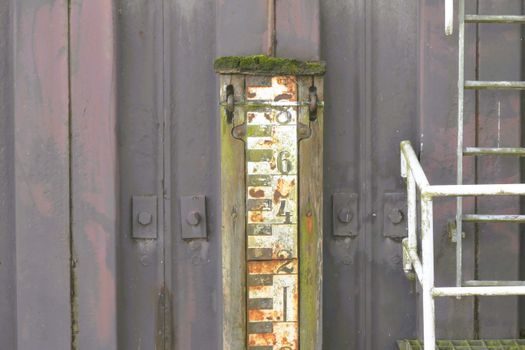
GWR fits a very specific use-case set. Inside an industrial tank, the LPR-style "interface + level" reading on a separator needs a probe that sees both layers — the Emerson Rosemount 3300 series is a long-standing reference in this niche [S8], and the ABB K-TEK MT5000 / MT5100 series guided wave radar transmitters target the same continuous level application with all-digital electronics and a graphic display [S3][S4]. Bulk solid silos, fly-ash hoppers, and plastic pellet bins also fall in the GWR zone: VEGAFLEX 82 covers bulk solids to 75 m [S6], and the Holykell 26G high-frequency non-contact GWR is documented as a finished-instrument product line for liquid/material level recording using antenna-emitted microwave pulses [S7].
Laser level technology fits a different set. A conveyor that needs to know the height of a stack of pallets, a laser displacement sensor head measuring web thickness on a steel mill, or a short-range clear-liquid gauge on an open-top reservoir all play to the laser's strengths: tight spot, fast update rate, no probe intrusion. Outside the optical path, however, laser falls over. Steam, dust, foam, and translucent liquids all upset the return signal; in those services a guided wave radar probe physically brought to the surface is the only credible non-contact option.
Failure Modes and Field Constraints Engineers Overlook
Two failure modes dominate the GWR field record. The first is mounting: a metal tank versus a plastic tank changes the EMC compliance envelope, and the LR8000 documentation explicitly distinguishes DIN EN 61000-6-2/6-3 testing in a closed metal tank from DIN EN 61000-6-4 in plastic or open metal tanks [S1]. The second is dynamic error: GWR heads specify a temperature drift per 10 K of ±0.2 % of full scale, and a typical ±5 mm repeatability / ±7 mm absolute error on a 1.6 m unit, so for a tight 0.1 %-of-level inventory application a higher-frequency or longer-cycle averaging strategy is needed [S1].
Laser's dominant failure mode is false return on dust, steam, or sun-load. Class 1 / Class 2 eye-safety ratings, beam diameter at stand-off, and ambient-light immunity in lux are the numbers that decide whether a laser will run reliably on a casting floor or only in a clean-room. A spec-first reader should also remember that laser cannot read through a sight glass, and the measurement is invalidated if the surface itself is transparent or retroreflective at an angle that scatters the spot away from the receiver.
Decision Matrix: GWR vs Laser, Criteria View
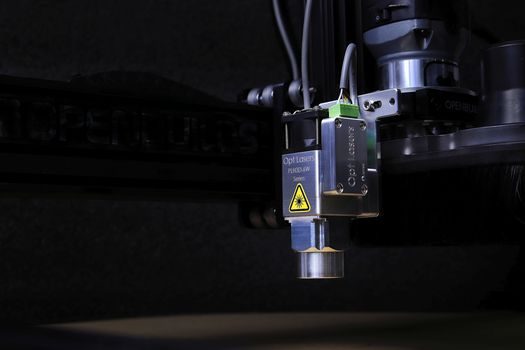
Stacking the two against four real decision criteria, GWR leads on environmental tolerance, dielectric compatibility, and industrial protocol coverage: VEGAFLEX 86 spans 400 bar and 450 °C with Modbus/PROFIBUS/4–20 mA [S2]; the LR8000 covers −25…80 °C, 16 bar MAWP and IO-Link at 4 Hz [S1]; the RLFP extends into hygienic and aggressive liquids with HART and RS-485 [S5]. Laser level meters lead on resolution, spot size, and stand-off speed in clean air — typically sub-millimetre resolution at <1 m stand-off versus a GWR head's millimetre-to-centimetre resolution at metres-to-tens-of-metres stand-off. Cost, lifecycle, and integration effort both rank roughly comparable when normalised to the vessel size: a high-end laser head plus protective housing often lands in the same procurement bracket as a stainless-steel GWR probe plus mating flange.
Spec gate for a real plant: if the service is a process vessel (oil, chemical, water, bulk solid) at non-trivial pressure or temperature and the DCS expects HART, PROFIBUS or Foundation Fieldbus, specify a TDR-guided wave radar unit such as the VEGAFLEX 86 [S2] or the ABB MT5100 [S4] with flange-mount stainless-steel probe and the relevant Ex/ATEX/IECEx rating. If the service is a positioning, scanning, or short-range clear-air measurement on a moving line, specify a laser level head with the right class-1/class-2 eye-safety, ambient-light rating, and IO-Link or 4–20 mA output that the downstream PLC actually reads.
Standards, Sourcing, and What to Verify on the Datasheet
Process-level radar sensors typically carry ATEX 2014/34/EU and IECEx certification for zone-classified areas; the OEM data sheet should show the actual notified-body certificate number and the gas/dust group. The LR8000 datasheet documents DIN EN 61000-6-2/6-3/6-4 EMC conformance, DIN EN 60068-2-27 50 g shock, DIN EN 60068-2-6 5 g vibration, UL file E174191, and an MTTF of 205 years [S1] — useful as a baseline when comparing suppliers. The IO-Link COM2 interface is implemented per IEC 61131-9 SDCI with 2.3 ms minimum process cycle [S1], which sets the maximum read rate for an IO-Link master.
Sourcing reality in mid-2026: TDR-guided wave radar products are widely stocked across European, US, and Chinese manufacturers — the Holykell 26G high-frequency non-contact GWR is a representative finished-instrument listing for liquid level recording [S7]. For procurement teams, the practical move is to shortlist two or three vendors (VEGA, ABB/K-TEK, Emerson/Rosemount, ifm, Riels, Holykell) and run a side-by-side eval against the dielectric of the target media, the maximum process pressure/temperature, the protocol mix, and the Ex/ATEX/IECEx rating. Related engineering reads on this site, such as the concrete pump truck vs concrete vibrator decision map, follow the same criterion-by-criterion pattern and may be useful as a template when building an internal GWR-vs-laser scoring sheet.