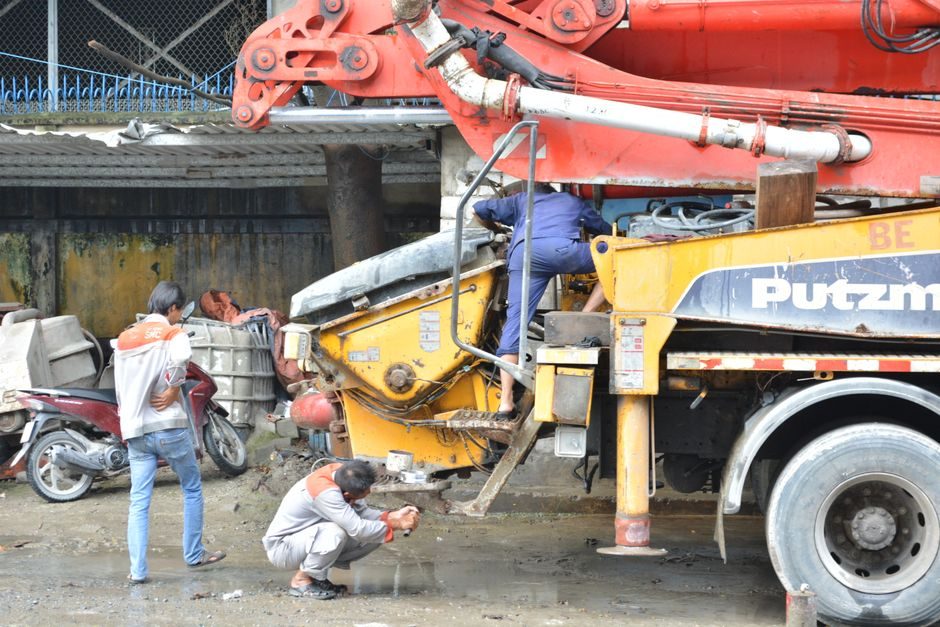
A 47-ton truck-mounted concrete pump truck on a 6×4 chassis typically delivers 120–170 m³/h at 8.3–13 MPa concrete pressure, while a 1.5–3 kW handheld or motor-in-head concrete vibrator runs at 3,000–12,000 vibrations per minute to consolidate placed concrete — the two machines do not overlap in function, they sit in sequence on a pour [S2][S3].
Current 2026 export listings out of Shanghai and Henan list 47 m to 53 m boom pump trucks at US$35,000–160,000 FOB with 1,500 PCS/month lines, while complete concrete vibrator assemblies (shaft + head + drive) ship at US$10–120 per set from Ningbo and Seoul OEM/ODM lines with sub-30 day lead time [S1][S2][S5][S7].
Functional Boundary: Placement vs Consolidation
A truck-mounted boom pump moves fresh concrete from the mixer truck or batching plant to the form face through DN125 (5-inch) delivery pipe at 8–13 MPa line pressure, with the placing boom folded for travel and unfolded to a 43 m, 47 m, 49 m, or 53 m vertical reach for high-rise and bridge pours [S2][S5][S9][S10].
A concrete vibrator — whether the 1.5 kW handheld poker, the 2.2–3 kW flexible-shaft motor-in-head type, or the high-cycle 200 Hz electric unit — never moves concrete any distance; it consolidates concrete that has already been deposited, driving air bubbles out and improving paste-to-aggregate contact at 3,000–12,000 vpm [S3][S7]. Specifying a vibrator for placement, or a pump truck for consolidation, is the most common misuse engineers see in the field [S7].
Decision Matrix: Pump Truck vs Vibrator on Five Criteria
Cost-per-cubic-metre placed: a 47–53 m boom pump truck on the job at US$35,000–160,000 capital plus operator amortises to roughly US$3–6 per m³ at 120–170 m³/h; a vibrator string (3–6 pokers + drive units) at US$200–800 per set is amortised against crew labour, not output volume [S2][S5][S7].
Output and reach: a 47-ton boom pump truck at 170 m³/h with 47–53 m reach covers a 4,000–8,000 m² slab pour in a shift, while a vibrator covers 8–15 m³/hr per operator-head depending on rebar density — pumps win on volume and reach by 10–50× [S2][S3][S10].
Power and infrastructure: the pump truck needs a 250–380 kW diesel on an 8×4 chassis with 1,500 PCS/month supply capability and ISO9001:2000 build, while the vibrator is single-phase 220 V or 380 V at 1.5–3 kW, plug-and-play at the form face [S2][S10].
Maintenance: pump truck wear parts — DN125 R1000 45-degree bends, spectacle wear plates, S-tube valves, cutting rings — are stocked at 10,000 PC/month supplier lines for DN125 elbows alone, with documented export history since 1998, while vibrator maintenance centres on flexible shaft replacement every 200–400 hours and bearing re-greasing [S4][S9].
Job fit: the pump truck is for high-rise decks (above 8 m), large rafts (above 1,000 m³), bridge piers, and any site where wheelbarrow or crane-and-bucket placement is uneconomical; the vibrator is mandatory on every placed pour regardless of placement method, and is the only choice for slabs, walls, and columns where boom access is impossible [S2][S3][S5].
Spec Differentiators Inside Each Family
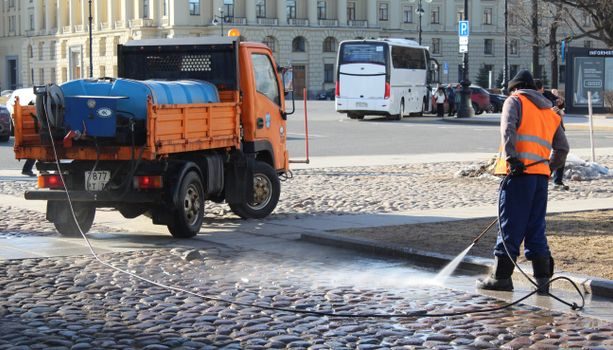
Within pump trucks, the chassis and boom combination determines duty: 47-ton 6×4 units on welded-steel booms at US$35,000–50,000 handle low-rise commercial work, while 8×4 53 m units like the CAMC CYH52Y (Model AH5420THB0M4) at ISO9001:2000 + CE certification, 1500 PCS/month supply, target highway and high-rise decks [S2][S5][S10].
Within vibrators, the three sub-classes split by drive and frequency: handheld internal (poker) vibrators at 1.5 kW and 3,000–6,000 vpm for thin slabs; flexible-shaft motor-in-head sets at 2.2–3 kW and 9,000–12,000 vpm for thick walls and columns; and high-cycle 200 Hz electric units for precast and where low noise and longer shaft life matter [S3][S7].
Spare-parts sourcing paths diverge accordingly: pump-truck spares run through specialists like A&S Machinery supplying spectacle wear plates and S-valve assemblies, while vibrator spares (shafts, heads, drive units) ship from Ningbo Yingzhou Xingchen and Seoul-based Kormax with 15-year manufacturing history [S3][S4][S7].
Use Cases Where One Machine Is Wrong
A concrete pump truck is the wrong tool for consolidation: even with the boom positioned correctly, the placement energy does not release entrapped air, and a pumped pour without poker vibration will show honeycombing and bug-holes at lift lines — the concrete mixer truck discharge followed by vibrator insertion is the only sequence that delivers dense, durable concrete [S3][S6].
A concrete vibrator is the wrong tool for placement beyond a 4–6 m radius of the dump truck chute: drag-line buckets, conveyor belts, or a trailer/boom pump are the only economical answers above that envelope, and any spec sheet that lists a vibrator with a delivery-hose connection is describing a mixer-pump combination, not a vibrator [S5][S6].
Standards, Certification, and Sourcing Reality
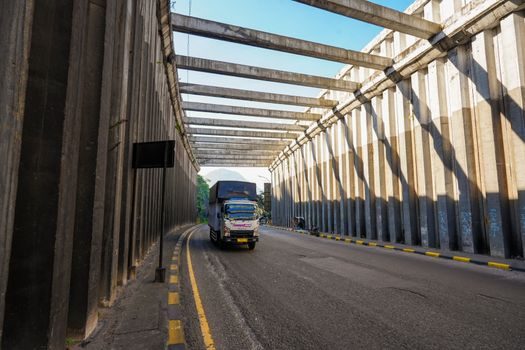
Major 2026 export builds carry ISO9001:2000 build certification as a baseline, with CE marking on the 53 m CAMC 8×4 unit; chassis codes follow the Chinese truck convention (6×4 versus 8×4) and boom length is the headline spec because it dictates floor count and bridge-pier reach, not the rated horsepower [S2][S10].
Vibrator sourcing is less standardised: Korean Kormax units and Chinese Ningbo OEM/ODM lines ship by set rather than by build code, and the published spec sheets typically list only voltage, frequency, and shaft length — buyers should request the eccentric weight and amplitude figures, because vibration amplitude (not vpm alone) drives consolidation depth in low-slump mixes [S3][S7].
Limits, Failure Modes, and Operating Constraints
Pump-truck failure modes cluster around wear parts: DN125 R1000 45-degree bends and S-tube valve seats are the highest-wear items at typical 8–13 MPa line pressure, and a missing spare-bend stockout can idle a 170 m³/h machine in 4–6 hours, which on a high-rise deck pour is the cost of a day's concrete [S4][S9].
Vibrator failure modes are simpler: flexible-shaft inner core breakage above 200–400 hours, bearing failure from concrete ingestion through a damaged head seal, and electric-motor burnout from phase imbalance on 380 V three-phase supplies are the recurring tickets, all fixable with stocked spares rather than machine replacement [S3][S7].
For plant-side spec work, pairing the placement method (boom pump, line pump, crane-and-bucket) against the consolidation method (poker, form vibrator, surface screed) and matching each to the element type — slab, wall, column, deck — is the design step most often skipped; the truck-mounted concrete pump belongs on pours above 1,000 m³ or above 8 m, the vibrator belongs on every pour, and conflating the two is the procurement mistake this matrix is built to prevent [S2][S5][S6][S10].
Track through Q4 2026: any tightening of Euro VI / China VI chassis emission rules will reset the 47–53 m boom-pump price floor, and the 200 Hz high-cycle vibrator line is the one sub-segment with documented capacity expansion at the Ningbo and Seoul OEM/ODM facilities — both are the early signals to watch when re-quoting a high-rise deck package [S3][S7][S10].
Related analysis: Dye Penetrant Kit vs Industrial X-Ray: NDT Method Decision.