
Fill first, cap second, verify closure integrity third, and label only after capped containers pass inspection. This sequence protects product quality while avoiding container accumulation between the filling machine and capping machine.
The decision depends on container geometry, closure type, line speed, torque requirements, inspection method, and whether a monoblock or separate-machine architecture is justified. Typical automatic capping includes cap sorting, delivery, placement, securing, and defect detection [S3].
Recommended Sequence for Liquid Packaging
Use this process order for gravity, piston, or rotary liquid filling: empty-container infeed, container positioning, filling, cap presentation, cap placement, closure securing, cap-quality verification, labeling, and secondary packaging. A capping machine normally operates after filling and before final inspection, labeling, or secondary packaging [S3].
Keep the filler and capper mechanically coordinated through indexed star wheels, conveyor rails, bottle guides, and matched transfer plates. Each machine must accept the same container diameter range, working height, pitch, and line speed. A carton erecting machine belongs at the downstream secondary-packaging stage, not between filling and capping, because inserting an uncapped carton before closure would interrupt product flow.
Place cap verification directly after torque or closure application. Depending on the closure, this may include sensing for a missing or tilted cap, monitoring applied torque, or checking seal integrity. The basic capping sequence comprises sorting, delivery, placement, securing, and verification, although not every machine performs all five functions [S3].
Filler Selection Drives the Upstream Decision
Product density, viscosity, foaming behavior, fill volume, container geometry, and required output must be fixed before the capper is specified.
Do not select the filler by nominal bottle-per-minute rating alone. Its rated speed must remain sustainable with the chosen closure and inspection method. A slow or intermittent filler beside a faster capper will starve the capper; a faster filler will create an unstable accumulation unless accumulation control is engineered.
For product sensitive to air or light, shorten the uncapped interval between discharge and closure. A fully automated sequence that coordinates filling and capping reduces manual transfers, spillage, incorrect fill volumes, and product exposure [S2]. A semi-automatic cap tightener may require an operator to place the cap, while a fully automatic system generally includes feeding, orientation, placement, and container handling.
Compare Separate Machines and Monoblocks
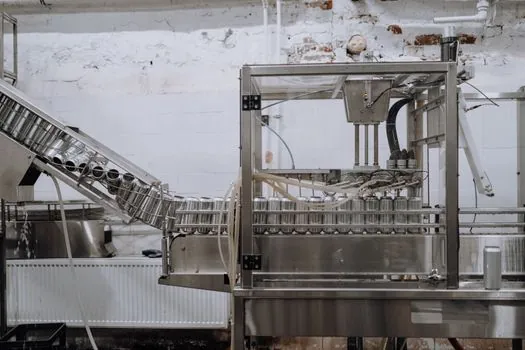
A monoblock combines filling, closure placement, and capping within one machine, reducing transfer distance and footprint while coupling the stations mechanically [S6].
Compare the architectures on four criteria. First, speed: a monoblock avoids one inter-machine accumulation point, but its combined cycle is governed by its slowest station. Second, changeover: a separate line may isolate filler and capper change parts, while a monoblock may require coordinated format changes across several stations. Third, quality control: separate architecture allows independent cap-torque monitoring and rejection; a monoblock still needs verification, but faults can stop the integrated sequence. Fourth, expansion: separate machines can be added or relocated more independently, whereas a monoblock is a compact format-specific platform [S6].
Use a monoblock when one product family, limited formats, limited floor space, and tightly synchronized flow dominate the project. Use separate machines when multiple SKUs, independent maintenance access, variable cap systems, or future line expansion dominate. Do not choose a monoblock solely because it has fewer visible transfers; verify whether filling accuracy, cap feeding, torque control, and inspection all fit the required output.
Select the Capper by Closure Geometry
Match the capper to the closure before integrating conveyors. Spindle machines tighten continuous-thread screw caps with rotating friction wheels; chuck machines use a vertical gripping head with controlled torque; snap machines press non-threaded lids onto compatible containers; ROPP machines roll aluminum caps into threads and a security band; crimp machines form a metal skirt around the neck; corking machines compress or insert stoppers [S3].
Snap-on systems require sufficient container strength for press-fit assembly. These closure-specific constraints usually outweigh a small advantage in nominal machine speed.
For plastic, glass, and specialty containers, verify that cap orientation, neck finish, container stability, and compression limits suit the selected method [S1]. For sensitive products, specify the closure before finalizing filler discharge and the conveyor distance. The capping-sealing machine must apply and secure the closure without damaging the filled container or disturbing the fill level.
Synchronize Controls, Transfers, and Inspection
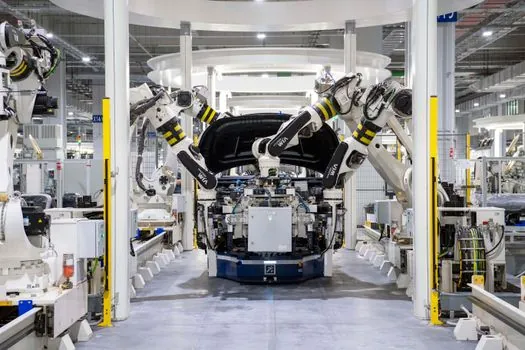
Define the control interface before ordering either machine. Required functions include container presence, fill-level or volume verification, filler discharge, cap-in-place confirmation, cap-at-station, torque completion, reject logic, fault stop, and downstream release. A capper cannot verify closure quality reliably unless the controls define which sensor events constitute a passed closure. [S5]
Torque control must match the closure system rather than use a universal value. One capping-system reference specifies applied-torque variation of ±20% for standard cappers and ±0.5 in-lb for servo cappers, with optional torque monitoring and rejection [S1]. Treat those figures as an example specification, not an acceptance criterion for every cap, bottle, and elastomer. Final torque and seal limits must be established from closure geometry, lining materials, container finish, and product compatibility.
Install accumulation only where it serves a defined process purpose. The filler can accumulate before the capper to isolate filling conditions, while the capper operates continuously. Between capping and labeling, use short, controlled transfer because product inspection and rejection become more valuable once the closure is secure. For coding after capping, verify that the print field is accessible and that code verification can reject an incorrectly marked container without mixing it with accepted units.
Commission by Failure Mode, Not Machine Start-Up
Commission the line with representative product, closures, and containers, not empty plant power. Test missing containers, missing caps, reversed caps, tilted caps, cross-threading, torque faults, fill faults, label faults, conveyor accumulation, and rejected-container handling. A failed cap must not pass downstream as a sealed container, and rejected containers must not rejoin accepted product. [S1]
Validate the agreed output with the complete sequence operating together. Record units per minute, fill variation, cap application failures, torque variation, inspection reject rate, changeover time, and line stops. The cap-application chain should include cap presence, placement, securing, and verification, while labeling should occur after successful closure [S3]. For additional context, the distinction between capping and sealing machines versus induction sealers matters when the closure includes a heat-sealed foil liner.
Before production release, set ownership for cap feeding, torque adjustment, sensor cleaning, feeder jams, change parts, lubrication, preventive maintenance, and operator training [S5]. Track closure rejects, torque faults, filler faults, and downstream labeling rejects per production lot. Rising cap rejects after a format change usually indicates cap orientation, neck geometry, or change-part mismatches rather than a filler problem.
The next trackable decision is to freeze the product, fill target, container dimensions, closure drawing, required output, and quality tests. Then compare separate-machine and monoblock layouts against those five inputs, approve one line balance, and validate closure performance on production-representative samples.