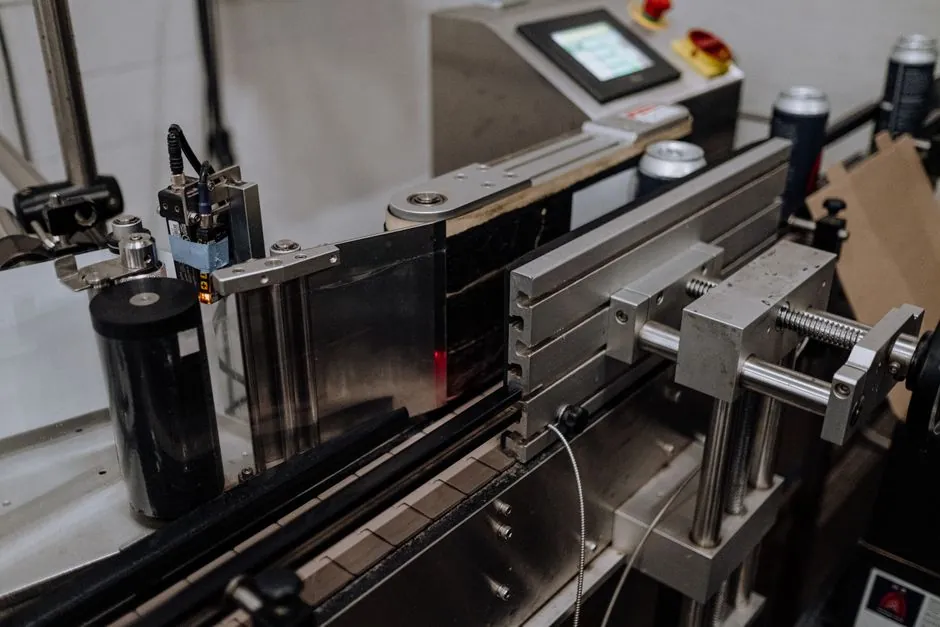
A carton erecting machine should precede the filling machine: it receives flat corrugated blanks and outputs formed, bottom-sealed cartons ready for product loading [S1][S2].
The integrated sequence is blank magazine, automatic pickup, box opening, flap folding, bottom sealing, carton transfer, filling, closure, coding, inspection, and case packing, with each machine matched to the slowest downstream-rated stage [S2][S4].
Define the Packaging Sequence and Control Point
A carton erector is the upstream control point for a filling line because it removes the labor-intensive operation of turning a flat blank into a square, sealed carton. Its operating sequence is pickup, opening, bottom-flap folding, forming, and bottom sealing; the completed carton can then move directly to filling, case packing, or palletizing [S2].
This distinguishes a carton erector from a case erector. The carton erector forms the individual product carton, while the case erector assembles multiple product cartons or cases for secondary packaging.
The mechanical design may be servo, pneumatic, or hybrid, but the functional sequence remains the same. Flat blanks are held in a magazine, one blank is picked at a time, and the forming unit opens the blank and folds its flaps. A missed pickup or double feed can stop the line, so blank pickup reliability is more important than a headline cycle claim [S2].
For standard carton construction details, including the difference between corrugated shipping cartons and turnover structures, see the carton box selection guide.
Select the Erector and Filler by Line Capacity
Manual erectors suit small or medium operations with constrained budgets or lower volumes, semi-automatic erectors retain manual blank loading while automating folding and sealing, and fully automatic erectors handle loading, forming, and sealing on continuous lines [S1]. The selection criterion is sustained line demand, not maximum catalogue speed.
The filler must be matched against the erector's sustained output after allowing for changeover time, rejects, and minor stops. The available research does not specify a universal erector rate, so any capacity comparison must use the supplier's guaranteed rate for the proposed carton dimensions and board grade rather than a generic cases-per-minute figure [S2][S4].
For a fixed-product filling operation, place the fully automatic erector directly upstream of the filler. For frequent size changes, verify adjustable guides, vacuum pickup control, sealing method, and recipe handling before committing to one machine.
A compact footprint does not solve a poor sequence. Erectors can be sized to fit an existing layout, but the full installation still needs room for blank loading, service access, product transfer, downstream rejects, and personnel access around the carton erecting machine.
Compare Manual, Semi-Automatic, and Automatic Integration
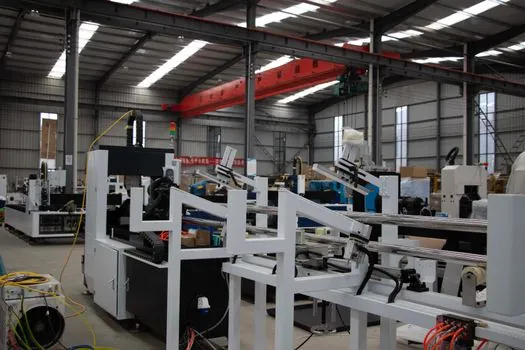
Manual erection has the lowest initial equipment burden but depends on operators to load, fold, square, and seal each carton; the approach is flexible at low volume, yet labor-dependent and prone to output variation [S1][S4]. Semi-automatic erection moves folding and sealing under machine control but still requires manual blank loading [S1].
Fully automatic erection provides repeatable formation and can include controls, sensors, quick-change features, and integration with conveyors and other packaging equipment [S1]. Its higher capital requirement can be defensible when manual formation constrains the filler's rated rate or creates unacceptable ergonomic exposure [S1][S4].
The comparison is therefore practical: manual erection wins on low capital cost and product flexibility; semi-automatic erection reduces manual folding while retaining simpler loading; full automation wins on sustained throughput and repeatability. Manual carton erectors are suitable for small- to medium-scale operations, while semi-automatic erectors offer increased efficiency without the investment required for fully automated systems, and fully automatic erectors are designed for high-volume production lines [S1].
Do not confuse an erector with a filler. The filling machine meters product into the erected carton, while the erector prepares the package. Each machine must have its own duty specification, including product type, fill volume or weight tolerance, carton dimensions, and closure method.
Insert Buffers, Inspection, and Reject Handling
A short powered conveyor or controlled accumulation buffer between erection and filling prevents a brief filler stop from immediately stopping the erector, while keeping carton presentation repeatable. Buffer sizing should reflect the planned line rate, expected filler stop duration, and acceptable accumulation level; the research does not provide a universal buffer count or length [S2].
Automatic inspection can identify improper placement, missing parts, damaged cartons, and application defects in completed cartons [S7]. Place carton inspection after forming and sealing, then remove rejects before filling so that an incorrectly formed carton does not reach product-dosing equipment. A second check after filling can verify closure, coding, label placement, or case contents, depending on the line configuration.
The downstream case packing machine should not be used as an unplanned accumulation buffer. Product-filled cartons are more sensitive to crushing and misregistration than empty erected cartons, so staged accumulation and accumulation forces belong in the control specification. Filling-machine and conveyor integration details are addressed in Capping Machine vs Filling Machine Line Integration Sequence.
Apply the Sequence to Real Packaging Operations
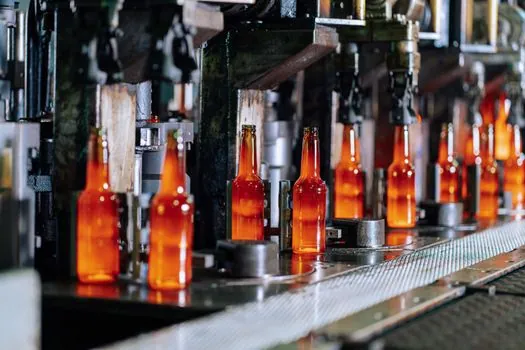
Food packaging lines commonly use automatic erectors to receive flat blanks and hand over standing cartons for repeated filling cycles [S6]. Pharmaceutical, cosmetic, beverage, e-commerce, logistics, and healthcare operations also use erected cartons, but product-contact requirements and closure controls may add constraints beyond ordinary corrugated secondary packaging [S2][S3].
A robotic system can combine carton erection, product loading, shrink wrapping, and I-type sealing for bottles, biscuit containers, instant-noodle packages, milk-powder bottles, and cosmetic sets [S5]. A separate configuration combines erection, a case-packing robot, and sealing for juice boxes, snack boxes, protein bars, and electronic equipment [S5]. These examples show that the carton erector may sit inside a larger robotic cell rather than directly beside a stand-alone filler.
Use direct carton-to-filler integration for a stable, high-volume product with repeatable carton dimensions and a compatible closure sequence. Use an intermediate inspection station for pharmaceutical, cosmetic, or premium presentation lines where damaged or poorly formed cartons create higher product loss. Use manual or semi-automatic erection for low-volume campaigns where the labor saved by automation would not justify the capital and service commitment [S1][S2].
Control Failure Modes Before Commissioning the Line
The main upstream failure is an unreliable blank pickup: double feeds and missed pickups can stop carton supply, while off-square cartons can disrupt sealing, conveyor transfer, or pallet stability [S2][S4]. The erector must therefore be tested with the production blank, not a sample board with comparable dimensions but different stiffness or flute type.
Other commissioning checks include bottom-seal consistency, correct flap folding, product-contact compatibility, guide adjustment across the approved carton range, sensor response, emergency-stop coverage, and reject discharge. Sealing can use adhesive or tape, and the choice must match the downstream carton design and filling process [S3]. For applications where adhesive settings affect formation, the operating limits for glue open time and press time must be established with the board and adhesive supplier.
Final acceptance should be based on sustained run performance: cartons per minute, fill-weight or fill-volume deviation, rejected cartons, stoppage recovery, and changeover time. Capacity claims should be recorded for the approved carton size range and material grade. For secondary packaging performance, specify board strength and pallet configuration separately from line sequencing, using ECT vs BCT vs Mullen for Corrugated Carton Specification as a supporting selection reference.
The first procurement document should state the required sequence as blank loading, erection, bottom sealing, buffered transfer, filling, closure, coding or labeling, inspection, and case packing, together with the guaranteed output of the slowest machine and the approved carton range. This makes the erector-to-filler interface measurable before installation.