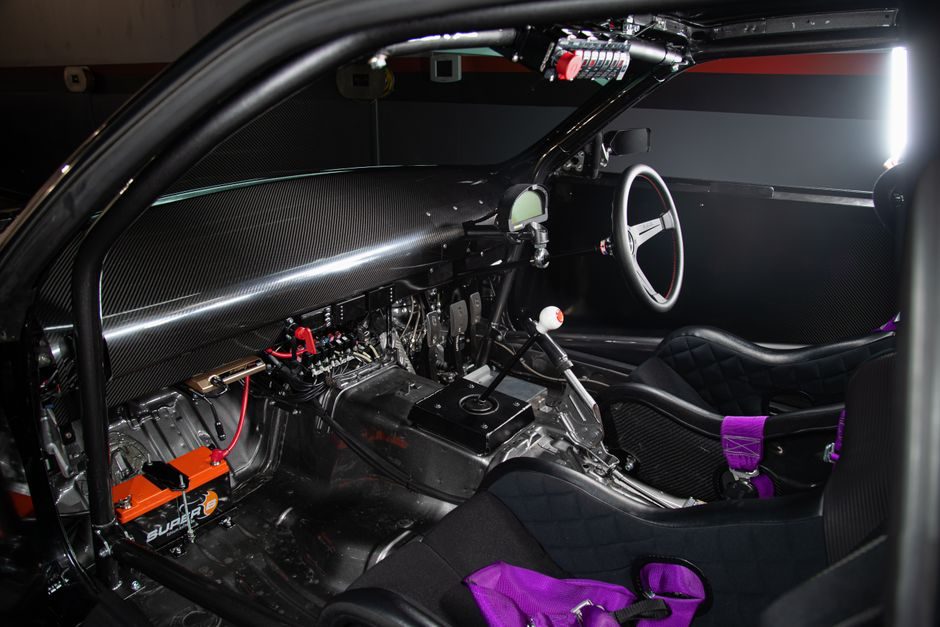
Specifying carbon fiber starts with four independent decisions — tow size, weave geometry, resin chemistry and modulus tier — and the cheapest laminate that passes your load case is rarely the right one. Tow counts from 1K to 24K cover the practical range; weave choice trades drape against stability; resin selection is dictated by cure temperature, chemical exposure and cosmetic requirement; modulus is picked by strain budget, not by marketing copy.
This guide lines the main options up against drape, mechanical translation, chemical resistance and cost-per-kg, and is written for a buyer or process engineer who has to defend a part number on a drawing, not on a brochure. For the upstream raw-material spec conversation see the tow/weave/resin/modulus primer.
Tow count (1K to 24K) and what it actually controls
A "K" denotes 1,000 filaments per tow; 3K, 6K, 12K and 24K are the standard stocking grades, with 1K and 18K available from specialty weavers for cosmetic or thick-laminate builds [S1][S2]. Smaller tows drape tighter, lay flatter against compound curves and produce a finer cosmetic surface because the tow "telegraphing" through a clear coat is suppressed — that is why aerospace-class body panels and most Seibon-style aftermarket panels are woven from 3K or smaller tows [S2]. Larger tows (12K–24K) cost less per kg and laminate faster for thick structural buildup, but the larger bundles print through a thin clear coat, so they are typically buried under paint or used in non-visual prepreg stacks [S5]. A practical rule: 3K is the default for visual 2x2 twill panels, 6K–12K for painted or buried structural plies, 24K for industrial roll-wrapped tubing and pressure-vessel overwraps where each ply is several mm thick.
Weave geometry: plain, twill, unidirectional and bias
Plain weave is the most stable (lowest slip during handling) but the most crimp-heavy, so in-plane stiffness is the lowest of the woven options for a given areal weight. Unidirectional (UD) cloth has essentially no crimp in the warp direction, translating ~95% of fiber modulus into laminate stiffness along that axis, but it must be stacked at multiple angles (±45°, 0°, 90°) to carry off-axis load. A 0°/±45°/90° quasi-isotropic UD stack is the standard structural laminate for aerospace and motorsport primary structure; a balanced woven laminate is used where drape, damage tolerance and one-step layup matter more than peak stiffness per kg.
Resin system: epoxy vs polyester vs vinyl ester
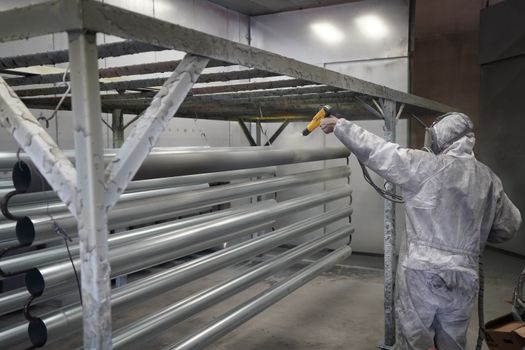
Polyester is the lowest-cost option, gives moderate mechanicals and is acceptable for non-structural visual panels, but its adhesion to carbon is weak and its hot/wet performance is the worst of the three. Vinyl ester sits in the middle — better chemical resistance than polyester, used for chemical-plant pipework and tanks where carbon-steel would corrode. Epoxy is the default for any load-bearing carbon part: highest strength retention, lowest creep, and the only family that is genuinely compatible with prepreg cure cycles at 120–180 °C [S5]. For a wet-layup cosmetic panel, a room-temp-cure laminating epoxy with a 24 h demould and a 7-day full-cure post-cure is typical; for a structural prepreg part, the resin is dictated by the cure schedule on the supplier's data sheet and is non-negotiable. Pick resin before picking weave — the cure temperature window often eliminates half the cloth options before mechanical properties are even compared.
Modulus tier: standard, intermediate, high and ultra-high
Intermediate-modulus (IM, ~290–300 GPa) raises stiffness by ~25% for ~30–50% higher cost and is the typical aerospace spec. High-modulus (HM, ~350–500 GPa) and ultra-high-modulus (UHM, 500+ GPa) fibers cut strain to failure to under 0.5% and demand careful impact and fatigue analysis — they are specified for satellite booms, precision machine structures and high-stiffness linear-guide carriages where deflection, not strength, is the limiting constraint. The default industrial answer is standard-modulus; bump to IM only when a deflection budget fails, and to HM/UHM only with a signed-off strain and impact analysis. [S1]
Selection walkthrough: matching spec to part

Start by defining the load case — peak stress, strain budget, fatigue cycle count, service temperature and chemical exposure. For a cosmetic body panel with no structural rating, a 3K 2x2 twill, standard-modulus, wet-layup epoxy laminate at 2–3 mm cured thickness is the baseline. For a structural automotive chassis brace or a UAV spar, switch to UD prepreg, IM fiber, quasi-isotropic stacking, vacuum-bag + oven cure, with ply schedule verified by FEA. For a chemical-handling pipe or tank liner, vinyl ester is the resin default with carbon used as the conductive/structural skin over a corrosion liner. For a satellite structure or a precision instrument stage where thermal stability dominates, UHM fiber with a cyanate-ester or BMI resin system is the standard answer, and the part is almost always autoclave-cured. The point of the decision tree is that tow, weave, resin and modulus are coupled: changing one usually forces the other three to move with it. [S2]
Quality, standards and common failure modes
Two spec checks catch most field failures. Second, void content: aerospace structural prepreg is held below 1–2% void by autoclave pressure; wet-layup parts routinely run 3–5% and should not be used for fatigue-rated primary structure without ultrasonic or micrograph verification. Common failure modes traceable to wrong sizing: (1) cosmetic panels that print through because 12K–24K was used under a thin clear coat, (2) prepreg delamination because cure temperature was dropped below the resin's minimum, (3) premature fatigue cracking in a HM laminate because the design assumed standard-modulus strain. Track the raw-material certificate (C of C) per lot, and never substitute across modulus tier without re-running the allowables [S1][S5].
Closing: the verifiable next node for any spec-in-progress is the supplier's data sheet for FAW, cured ply thickness, tensile modulus and cure schedule — those four numbers, not the marketing brochure, are what lock the part. Watch for tow availability (3K 2x2 twill is widely stocked, 18K+ is often a special order with 8–12 week lead) and for resin shelf life on prepreg rolls (typically 12 months at –18 °C), since both control whether the part ships on schedule. For adjacent part-spec work, the welded-steel-mesh sizing and selection guide follows the same four-knob decision pattern and is useful as a cross-check when carbon is being compared against metallic alternatives.