
Semiconductor-grade carbon fiber is a tightly specified subset of standard PAN-based tow: fiber suppliers must certify total metallic impurity below 5 parts per billion for elements that diffuse into silicon — Fe, Na, K, Cu, Ni, Cr — and surface particle counts below ISO 14644-1 Class 3 in finished composite stock [S1].
Real Carbon, Inc. and similar custom composite houses machine these stocks into wafer-handling end effectors, EUV lithography chamber insulators and CVD showerhead supports where aluminum or carbon steel would outgas or shed particles [S1]. The category is niche but specification-driven: the fiber used in a Boeing 787 stringer is not the fiber that goes into a 300 mm FOUP handler.
Why Semiconductor Tooling Demands a Different Fiber
Front-end equipment (lithography, etch, CVD, PVD) is built around contamination budgets expressed in parts-per-billion and particles-per-cubic-meter at ISO Class 3 cleanroom air [S1]. A composite that sheds a single 0.3 µm fiber fragment can scrap a wafer lot worth several thousand US dollars, so fabs audit both the fiber feedstock and the machined part under SEM/EDS before qualification.
Carbon fiber wins over metals in three places: mass (density ~1.75–1.80 g/cm³ versus 2.70 g/cm³ for aluminum and 7.85 g/cm³ for steel fiber-reinforced alternatives), stiffness-to-weight ratio, and CTE tunability from near-zero to 4×10⁻⁶/K through layup design [S1][S5]. For a 450 mm wafer-handler arm, that means sub-second settle times and zero measurable drift over a 600 °C thermal cycle, which aluminum cannot match.
The Four Grades in the Buyer's Frame
Standard-modulus PAN fiber (tensile modulus ~230 GPa, tensile strength ~3.5 GPa) covers roughly 80 percent of fab composite use because it is the cheapest stock that still passes purity audits; intermediate-modulus (290 GPa) stocks roughly 30–50 percent more and are reserved for high-acceleration robot arms; high-modulus (>350 GPa) is a specialty buy with limited spool sizes and lead times measured in months rather than weeks [S1].
Recycled aerospace tow — the material covered in 2026 coverage of Boeing's scrap-to-feedstock programs — is being marketed for secondary structural panels and sporting goods, not for fab consumables [S2]. The recycler route introduces uncontrolled metallic trace content from upstream tooling and reclamation chemistry; fab auditors reject it on the contamination axis alone, regardless of mechanical recovery.
Surface Finish and Coatings That Pass Cleanroom Audit
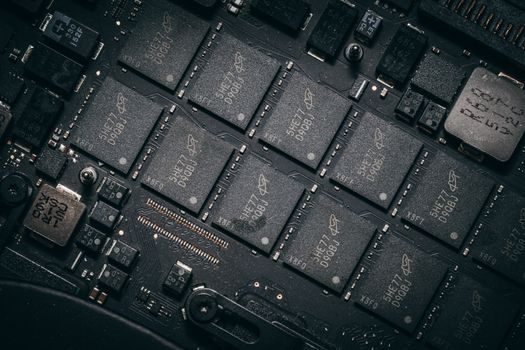
Bare PAN fiber is never shipped into a Class 1 cleanroom; the standard finish is a pyrolytic carbon (pyro-C) CVD overcoat applied at 1000–1400 °C, which seals the fiber surface, drops ash content below 50 ppm and drives the metal-extractable leach rate down to single-digit ppb in acid digestion tests [S1].
Two secondary treatments show up in 2026 supplier data sheets: a silicon-carbide (SiC) CVD topcoat for high-temperature EUV chamber parts rated above 1200 °C, and a vapor-grown carbon nanofiber (VGCNF) sizing that improves resin wetting without adding extractable ions [S1]. Neither is a universal spec; both are agreed by exception when the part sits in a plasma or thermal-cycling zone where the baseline py-C coating would microcrack.
Composite Layup and Resin Choices for Tooling
The most common fab-grade laminate is a quasi-isotropic [0/45/90/-45] layup of 3K tow at 55–60 percent fiber volume, potted in a low-outgassing epoxy such as bisphenol-F cured with an aromatic amine — this combination posts total mass loss (TML) below 1.0 percent and collected volatile condensable materials (CVCM) below 0.10 percent under ASTM E595, the NASA-derived screening test that fab procurement has adopted verbatim [S1].
For thermal management, glass fiber is occasionally substituted in non-load-bearing insulating rings, but the stiffness hit is roughly 60 percent versus standard-modulus carbon and the CTE drift under thermal cycling is unacceptable for metrology frames [S1]. Cyanate-ester resins raise the glass-transition temperature from ~180 °C (epoxy) to ~250 °C, a useful step for parts close to the chuck or electrostatic clamp, but they cost roughly three times the per-kg price of the bisphenol-F baseline and require 6–8 hour post-cures.
Comparison Across the Four Common Buy Options
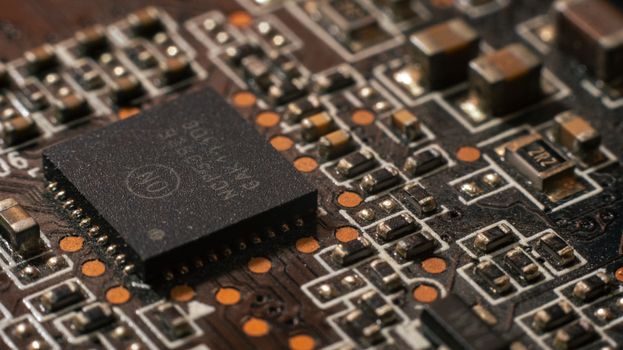
Procurement in 2026 is choosing between four stock families on a 2D plot of purity-versus-modulus: (1) Standard-modulus PAN + py-C — lowest cost, ~3-month lead, passes >90 percent of fab audits; (2) Intermediate-modulus PAN + py-C — ~40 percent price premium, same purity, used for high-acceleration robot arms; (3) High-modulus PAN + SiC overcoat — 2–3× the price, specialty, reserved for EUV chamber frames; (4) Recycled aerospace tow — cheapest per-kg, fails most fab contamination protocols, accepted only in non-process peripheral brackets [S1][S2].
On cycle time, options 1 and 2 ship from US stock in 8–12 weeks; option 3 needs 16–24 weeks because SiC CVD lines are few; option 4 can be sourced in 2–4 weeks but triggers a 6-week qualification loop that most fabs do not want to pay for.
Limitations and Failure Modes to Spec Into the Drawing
Three failure modes recur in field-return data from 200 mm and 300 mm tools: (a) microcracking of the py-C coating after roughly 500 thermal cycles above 300 °C, which exposes fiber ends and raises particle counts by an order of magnitude; (b) galvanic corrosion at any carbon-to-aluminum interface without a dielectric barrier — a real risk in mixed-material chambers; (c) static-charge build-up on uncoated laminate surfaces, mitigated by a thin PVD TiN or indium-tin-oxide film that most 2026 datasheets now call out as standard [S1].
For peripheral civil construction inside the fab — mezzanines, sub-fab cable trays, scrubber housings — concrete fiber reinforcement and standard structural carbon steel are the economic picks; the carbon-fiber premium is not justified outside the process-tool envelope, a point the Real Carbon and similar custom shops are explicit about in their 2026 capacity and capability notes [S1].
Sourcing Signals Worth Tracking Through 2026

Two trackable signals: the Carbon Fiber Conference 2026 program lists a dedicated semiconductor-tooling session, signaling that contamination-controlled composite supply is being treated as a category rather than an aerospace spillover [S3]; and the wikiHow-grade DIY layup guides circulating in 2025 are not relevant to fab procurement — they cover wet layup with hardware-store epoxy and have no place in an ISO Class 3 audit chain [S4].
For fab engineers and OEM spec writers, the practical filter is: specify py-C-coated standard- or intermediate-modulus PAN fiber, demand per-batch ICP-MS metal data, require ASTM E595 TML/CVCM on the cured laminate, and route any high-temperature EUV frame through an SiC-qualified line. For broader plant-side spec writing, the data center raw material sourcing guide frames similar purity-and-lead-time tradeoffs, and the best total station for oil and gas duty piece covers the adjacent metrology-side contamination controls.