
Select a mini-load crane AS/RS when cases must be stored and retrieved repeatedly from fixed locations, with one stacker crane dedicated to an aisle handling totes, trays, and cartons [S1][S2].
Select a case-handling climbing robot when cases can move between floor-level pickup positions and rack levels without committing to a full aisle crane, embedded track, or tightly bounded goods-to-person layout.
Decision Criteria for Case Storage Automation
A mini-load crane AS/RS stores containers, trays, cases, and other small loads in fixed rack positions, while a case-handling climbing robot transfers cases between a work surface and elevated storage locations. The correct comparison therefore starts with load geometry, retrieval pattern, required throughput, and future expansion, not simply purchase price [S1][S5].
Use the following decision matrix:
<strong>Fixed-location density:</strong> Mini-load wins when every case has a known storage address. Its vertical rack structure uses more vertical space than conventional selective rack systems, and a single crane-mounted load-handling device can serve a dedicated aisle [S1][S2].
<strong>Deployment flexibility:</strong> A climbing robot wins when the system must work from accessible floor positions, serve more than one work zone, or change transfer locations without a fixed aisle architecture.
<strong>Retrieval behavior:</strong> Mini-load wins for repetitive goods-to-person picking and manufacturing replenishment because the crane automatically delivers a load to an operator or conveyor [S1]. A climbing robot is more suitable when cases move through a flexible transfer sequence or need access from multiple approach positions.
<strong>Footprint and installation:</strong> Mini-load requires a planned rack-and-aisle system, but the surface-riding crane architecture does not require embedded floor track. Mid-load and mini-load AS/RS do not use an embedded rail because the crane rides on the surface [S3].
Mini-Load Crane AS/RS: Strong Fit for Dense, Repetitive Flows
Mini-load AS/RS is purpose-built for small-load goods-to-person operations, including high-SKU order picking, pharmaceutical distribution, spare-parts storage, manufacturing replenishment, and sequence-oriented sorting. The crane retrieves a specified load from a defined address and delivers it directly to an operator, eliminating manual search and travel through the rack [S1][S3].
The architecture can increase storage density by using vertical rack levels instead of leaving cases in floor-level shelving.
Capacity limits vary by architecture, so the generic term “mini-load” is not enough for purchase specification. Mini-load AS/RS systems are described as being suitable for totes, containers, cartons, and trays [S3][S4]. The governing limit is the specific crane, mast, extractor, rack, and conveyor combination, not the product category. Larger cases should be treated as a separate engineering check, especially where a tote-handling extractor has limited clearance.
Case-Handling Climbing Robot: Strong Fit for Flexible Work Zones
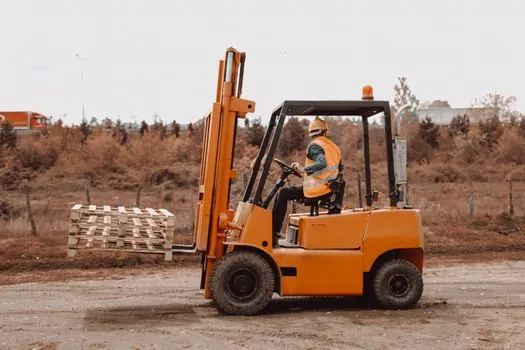
A case-handling climbing robot is appropriate where cases need flexible transfer between floor-level handling and elevated storage, especially when the operation values modular deployment over a fully dedicated rack aisle.
The climbing-robot option separates the mobile carrier from the fixed aisle crane architecture, so the case can be presented at different points in the material flow rather than only at a crane interface. That makes it a credible choice for mixed work cells, lower-density storage, and sites where the workflow is likely to move. Its weakness is the loss of a rigid, dedicated aisle position: every transfer depends on robot mobility, navigation, manipulation time, and a compatible pickup or drop station.
A specification request should require the robot’s rated case mass, permitted case dimensions, required turning clearance, maximum lift height, cycle-time definition, battery operating profile, and charging arrangement. It should also identify whether the system handles rigid cases only or includes deformable cartons, mixed orientations, and cases without standard handling surfaces. A fixed crane specification similarly needs extractor type, rack pitch, aisle width, load overhang, conveyor elevation, and single-deep or double-deep storage [S1].
Throughput, Storage Density, and Operating Load
Mini-load AS/RS supports high-volume order-picking and manufacturing operations by automatically storing and retrieving loads and delivering them directly to operators for picking [S1]. Its throughput depends on crane travel time, lift and descent time, extractor engagement, conveyor handoff, queue discipline, and the number of cranes serving each aisle.
Climbing robots offer flexible access but make coordination across travel, lift, transfer, and charging part of the cycle-time calculation. A practical comparison must use the same workload definition: store a case, retrieve it, present it to a workstation, and return the carrier to standby. Comparing only drive speed or only theoretical lift rate hides the material-flow bottleneck.
Storage density also needs a common basis. Mini-load comparison should report usable positions per building footprint after accounting for aisles, transfer stations, maintenance access, and fire protection. A robot comparison should report cases per occupied bay, not only the maximum lift height. The equipment definition should then be tested against actual case dimensions, not nominal category dimensions, because length, width, height, weight, and center-of-gravity variation determine extractor selection and usable capacity [S1][S9].
Costs, Installation, and Ownership Constraints
Mini-load AS/RS is generally less expensive than unit-load AS/RS because of its smaller scale, but the initial investment remains substantial when racks, cranes, conveyors, controls, and software are included [S4]. The strongest ownership argument is therefore functional: if fixed addresses and automatic delivery support high-throughput picking, the system can reduce operator travel and make inventory sequencing more predictable [S1].
The climbing robot can reduce dependence on a fixed aisle and may simplify phased implementation where floor-level stations can be introduced incrementally. That flexibility can offset a higher unit cost when the business cannot justify a complete rack installation, but no supplied source provides a comparable purchase price, payback period, or lifetime figure. Cost comparison should therefore use installed scope, not equipment quotation alone.
For either option, maintenance planning must address retrieval devices, conveyor interfaces, controls, software integration, batteries where applicable, and spare-parts strategy. Surface-riding mini-load cranes avoid embedded rail, and the absence of an embedded rail removes that track as a single failure point, although the crane, controller, extractor, and communications still require planned maintenance [S3].
Application Recommendations
Choose mini-load crane AS/RS for distribution centers with many SKUs, repetitive case retrieval, fixed replenishment points, and a requirement for vertical density. The reference application is goods-to-person picking: the crane retrieves a tote, tray, or case and delivers it to an operator or transfer conveyor [S1][S4].
Choose a case-handling climbing robot for flexible work cells where cases enter and leave through multiple access points, the layout is not yet fixed, or the facility needs modular expansion without committing to a complete fixed-aisle rack. It is less suitable where a dedicated automated crane can continuously serve one high-density aisle with a predictable retrieval queue.
Do not choose either system solely from nominal throughput. Validate the case family, maximum dimensions, maximum mass, center of gravity, storage pitch, transfer interface, required redundancy, and operating environment. DAIFUKU lists plastic containers, cartons, trays, and circular loads such as paper and film rolls, with cold-environment applications for frozen-food picking [S1].
Standards, Interfaces, and Supplier Due Diligence
AS/RS performance should be demonstrated with defined operating conditions: load range, storage pitch, aisle configuration, transfer-station occupancy, traffic model, and uptime test. The supplied research does not establish one universal case-handling capacity for every mini-load system, so a supplier guarantee should specify whether a cycle means crane movement only or the complete storage-to-pick-point transaction [S1][S3].
Controls integration requires defined handshakes between the warehouse management system, AS/RS controller, conveyors, and any robotic pickup equipment. Trackable acceptance items include retrieval accuracy, conveyor-blocked behavior, fault recovery, manual exception handling, and the method used to prove continuous operation. The related engineering question of adapting a stacker crane with a different load-handling device is covered in Can a Stacker Crane Receive a New Load Handling Device?.
The final document package should include the specific crane or robot model, load ratings, case limits, aisle and transfer dimensions, safety controls, electrical supply, software interfaces, spare parts, installation duration, and acceptance-test protocol. A useful next node is a vendor test using the five slowest, lightest, heaviest, widest, and most offset cases in the actual inventory mix.