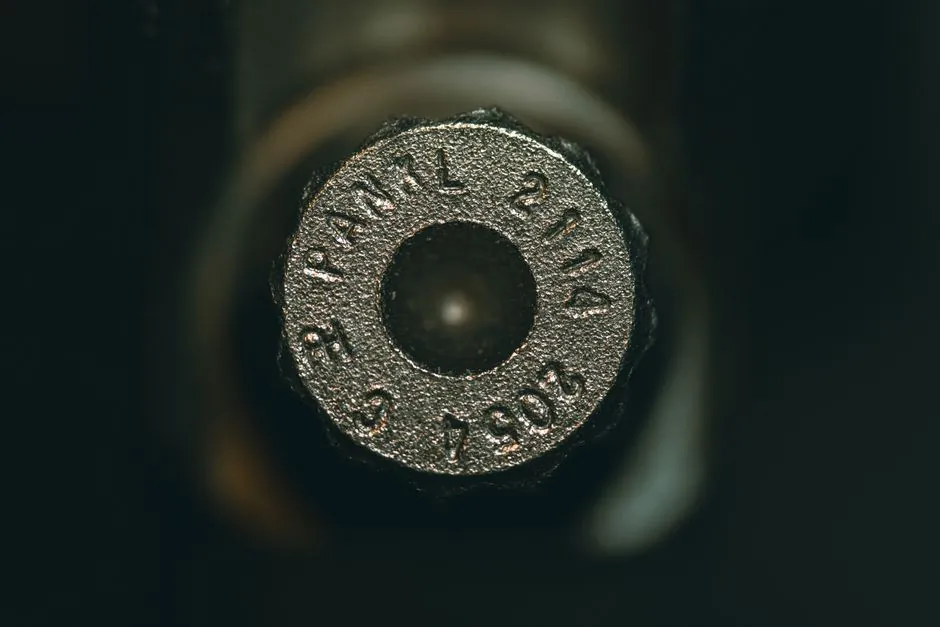
Case-hardened steel is the recognized industry standard for tapered roller bearing rings and rollers, delivering roughly 40% longer fatigue life than through-hardened 52100 in shock-loaded service [S3]. For most heavy-duty truck, wind, and industrial gearbox applications, the choice between the two heat-treat routes is settled before the bearing is even drawn: specify case-carburized steel, then debate core cleanliness, retained austenite, and case depth.
Through-hardened 52100 (approx 1.0% C, hardened to ~60 HRC) is still the dominant material for ball bearings, cylindrical rollers, and many general-purpose tapered applications where loads are steady and operating temperatures stay below 100°C [S1][S4]. The two routes diverge in microstructure, residual stress, and failure mode, and that divergence is what governs the selection matrix below. A useful orientation point for the bearing family as a whole is the tapered roller bearing reference page, since race hardening is one of its defining material decisions.
Microstructure and Hardness Profile
Through-hardened 52100 reaches approximately 60 HRC uniformly from surface to core, with rollers typically run 1-2 HRC harder than the rings to push peak Hertzian stress below the rolling-contact fatigue limit [S4]. Case-hardened components start as low-carbon steel (approx 0.2% C), are carburized in a controlled carbon-atmosphere furnace so carbon diffuses inward to a specified case depth, then are quenched; the result is a ~60 HRC surface (or ~64 HRC if carbonitrided) over a softer, tough low-carbon core [S3][S4].
The case layer is usually held to a defined depth, commonly on the order of a few millimetres depending on section size, while the core sits in the 35-45 HRC range to absorb impact energy. This graded profile is the physical reason case-hardened roller bearing components tolerate bending, torsion, and shock better than their through-hardened counterparts.
Fracture Toughness, Residual Stress, and Failure Mode
Case-hardened steels exhibit higher fracture toughness than through-hardened 52100, and that property defines the stress required to initiate rapid crack growth from a spall or surface defect [S2]. A through-hardened part tends to fail by cracking: with a neutral to tensile residual stress at the surface, hoop stress from shaft fit and design loads can approach the force needed to open a crack, and a single subsurface spall then propagates to a catastrophic fracture [S4].
Case-hardened parts carry compressive residual stress in the case and high retained austenite, a soft but ductile phase that blunts crack tips and slows sub-surface crack growth. The practical consequence: a case-carburized tapered bearing "tolerates substantial damage progression without catastrophic failure during the interval between the onset of a problem and when routine maintenance identifies the need for repair" [S2]. For wind, mining, rail, and heavy-truck service, that damage-tolerance window is the deciding factor, not raw L10 on a clean test rig.
Fatigue Life: the Numbers Engineers Compare
On a like-for-like test, case-hardened steel gives roughly 40% longer life than through-hardened steel of comparable section [S3]. When life is recast in ISO/AGMA life-adjustment-factor terms, vacuum-processed 52100 lands in the a1 ≈ 3.0-4.5 band, while vacuum-arc-remelted case-carburized steels run a1 ≈ 4.5-6.0, a reduction of 0 to roughly half the L10 for the through-hardened product [S2].
That gap is driven mostly by steel cleanliness, not by the heat-treat route itself: 52100 life improves sharply with vacuum degassing and remelting, and case-carburized product improves further when premium melting practices are applied. The bearing-steel life factors trace back to the "STLE Life Factors for Roller Bearings" dataset (E.V. Zaretsky), which remains the reference for material a1 selection [S2]. For wind main-shaft and gearbox ratings, this 30-50% life delta is large enough to swing bearing selection even at higher unit cost.
Contamination, Debris Denting, and Surface Damage
In contaminated environments, the case-hardened combination of tough core and high retained austenite produces shallower, narrower debris dents, with a larger radius of "hill" material pushed up around the indent [S4]. Through-hardened 52100, by contrast, develops sharp-edged dent corners that act as stress raisers and accelerate spalling from the dent site.
This matters wherever the bearing operates in a non-sealed environment: wind turbine main shafts, off-highway gearboxes, rolling-mill drives, and railroad traction motors. The retained-austenite argument is also why premium case-hardened tapered roller bearing lines are specified for Class III+ wind applications, where maintenance access is helicopter-only and a single unplanned change-out dwarfs any upfront material premium.
Selection Matrix: Through-Hardened vs Case-Hardened
Use this four-criterion comparison when the application allows either route. Numbers below are drawn from the cited industry references, not extrapolated. [S1]
Surface hardness: through-hardened 52100 ≈ 60 HRC uniform; case-hardened ≈ 60 HRC (carburized) or ≈ 64 HRC (carbonitrided), with a graded core of ~35-45 HRC [S4]. Core toughness and impact resistance: through-hardened 52100 is comparatively brittle with low retained austenite; case-hardened is ductile, high retained austenite, tolerates bending, torsion, and shock [S3][S4]. Fatigue life factor a1: through-hardened 52100 ≈ 3.0-4.5 (vacuum processed); case-carburized ≈ 4.5-6.0 (vacuum arc remelted) [S2]. Relative cost: through-hardened is the lower-cost baseline; case-hardened carries a small premium for the longer carburizing cycle, generally justified by the 40% life gain in tough service [S3][S4].
Decision rule: specify through-hardened 52100 for steady radial/axial loads, sub-100°C operation, sealed environments, and price-sensitive OEM programs. Specify case-hardened (carburized or carbonitrided) for shock loading, misalignment, dirty or boundary-lubricated service, low-cycle fatigue risk, and any application where a delayed, damage-tolerant failure mode is preferred over a sudden fracture. Above 100°C, dimensional stability becomes the gating constraint, and the Hengerer dataset notes that neither route is automatically disqualified; vacuum-degassed 52100 is often retained with a tempering-temperature review, while case-carburized product requires an explicit retained-austenite stabilization step [S1].
Process Notes, Standards Anchors, and Sourcing Cues
Carbonitriding (a case-hardening variant that adds nitrogen to the diffusing atmosphere) raises surface hardness to ~64 HRC and is widely used for heavy-truck wheel ends and pinion bearings, where the extra surface hardness pays back in dent resistance [S4]. The melting-practice caveat is the most-cited variable in field life variation: through-hardened bearing life "varies very much" with steel cleanliness, and the same is true for case-carburized product, which is why aerospace and wind classes require vacuum arc remelt (VAR) or vacuum induction melting + vacuum arc remelt (VIM-VAR) [S2].
For wind and similar high-consequence duty, also check the bearing-maker's published a1 factor and the melting route on the material certificate; for through-hardened 52100, require a minimum inclusion rating per ASTM E45 method A, and for case-carburized product, ask for case-depth profile (effective case to 50 HRC, per ISO 6336-5 or maker equivalent) and retained-austenite measurement (XRD, typically reported as a percentage with a maker-defined upper limit to avoid dimensional drift). For a related decision flow on adjacent bearing hardware, the hard-bearing vs soft-bearing balancing machine reference covers a different but adjacent spec trade-off that often surfaces in the same vendor qualification review.
Track the following two signals over the next sourcing cycle: (1) bearing-maker datasheets quoting a1 factors broken out by melting route rather than as a single number, which is the cleanest indicator that the OEM is controlling the variable that actually drives the 30-50% life spread; (2) explicit retained-austenite limits on case-carburized wind and rail bearings, since this is the property that governs dimensional drift and fracture-toughness stability in service above 100°C.
For the relevant spec sheets and selection criteria, see case packing machine.